Love this? Save it for later!
Share the inspiration with your friends
I was at the hardware store—of all places—buying mulch last April when the woman behind me in line started describing dinner. Not a deck stain or a better shovel. Dinner. She was maybe seventy, wearing gardening gloves with the fingertips cut off, and she had a roll of landscape fabric slung over her shoulder like a fashion accessory. “I just throw it all on one pan,” she said, gesturing with her free hand. “Salmon, asparagus, lemons. The oven does the work while I’m out here.” I wasn’t expecting cooking advice from a woman buying weed barrier, but there I was, holding a bag of cedar mulch, listening to her explain exactly how to make the easiest spring meal I’d ever heard of. She called it her “no-fuss Friday dinner.” I called it genius. I mean, honestly—who thinks to get recipe inspiration at the lumber section?
I jotted down the basics on the back of my receipt right there by the register. The woman, whose name I later learned was Gloria, told me the trick is to not overthink it. “Spring ingredients don’t need much,” she said. “They just need heat and a little timing.” That conversation lasted maybe four minutes, but it completely changed how I approach busy weeknight cooking during asparagus season. I’ve made this spring salmon sheet pan dinner with lemon asparagus at least a dozen times since that day, and every single time, I think of Gloria and her gardening gloves. It’s the kind of recipe that makes you feel like you’re eating something fancy, but really, you just tossed things on a pan and walked away.
There was one time I forgot to preheat the oven—just slid the pan in cold and wondered why everything was taking forever. You know that feeling when you realize twenty minutes in? I stood there staring through the oven door like it had personally offended me. The salmon still turned out fine, honestly. A little less crispy on the edges, but fine. That’s the beauty of this dish. It forgives your mistakes. And that, my friends, is why I keep coming back to it. So let me tell you exactly how Gloria’s hardware store dinner became my favorite spring tradition.
Why You’ll Love This Recipe
Let me be real with you—I’ve tested this spring salmon sheet pan dinner with lemon asparagus about eight times to get it just right. I tried different oven temps, different thicknesses of asparagus, different positions on the rack. I even tested it with two different brands of salmon to see if it mattered (it kinda does, I’ll get to that). So when I say this recipe works, I mean it has been thoroughly, happily, hungrily tested.
- Quick & Easy: From fridge to table in about 30 minutes. Seriously. The oven preheats while you chop the lemon and trim the asparagus. That’s it.
- Simple Ingredients: You need salmon, asparagus, lemons, olive oil, garlic, salt, pepper, and maybe some dill if you’re feeling fancy. No weird grocery store hunts.
- Perfect for Spring: This is the meal you make when asparagus finally shows up at the farmer’s market and you want to celebrate with something bright and fresh.
- Crowd-Pleaser: My kids fight over the crispy lemon slices. My husband thinks it’s restaurant-quality. I just smile and nod.
- Unbelievably Delicious: The salmon gets flaky and tender, the asparagus gets charred at the tips, and the lemon caramelizes into these little bursts of sunshine. It’s simple food done right.
What makes this spring salmon sheet pan dinner with lemon asparagus different from every other sheet pan recipe out there? It’s the timing. Most recipes tell you to throw everything on at once, which means either overcooked fish or undercooked veggies. I figured out the exact moment to add each ingredient so everything finishes at the same time. That little tweak—adding the asparagus halfway through—makes all the difference. It’s not rocket science, but it is the kind of detail that turns a good dinner into a great one.
This is the recipe you make when you want to impress someone without breaking a sweat. Or when you just want to eat something that tastes like spring actually arrived. It’s comfort food for the season of renewal—lighter, brighter, but still deeply satisfying.
What Ingredients You Will Need
This recipe uses simple, fresh ingredients that let the spring flavors shine. You don’t need much, but you do need good quality where it counts. Here’s what to grab:
For the Salmon
- 4 salmon fillets (6 ounces each): Look for wild-caught if you can—I prefer sockeye or coho for their firmer texture and richer flavor. Farm-raised Atlantic works too, but it’s a bit softer and fattier. Pat the fillets dry before seasoning for the best sear.
- 2 tablespoons olive oil: Use a good extra-virgin here since it’s a prominent flavor. I like California Olive Ranch for everyday cooking.
- 3 cloves garlic, minced: Fresh is non-negotiable for this one. The jarred stuff gets bitter at high heat.
- 1 teaspoon salt: I use fine sea salt for even distribution.
- ½ teaspoon black pepper: Freshly ground, please. It makes a difference.
- 1 teaspoon dried dill (or 1 tablespoon fresh): Dill and salmon are a classic pair. If you don’t have it, try thyme or just skip it—the lemon does heavy lifting here.
For the Asparagus
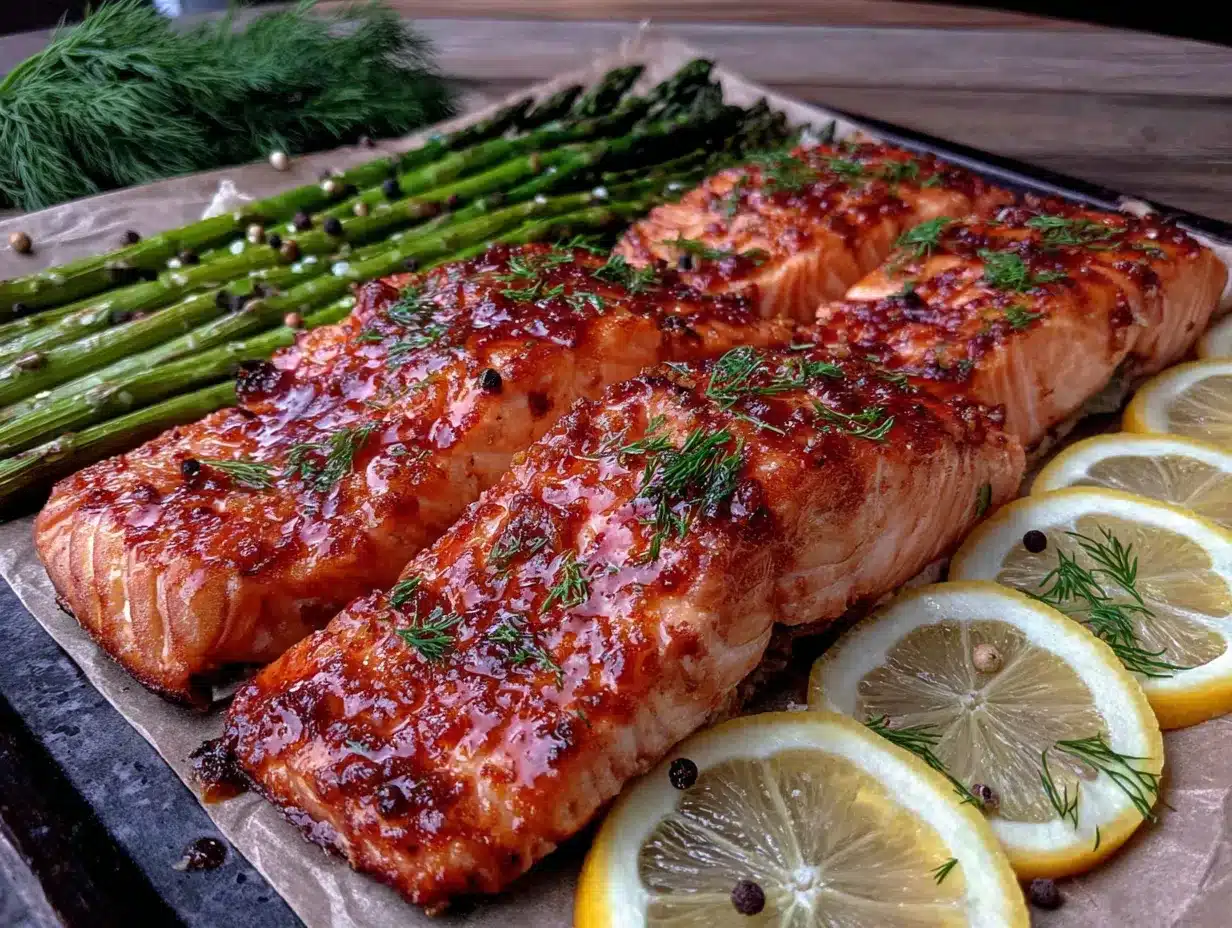
- 1 bunch asparagus (about 1 pound): Look for firm, bright green stalks with tight tips. Thicker spears hold up better to roasting—they don’t get mushy as fast. Snap off the woody ends (they’ll break naturally where the tender part starts).
- 1 tablespoon olive oil: Just enough to coat.
- ¼ teaspoon salt: Light seasoning since the salmon seasoning will mingle.
- ¼ teaspoon black pepper:
For the Lemon & Garnish
- 1 large lemon: Slice one half into thin rounds for roasting. Juice the other half to finish the dish. Trust me on this—both uses matter.
- Fresh dill or parsley for garnish: Optional but pretty. I’m a sucker for fresh herbs on everything.
- Flaky sea salt for finishing: Maldon is my go-to. That little crunch at the end is chef’s kiss.
Ingredient Tips from My Kitchen: For the best texture, let your salmon sit at room temperature for 10 minutes before cooking. Cold fish straight from the fridge cooks unevenly. Also, if your asparagus is super thin (pencil-thin), reduce the roasting time by about 3 minutes. I learned that the hard way when I ended up with asparagus that looked like sad green strings. Not my finest moment.
Substitution Guidance: No asparagus? Try green beans or broccolini—just adjust the timing since they cook differently. Need a dairy-free option? This recipe is already dairy-free, so you’re good. For a gluten-free meal, this is naturally gluten-free as written. If you want to swap the salmon, arctic char or even thick white fish like cod works beautifully. Just watch the cooking time—thinner fish cooks faster.
Equipment Needed
You don’t need a fancy kitchen for this spring salmon sheet pan dinner with lemon asparagus. Here’s what you’ll need:
- Large rimmed baking sheet (18×13 inches): A half-sheet pan is ideal. The rim matters—it catches any juices and keeps your oven clean. I use Nordic Ware because they don’t warp at high heat.
- Parchment paper or aluminum foil: Lining the pan makes cleanup embarrassingly easy. Like, zero-scrubbing easy. I prefer parchment because it doesn’t react with the lemon.
- Chef’s knife and cutting board: For trimming asparagus and slicing lemons. A sharp knife makes the whole process faster and safer.
- Small bowl for mixing seasoning: You can mix the garlic, oil, and spices right on the pan if you’re lazy like me sometimes.
- Fish spatula (optional but helpful): The thin, angled design makes lifting salmon off the pan without breaking it so much easier. A regular spatula works too, just be gentle.
- Instant-read thermometer (optional): If you’re nervous about overcooking salmon, this takes the guesswork out. 125°F for medium, 130°F for medium-well.
Budget-Friendly Tips: Don’t have a fish spatula? Use a thin metal turner from the dollar store. No parchment? Foil works fine—just give it a light spray of oil. And honestly, you can skip the thermometer once you’ve made this a couple times. You’ll learn to tell when the salmon is done by how it flakes.
Preparation Method
Ready to make the best spring salmon sheet pan dinner with lemon asparagus of your life? Let’s go. I’ll walk you through every step like we’re cooking together in my kitchen.
- Preheat your oven to 400°F (200°C). Position the rack in the upper third of the oven. This gives you better browning on top. While the oven heats, line your baking sheet with parchment paper. Don’t skip this—you’ll thank me later when cleanup takes 30 seconds.
- Prep the salmon: Pat the fillets dry with paper towels. This is crucial for getting that nice exterior instead of steamed-looking fish. Place them skin-side down on the prepared baking sheet, spacing them evenly. Drizzle with 2 tablespoons olive oil, then sprinkle with minced garlic, 1 teaspoon salt, ½ teaspoon pepper, and the dill. Use your hands to rub the seasoning all over the fillets. Yes, get your hands in there. It’s the best way to ensure even coverage.
- Add the lemon slices: Arrange thin lemon rounds on top of and around the salmon fillets. Don’t overcrowd—just a few per fillet. The lemon will caramelize and soften as it roasts, becoming almost sweet. Tuck a few extra slices between the fillets for good measure.
- Roast the salmon for 10 minutes: Slide the pan into the oven and set a timer. This is the head start the salmon needs. During those 10 minutes, prep your asparagus. Snap off the woody ends (hold each spear near the bottom and bend—it’ll break right where it gets tough). Toss the asparagus with 1 tablespoon olive oil, ¼ teaspoon salt, and ¼ teaspoon pepper right on a cutting board or in a bowl.
- Add the asparagus: After 10 minutes, pull the pan out (careful, it’s hot!). Arrange the seasoned asparagus around the salmon fillets in a single layer. Don’t pile them on top of each other or they’ll steam instead of roast. Return the pan to the oven.
- Roast for another 10-12 minutes: The total cooking time is 20-22 minutes. The salmon should be opaque and flake easily with a fork. The asparagus should be bright green with some charred spots. The lemon slices should look slightly shriveled and golden at the edges. If your asparagus is very thin, check at 8 minutes. If it’s thick, let it go the full 12.
- Finish with fresh lemon juice: As soon as the pan comes out, squeeze the remaining lemon half over everything. That bright, fresh hit right at the end wakes up all the flavors. Sprinkle with flaky sea salt and fresh dill or parsley if you’re using it.
- Let it rest for 2-3 minutes: I know you want to dig in immediately, but letting the salmon rest allows the juices to redistribute. Use this time to set the table or pour yourself a glass of something nice. You’ve earned it.
Visual Cue Guide: The salmon should look slightly golden on top with a few darker spots from the seasoning. When you press it gently with a fork, it should separate into large, moist flakes. The asparagus should be tender-crisp—it should offer some resistance when you bite into it but not be squeaky or raw. The lemon slices should look almost candied at the edges. If they’re still raw and juicy, give everything another 2 minutes.
My Personal Efficiency Tip: While the oven preheats, I line the pan and season the salmon. That way, by the time the oven beeps, I’m ready to slide it in. During the first 10 minutes of roasting, I prep the asparagus and set the table. Multitasking with a timer keeps everything flowing smoothly without that frantic “oh no, the garlic is burning” energy.
Cooking Tips & Techniques
After making this spring salmon sheet pan dinner with lemon asparagus more times than I can count, I’ve collected some hard-won wisdom. Let me save you from my mistakes.
The Biggest Mistake I Made: The first time I made this, I put the asparagus on the pan with the salmon from the start. By the time the salmon was done, the asparagus was limp and sad. Mushy, really. I tried to salvage it by calling it “well-done,” but my family wasn’t fooled. Adding the asparagus halfway through changed everything. The texture went from sad to spectacular.
Don’t Crowd the Pan: If your baking sheet is packed tight, everything steams instead of roasts. You want space between the salmon fillets and the asparagus spears. If you’re cooking for a crowd, use two pans or cook in batches. I learned this when I tried to squeeze six fillets onto one pan and ended up with pale, watery fish. Not my proudest dinner.
Temperature Matters: 400°F is the sweet spot. Lower and the salmon won’t brown. Higher and the asparagus might burn before the salmon is done. Trust the temperature. Also, let your oven fully preheat. I know it’s tempting to slide the pan in early, but that 5-minute shortcut leads to uneven cooking. I’ve done it. I’ve regretted it.
The Garlic Trick: Mince the garlic finely and rub it into the salmon rather than leaving it in clumps. Big pieces of garlic can burn and turn bitter at 400°F. If you’re worried about burning, mix the garlic into the olive oil first and drizzle it over the fish. That extra step distributes the garlic more evenly.
Timing Strategy: While the salmon roasts for its first 10 minutes, set out your plates, pour drinks, and maybe make a quick salad. This is a one-pan meal, so the only side you might want is something green and fresh. A simple arugula salad with lemon vinaigrette pairs beautifully and takes 3 minutes to throw together.
Consistency Secret: Buy salmon fillets that are similar in thickness. If one is thick and one is thin, the thin one will overcook while you wait for the thick one. I’ve started asking the fish counter to cut me evenly sized portions. It makes a real difference.
Variations & Adaptations
One of the best things about this spring salmon sheet pan dinner with lemon asparagus is how adaptable it is. Here are some ways to make it your own:
Dietary Variations:
- Low-Carb/Keto: This recipe is already low-carb as written. For extra fat, drizzle the salmon with melted butter before roasting. It adds richness and helps the seasoning stick.
- Paleo/Whole30: Use ghee instead of olive oil for the salmon, and skip the dill (some dried dill blends have additives). Everything else is already compliant.
- Dairy-Free: Already dairy-free! But if you want a creamy element, serve with a dollop of dairy-free yogurt mixed with lemon zest.
Seasonal Swaps:
- Spring: Swap asparagus for ramps or fiddlehead ferns if you can find them. Both are seasonal delicacies that roast beautifully.
- Summer: Use zucchini slices and cherry tomatoes instead of asparagus. The tomatoes will burst and create a little sauce.
- Fall: Try butternut squash cubes and Brussels sprouts. Roast the squash for 10 minutes before adding the salmon since it takes longer.
- Winter: Use broccoli florets and thinly sliced fennel. The fennel gets sweet and tender when roasted.
Flavor Twists:
- Spicy: Add ½ teaspoon red pepper flakes to the seasoning mix. The heat cuts through the richness of the salmon beautifully.
- Herby: Swap the dill for a mix of fresh parsley, chives, and tarragon. This French-inspired version is lovely with a glass of white wine.
- Citrusy: Add orange slices alongside the lemon for a sweeter, more complex citrus flavor. I tried this by accident when I ran out of lemons, and it was a happy accident.
Different Cooking Methods: No oven? No problem. You can cook the salmon and asparagus on a grill pan or outdoor grill. Use a cast iron skillet on the grill, follow the same timing, and you’ll get gorgeous smoky flavor. Just keep the lid closed to trap heat. I’ve done this on camping trips and it works beautifully.
My Personal Variation: I once added a sprinkle of toasted sesame seeds and a drizzle of soy sauce to the finished dish. It gave it an Asian-inspired twist that was completely unexpected but totally delicious. My husband asked what I’d done differently and couldn’t quite place it. Sometimes the best variations come from staring into your pantry and grabbing whatever looks interesting.
Serving & Storage Suggestions
This spring salmon sheet pan dinner with lemon asparagus is best served straight from the oven, but let me walk you through all the options.
Serving Temperature: Serve the salmon warm, not piping hot. Letting it rest for those 2-3 minutes brings it to the perfect eating temperature. The asparagus should still be warm but not steaming. Room temperature leftovers are actually lovely the next day flaked over a salad.
Presentation Ideas: Slide the entire contents of the baking sheet onto a large platter. Arrange the salmon fillets in the center, surround with asparagus, and tuck the caramelized lemon slices around the edges. Sprinkle with fresh dill and flaky salt. It looks like you spent way more effort than you actually did. For individual plates, place one salmon fillet with a bundle of asparagus spears and a couple lemon slices.
What to Serve With It:
- Simple Rice or Quinoa: The grains soak up the lemony juices from the pan. I like jasmine rice for its subtle floral aroma.
- Crusty Bread: For sopping up every last bit of oil and lemon. A good sourdough or baguette works perfectly.
- Green Salad: Arugula with lemon vinaigrette keeps the meal light and fresh. The peppery arugula contrasts nicely with the rich salmon.
- White Wine: A crisp Sauvignon Blanc or unoaked Chardonnay is a natural pairing. Or a dry rosé if you’re feeling springy.
Storage Instructions: Store leftovers in an airtight container in the refrigerator for up to 3 days. Keep the salmon and asparagus together—they’ll continue to flavor each other. I don’t recommend freezing this dish. The texture of both the salmon and asparagus suffers after thawing.
Reheating Tips: The best way to reheat is in a 300°F oven for about 10 minutes. This gently warms everything without drying out the fish. The microwave works in a pinch but will make the asparagus a bit limp. If you’re using the microwave, only heat for 30-45 seconds and eat immediately. For a cold option, flake the salmon over a bed of greens with some cherry tomatoes and cucumber for an amazing next-day lunch.
How Flavors Develop: This dish is at its peak right after cooking. The lemon is brightest, the asparagus is crispiest, and the salmon is most tender. Leftovers are still good, but the texture changes slightly. The asparagus softens, and the salmon loses some of its flakiness. That said, the flavors meld together beautifully overnight. I’ve eaten cold leftovers straight from the fridge and enjoyed them.
Nutritional Information & Benefits
Let’s talk about what you’re actually eating with this spring salmon sheet pan dinner with lemon asparagus. It’s not just delicious—it’s genuinely good for you.
Estimated Nutritional Values (per serving, based on 4 servings):
- Calories: Approximately 380-420
- Protein: 35-40g
- Fat: 22-26g (mostly healthy unsaturated fats from salmon and olive oil)
- Carbohydrates: 8-10g
- Fiber: 3-4g
- Sugar: 3-4g (natural from lemon and asparagus)
- Sodium: 600-700mg (depending on salt used)
Health Benefits of Key Ingredients:
- Salmon: Rich in omega-3 fatty acids, which support heart and brain health. Also a great source of high-quality protein and vitamin D. Wild-caught salmon has a better omega-3 profile than farmed, but both are excellent choices.
- Asparagus: Packed with fiber, folate, and vitamins A, C, and K. It’s also a natural diuretic, which can help reduce bloating. Spring asparagus is at its nutritional peak.
- Lemon: High in vitamin C and antioxidants. The acidity also helps your body absorb the iron from the asparagus. It’s a win-win.
- Olive Oil: Full of monounsaturated fats and anti-inflammatory compounds. Extra-virgin olive oil has the most benefits.
Dietary Considerations: This recipe is naturally gluten-free, dairy-free, low-carb, and keto-friendly. It’s also Whole30 and Paleo compliant with the ghee swap mentioned earlier. The only potential allergen is fish, so skip the salmon and use chicken thighs if you need a non-seafood option (adjust cooking time to 25-30 minutes).
My Wellness Perspective: I love that this meal feels indulgent but is actually packed with nutrients. It’s the kind of dinner that leaves you feeling satisfied but not weighed down. Perfect for spring when you’re emerging from winter’s heavier comfort foods and craving something lighter. I honestly feel better after eating this—not just full, but energized.
Conclusion
So there you have it—the spring salmon sheet pan dinner with lemon asparagus that started with a chance encounter at the hardware store. Gloria, wherever you are, thank you for changing my weeknight dinner game forever. This recipe is proof that the best cooking inspiration often comes from the most unexpected places.
I hope you’ll give this a try, whether you’re a seasoned cook or someone who’s a little nervous about cooking fish. It’s forgiving, it’s fast, and it tastes like spring on a plate. Feel free to play around with the variations—make it spicy, make it herby, make it your own. That’s the beauty of simple recipes. They leave room for your personality to shine through.
I’d love to hear how it goes! Drop a comment below and let me know if you tried any fun twists, or if Gloria’s hardware store wisdom worked as well for you as it did for me. And if you’re looking for more easy spring dinners, check out my lemon herb chicken thighs or roasted spring vegetable bowl—they’ve got that same fresh, bright energy. Happy cooking, friends. Spring is finally here, and it tastes pretty darn good.
Frequently Asked Questions
Can I use frozen salmon for this recipe?
Yes, but you’ll need to thaw it completely first. Pat it very dry before seasoning—frozen salmon releases more water as it thaws, which can make the fish steam instead of roast. I recommend thawing in the refrigerator overnight for best results.
What if I don’t have fresh asparagus?
Frozen asparagus works in a pinch, but the texture will be softer. Don’t thaw it first—add it to the pan frozen and increase the roasting time by 2-3 minutes. Fresh is definitely better here, but frozen gets the job done when asparagus isn’t in season.
How do I know when the salmon is fully cooked?
The salmon should be opaque all the way through and flake easily when you press it with a fork. If you have an instant-read thermometer, 125°F for medium or 130°F for medium-well is your target. The fish will continue cooking slightly after you pull it from the oven.
Can I prep this ahead of time?
You can season the salmon and trim the asparagus up to a few hours ahead. Keep them separate in the refrigerator. Don’t slice the lemon in advance—it dries out. Assemble everything just before roasting for the best texture and flavor.
What’s the best way to reheat leftovers without drying out the fish?
The oven method is your friend. Reheat at 300°F for about 10 minutes, covered loosely with foil to trap moisture. The microwave is faster but will dry out the salmon and make the asparagus limp. If you’re in a hurry, the microwave works—just keep it to 30-45 seconds.
Pin This Recipe!
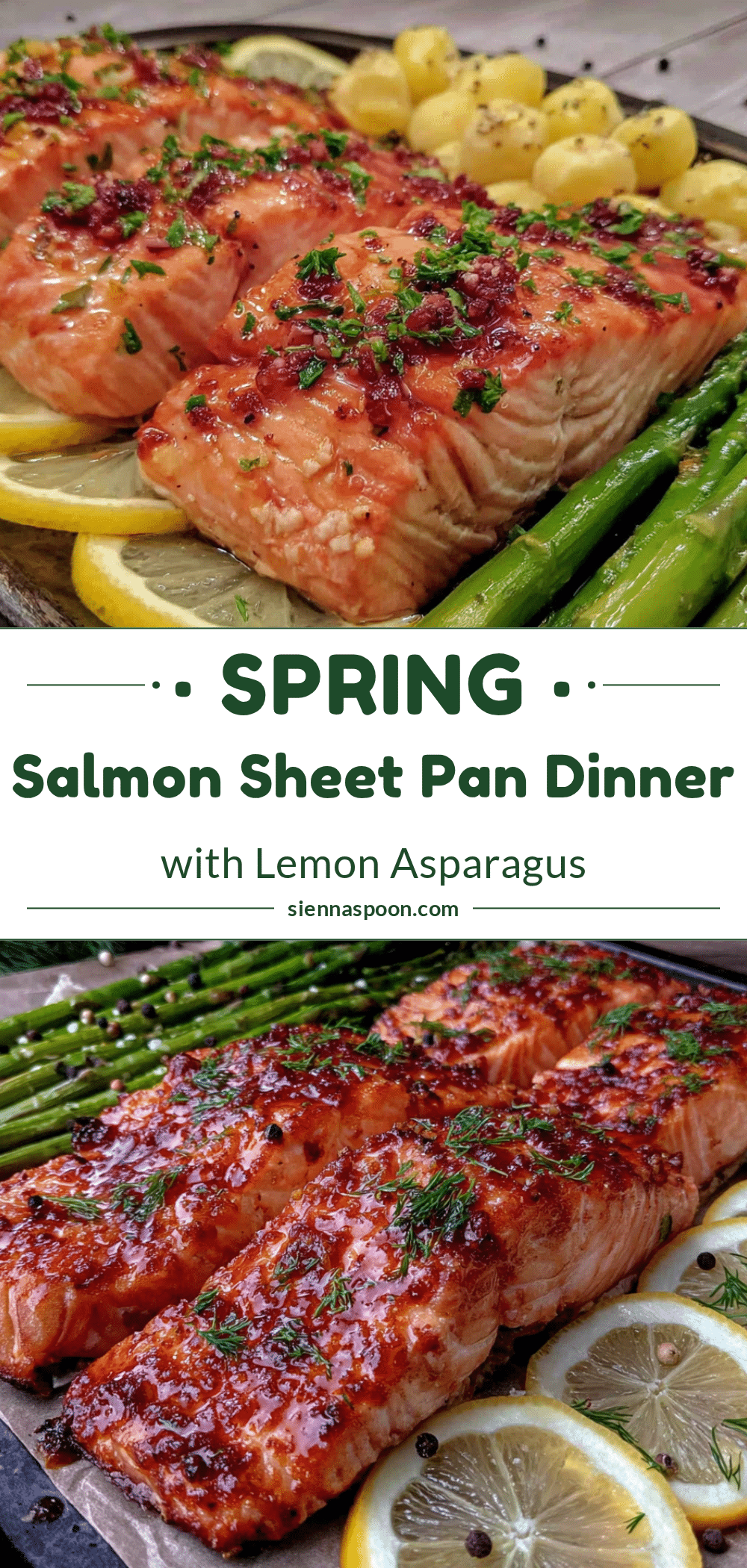
Easy Spring Salmon Sheet Pan Dinner with Lemon Asparagus

A quick and easy sheet pan dinner featuring flaky salmon, tender asparagus, and caramelized lemon slices. Perfect for busy weeknights, this spring-inspired meal comes together in about 30 minutes with minimal cleanup.
- Prep Time: 10 minutes
- Cook Time: 20-22 minutes
- Total Time: 30-32 minutes
- Yield: 4 servings 1x
- Category: Main Course
- Cuisine: American
Ingredients
- 4 salmon fillets (6 ounces each)
- 2 tablespoons olive oil
- 3 cloves garlic, minced
- 1 teaspoon salt
- ½ teaspoon black pepper
- 1 teaspoon dried dill (or 1 tablespoon fresh)
- 1 bunch asparagus (about 1 pound)
- 1 tablespoon olive oil
- ¼ teaspoon salt
- ¼ teaspoon black pepper
- 1 large lemon
- Fresh dill or parsley for garnish (optional)
- Flaky sea salt for finishing
Instructions
- Preheat your oven to 400°F (200°C). Position the rack in the upper third of the oven. Line a large rimmed baking sheet with parchment paper.
- Pat the salmon fillets dry with paper towels. Place them skin-side down on the prepared baking sheet, spacing evenly. Drizzle with 2 tablespoons olive oil, then sprinkle with minced garlic, 1 teaspoon salt, ½ teaspoon pepper, and the dill. Rub the seasoning all over the fillets.
- Arrange thin lemon rounds on top of and around the salmon fillets.
- Roast the salmon for 10 minutes.
- While the salmon roasts, snap off the woody ends of the asparagus. Toss the asparagus with 1 tablespoon olive oil, ¼ teaspoon salt, and ¼ teaspoon pepper.
- After 10 minutes, remove the pan from the oven. Arrange the seasoned asparagus around the salmon fillets in a single layer.
- Return the pan to the oven and roast for another 10-12 minutes, until the salmon is opaque and flakes easily, and the asparagus is bright green with some charred spots.
- As soon as the pan comes out, squeeze the remaining lemon half over everything. Sprinkle with flaky sea salt and fresh dill or parsley if using.
- Let it rest for 2-3 minutes before serving.
Notes
For best texture, let salmon sit at room temperature for 10 minutes before cooking. If asparagus is very thin, reduce roasting time by about 3 minutes. To reheat leftovers, use a 300°F oven for about 10 minutes.
Nutrition
- Serving Size: 1 salmon fillet with
- Calories: 400
- Sugar: 3.5
- Sodium: 650
- Fat: 24
- Saturated Fat: 4
- Carbohydrates: 9
- Fiber: 3.5
- Protein: 37
Keywords: salmon, sheet pan dinner, asparagus, lemon, spring, easy, weeknight dinner, healthy, gluten-free, dairy-free, low-carb, keto