Love this? Save it for later!
Share the inspiration with your friends
My friend Jen asked why I couldn’t just skip the long marinating step and toss everything in a hot pan. I started to explain why that wouldn’t work—then stopped. She had a point. I had been so stuck in my ways, convinced that Korean BBQ needed hours to soak up all that flavor. Honestly, I was a little embarrassed by how stubborn I was being.
So I tried it her way. I whisked together the sauce, sliced the beef, and let it sit for maybe ten minutes while I preheated the pan. The result? Some of the best Korean BBQ I’ve ever made. The meat was tender, the sauce caramelized perfectly, and the whole thing came together in under 30 minutes. I felt like I had been overcomplicating things for years.
That night, standing over the stove with the sweet and spicy aroma filling my tiny kitchen, I realized something. Sometimes the best cooking advice comes from someone who hasn’t learned all the rules yet. Jen didn’t know you were supposed to marinate for hours. She just knew she was hungry and wanted dinner fast. And honestly, isn’t that most of us on a Tuesday night?
These Quick Sweet and Spicy Korean BBQ Beef Skewers were born from that moment. They’re proof that you don’t need fancy techniques or hours of prep to get incredible flavor. You just need a good sauce, a hot pan, and maybe a friend who’s brave enough to question everything you think you know. I’ve made these skewers at least a dozen times since that night, and they never get old. The way the gochujang glaze bubbles up and turns sticky-sweet around the edges—it’s the kind of dinner that makes you forget you were tired in the first place.
Why You’ll Love This Recipe
Let me tell you why these skewers have become my go-to for busy weeknights. I’ve tested this recipe more times than I can count, tweaking the sauce ratio and the cooking time until everything hit just right. Here’s what makes it special:
- Quick & Easy: From start to table in under 30 minutes. No long marinating, no complicated steps. Perfect for those nights when you walk in the door starving.
- Simple Ingredients: You probably have most of these in your pantry right now. Soy sauce, brown sugar, garlic, and gochujang (Korean chili paste) are the stars. No specialty shopping trips required.
- Perfect for Weeknights: This is the definition of a weeknight win. Quick cleanup, minimal prep, and maximum flavor. It’s the kind of meal that makes you feel like you actually cooked, even when you’re short on time.
- Crowd-Pleaser: I’ve served these to picky eaters, spice-averse friends, and hardcore foodies. Everyone loves them. The sweetness balances the heat, so even kids ask for seconds.
- Unbelievably Delicious: The texture is what gets me every time. The beef gets caramelized on the outside while staying juicy inside. That sticky, slightly charred glaze is pure magic.
What makes this recipe different from all the others? It’s the technique. By skipping the long marinade and cooking the beef hot and fast, you get that perfect caramelization without the meat getting tough. The gochujang adds a depth of flavor that you just can’t get from regular chili sauce. It’s smoky, spicy, and a little sweet all at once. I’ve tried versions with sriracha and honey, and honestly, they don’t compare. This is the real deal, and it’s faster than takeout.
What Ingredients You Will Need
This recipe uses simple, everyday ingredients to create something truly special. Most of these are pantry staples in my kitchen, and they come together to deliver big, bold flavor without any fuss.
For the Beef and Skewers
- 1.5 pounds flank steak or sirloin, sliced thin against the grain (flank steak works best for tenderness)
- Wooden or metal skewers (if using wooden, soak them in water for 20 minutes first)
- 2 tablespoons vegetable oil, for cooking (use a neutral oil with high smoke point)
- 1 tablespoon sesame seeds, for garnish (toasted if you have them)
- 2 green onions, sliced thin, for garnish
For the Sweet and Spicy Sauce
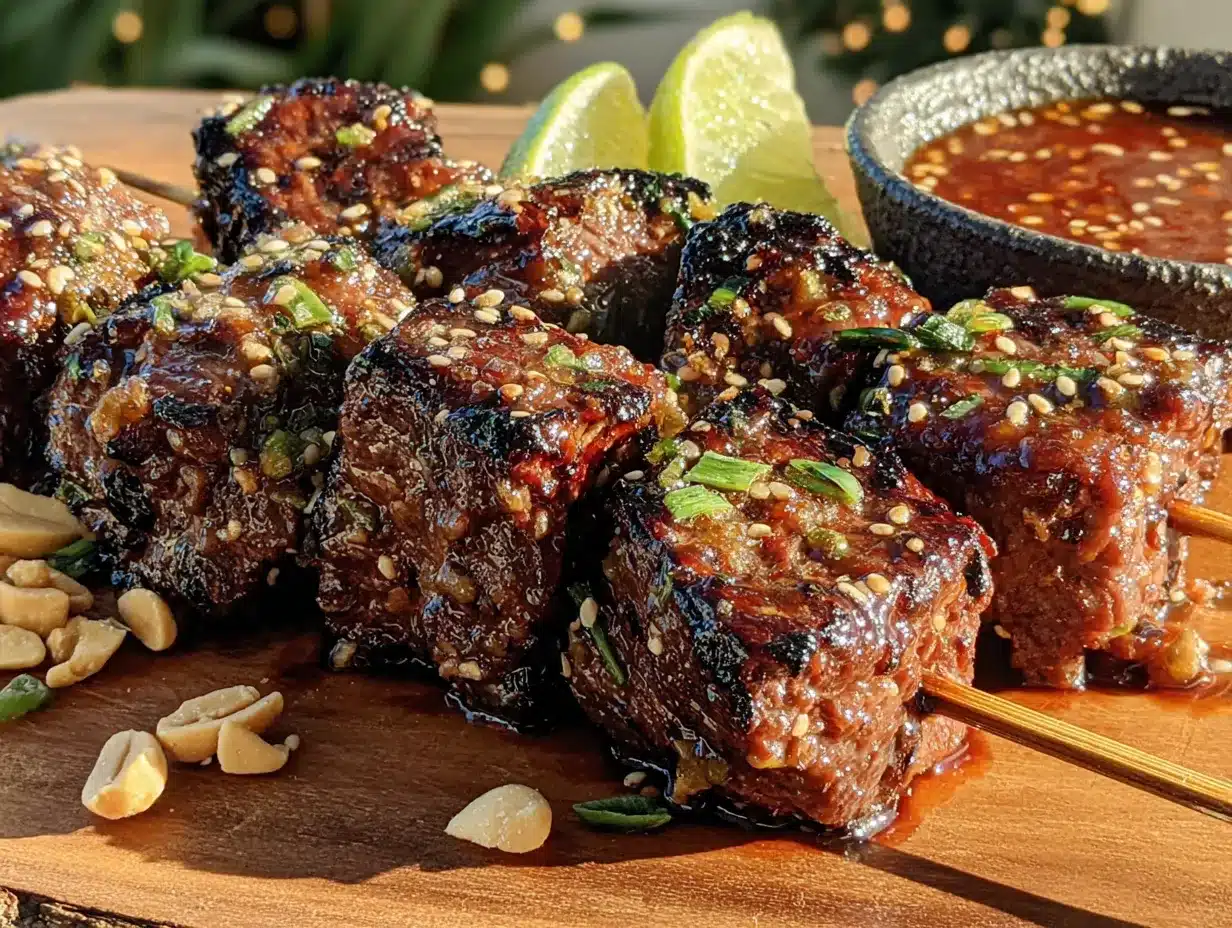
- 1/4 cup soy sauce (I recommend low-sodium to control the salt level)
- 3 tablespoons gochujang (Korean chili paste—find it in the Asian section or online)
- 2 tablespoons brown sugar, packed (adds sweetness and helps create that sticky glaze)
- 2 tablespoons honey (or substitute with maple syrup for a different flavor)
- 3 cloves garlic, minced (fresh is non-negotiable here)
- 1 tablespoon grated fresh ginger (don’t use the dried stuff—it makes a difference)
- 1 tablespoon rice vinegar (adds brightness and balances the richness)
- 1 teaspoon sesame oil (for that unmistakable Korean BBQ aroma)
- 1/2 teaspoon black pepper (freshly ground is best)
Ingredient Tips and Substitutions
Let me share a few things I’ve learned from making these skewers over and over. For the beef, flank steak is my top choice because it slices beautifully and stays tender when cooked quickly. Sirloin works in a pinch, but avoid tougher cuts like chuck. Slice against the grain—this is key for tenderness. If you can’t find gochujang, you can substitute with sriracha mixed with a little miso paste, but honestly, gochujang is worth seeking out. It has a fermented depth that nothing else quite replicates.
For a gluten-free version, use tamari instead of soy sauce. If you’re watching your sugar intake, you can reduce the brown sugar to 1 tablespoon and add an extra tablespoon of honey. And if you’re spice-sensitive, start with 2 tablespoons of gochujang instead of 3. The beauty of this recipe is how adaptable it is.
Equipment Needed
You don’t need a lot of fancy equipment for this recipe, which is part of what makes it so great for weeknights. Here’s what you’ll need:
- A large skillet or cast iron pan (cast iron gives the best sear, but any heavy-bottomed pan works)
- Wooden or metal skewers (if using wooden, soak them for 20 minutes to prevent burning)
- A sharp knife (for slicing the beef thin—a dull knife makes this job frustrating)
- Cutting board (preferably a large one for easy slicing)
- Small bowl (for mixing the sauce)
- Tongs (for flipping the skewers in the hot pan)
- Measuring spoons (for the sauce ingredients)
I’ve made these skewers in a non-stick pan when my cast iron was in the sink, and they turned out fine. The sear wasn’t quite as good, but the flavor was still there. If you don’t have skewers, you can just cook the beef strips directly in the pan—they’ll still taste amazing. My first batch was actually made without skewers because I forgot to buy them. Sometimes the best recipes come from improvisation.
Preparation Method
Let me walk you through this step by step. I’ve made these skewers so many times that I’ve got the process down to a science. Trust me when I say it’s easier than you think.
- Make the sauce (5 minutes): In a small bowl, whisk together the soy sauce, gochujang, brown sugar, honey, minced garlic, grated ginger, rice vinegar, sesame oil, and black pepper. Stir until the sugar dissolves and everything is well combined. The sauce should be thick but pourable. Taste it—you want a balance of sweet, salty, and spicy. Adjust the gochujang if you want more heat.
- Prepare the beef (10 minutes): Place the flank steak on your cutting board. Using a sharp knife, slice the beef against the grain into thin strips, about 1/4 inch thick. This is the most important step for tender meat. If the strips are too thick, they’ll be chewy. I like to partially freeze the steak for 15 minutes before slicing—it makes cutting thin strips much easier. Pat the beef dry with paper towels to remove excess moisture.
- Coat the beef (5 minutes): Place the sliced beef in a large bowl. Pour about half the sauce over the meat and toss to coat evenly. Let it sit for 10 minutes while you prep the rest. This quick marinade is all you need—the beef absorbs the flavor fast because it’s sliced so thin.
- Thread the skewers (5 minutes): Thread the beef strips onto the skewers, weaving them back and forth so they stay in place. Don’t overcrowd—leave a little space between pieces so they cook evenly. Each skewer should have about 4-5 strips. If you’re using wooden skewers, remember to soak them first.
- Heat the pan (2 minutes): Place your skillet over medium-high heat and add the vegetable oil. Let it get hot—you want the oil shimmering but not smoking. A hot pan is crucial for getting that beautiful caramelization. If the pan isn’t hot enough, the beef will steam instead of sear.
- Cook the skewers (6-8 minutes): Place the skewers in the hot pan in a single layer. Don’t crowd the pan—work in batches if needed. Cook for 3-4 minutes on the first side without moving them. You’ll know they’re ready to flip when the edges look browned and caramelized. Flip and cook for another 3-4 minutes on the other side. The beef should be cooked through but still juicy.
- Glaze and finish (2 minutes): In the last minute of cooking, brush the remaining sauce over the skewers. Let it bubble and thicken around the meat. This creates that sticky, glossy finish that makes these skewers so irresistible. Remove from the heat immediately.
- Garnish and serve (1 minute): Transfer the skewers to a serving platter. Sprinkle with sesame seeds and sliced green onions. Serve hot, straight from the pan.
A few things to watch for: If the sauce starts to burn in the pan, reduce the heat slightly. The sugars can caramelize quickly. Also, don’t overcook the beef—it should be tender and juicy, not dry. When in doubt, err on the side of slightly underdone. The residual heat will finish cooking it.
Cooking Tips & Techniques
I’ve had my share of failures with this recipe, and I want you to learn from them. Here are the things I wish someone had told me the first time I made Korean BBQ skewers.
Don’t skip the slicing step. I know it’s tempting to buy pre-sliced beef from the store, but those pieces are often uneven and too thick. Taking the time to slice your own flank steak against the grain makes a huge difference. I learned this the hard way after serving a batch of chewy, tough skewers that nobody wanted to eat.
Hot pan, cold meat. Make sure your pan is screaming hot before you add the beef. Cold meat hitting a hot pan creates that beautiful sear. If you add the beef to a lukewarm pan, it will release its juices and steam instead of caramelizing. I’ve made this mistake more times than I care to admit.
Work in batches. If you crowd the pan, the temperature drops and the beef steams. Cook the skewers in batches if necessary. It adds a few extra minutes but the texture is worth it. I usually cook 4-5 skewers at a time in my 12-inch skillet.
Use the sauce wisely. Reserve some sauce for glazing at the end. If you use all the sauce for marinating, you miss out on that final sticky layer. I learned this after making a batch that was flavorful but not glossy. The final brush of sauce is what gives these skewers their signature look and taste.
Multitask like a pro. While the beef is marinating, prep your garnishes and set the table. While the first batch cooks, thread the second batch onto skewers. This recipe moves fast, so having everything ready makes the process smooth and stress-free.
Variations & Adaptations
One of the things I love about this recipe is how versatile it is. Here are some variations I’ve tried and loved.
Chicken version: Swap the beef for boneless, skinless chicken thighs. Slice them thin and follow the same method. Chicken thighs stay juicier than breasts, which is important for quick cooking. I’ve made this for friends who don’t eat red meat, and it’s always a hit.
Vegetarian option: Use extra-firm tofu or portobello mushrooms instead of beef. Press the tofu well to remove excess moisture, then slice into strips. The sauce works beautifully with both options. I’ve even used this sauce on grilled eggplant slices—amazing.
Spice level adjustment: For a milder version, use 2 tablespoons of gochujang and add an extra tablespoon of honey. For extra heat, add 1 teaspoon of gochugaru (Korean chili flakes) or a splash of sriracha. My husband likes it hot, so I sometimes double the gochujang for his batch.
Oven-baked method: If you don’t want to stand over the stove, arrange the skewers on a baking sheet lined with foil. Broil on high for 4-5 minutes per side, brushing with sauce halfway through. This is great for feeding a crowd.
Grilled version: These skewers are fantastic on the grill. Cook over medium-high heat for 3-4 minutes per side. The smoky char adds another layer of flavor that’s hard to beat. I make these every summer for backyard barbecues.
Serving & Storage Suggestions
These skewers are best served hot, straight from the pan. The glaze is at its stickiest and most delicious when fresh. Here’s how I like to serve them.
Serving temperature: Serve immediately while the beef is hot and the glaze is glossy. If you’re making them for a party, keep them warm in a low oven (200°F) on a baking sheet for up to 20 minutes.
What to serve with them: I love these with steamed jasmine rice and a simple cucumber salad. The cool, crunchy cucumber balances the heat of the sauce. A side of kimchi is also perfect. For a low-carb option, serve over cauliflower rice or in lettuce wraps with sliced radishes and carrots.
Storage: Leftover skewers can be stored in an airtight container in the refrigerator for up to 3 days. The beef will lose some of its crispness, but the flavor stays great. I often make extra on purpose for lunch the next day.
Reheating: The best way to reheat is in a hot skillet for 1-2 minutes per side. This restores some of the caramelization. You can also use the microwave, but the texture won’t be as good. If you’re reheating in the microwave, cover with a damp paper towel to prevent drying out.
Freezing: You can freeze the cooked skewers for up to 2 months. Place them in a single layer on a baking sheet to freeze, then transfer to a freezer bag. Reheat directly from frozen in a hot skillet for 4-5 minutes per side.
Nutritional Information & Benefits
Here’s a rough breakdown for one serving (about 2 skewers, without rice or sides):
- Calories: 320
- Protein: 28g
- Fat: 14g
- Carbohydrates: 18g
- Fiber: 1g
- Sugar: 14g
- Sodium: 680mg
This recipe is a great source of protein and iron from the beef. Gochujang is made from fermented soybeans and chili peppers, which means it contains probiotics that are good for gut health. Ginger and garlic both have anti-inflammatory properties. While this isn’t a low-sodium dish, using low-sodium soy sauce helps keep it in check.
If you’re watching your sugar intake, you can reduce the honey and brown sugar by half. The flavor will be less sweet but still delicious. For a lower-fat option, use sirloin instead of flank steak and trim any visible fat.
Conclusion
These Quick Sweet and Spicy Korean BBQ Beef Skewers have become a staple in my kitchen for good reason. They’re fast, they’re forgiving, and they deliver restaurant-quality flavor without the wait. Whether you’re cooking for a family on a Tuesday night or feeding friends at a weekend gathering, these skewers never disappoint.
I love how this recipe taught me to question my own assumptions about cooking. Sometimes the best results come from breaking the rules. So go ahead—skip the long marinade, crank up the heat, and see what happens. I bet you’ll be surprised.
Have you tried these skewers? I’d love to hear how they turned out for you. Drop a comment below and let me know if you made any substitutions or variations. And if you loved them, share this recipe with someone who needs a quick weeknight win. Happy cooking!
Frequently Asked Questions
Can I make these skewers ahead of time?
Yes! You can prepare the sauce and slice the beef up to a day in advance. Store them separately in the refrigerator. When you’re ready to cook, just toss the beef in the sauce, thread the skewers, and cook as directed. This makes weeknight dinners even faster.
What can I use instead of gochujang?
If you can’t find gochujang, mix 2 tablespoons of sriracha with 1 tablespoon of miso paste and a pinch of sugar. It won’t be exactly the same, but it will give you a similar sweet-spicy-fermented flavor. You can also use sambal oelek in a pinch.
How do I keep the beef from sticking to the pan?
Make sure your pan is hot enough and you’ve added enough oil. The beef should sizzle immediately when it hits the pan. If it sticks, it probably needs another minute before you try to flip it. Using a well-seasoned cast iron pan also helps prevent sticking.
Can I use a different cut of beef?
Absolutely. Sirloin, ribeye, or even top round work well. The key is to slice the beef thin against the grain. Tougher cuts like chuck or brisket aren’t ideal for this quick-cooking method. Stick with cuts that are naturally tender.
How do I make this recipe less spicy?
Reduce the gochujang to 1-2 tablespoons and add an extra tablespoon of honey or brown sugar. You can also add a splash of water to the sauce to dilute the heat. For a completely mild version, use gochujang’s milder cousin, ssamjang, instead.
Pin This Recipe!
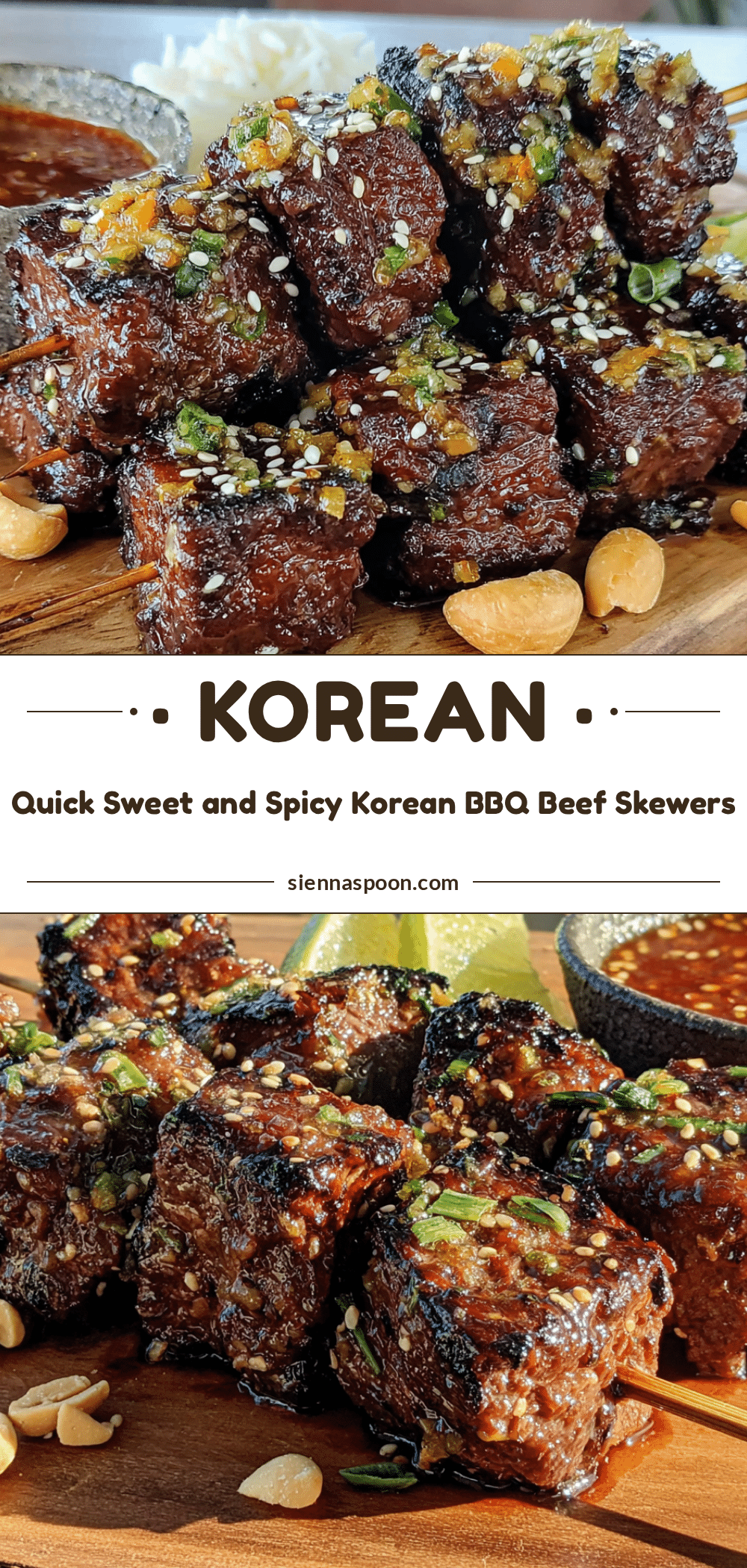
Quick Sweet and Spicy Korean BBQ Beef Skewers
These Quick Sweet and Spicy Korean BBQ Beef Skewers are ready in under 30 minutes with no long marinating required. The gochujang glaze caramelizes perfectly, creating a sticky-sweet finish that’s perfect for busy weeknights.
- Prep Time: 15 minutes
- Cook Time: 10 minutes
- Total Time: 25 minutes
- Yield: 4 servings 1x
- Category: Main Course
- Cuisine: Korean
Ingredients
- 1.5 pounds flank steak or sirloin, sliced thin against the grain
- Wooden or metal skewers (if using wooden, soak in water for 20 minutes)
- 2 tablespoons vegetable oil
- 1 tablespoon sesame seeds, for garnish
- 2 green onions, sliced thin, for garnish
- 1/4 cup low-sodium soy sauce
- 3 tablespoons gochujang (Korean chili paste)
- 2 tablespoons brown sugar, packed
- 2 tablespoons honey
- 3 cloves garlic, minced
- 1 tablespoon grated fresh ginger
- 1 tablespoon rice vinegar
- 1 teaspoon sesame oil
- 1/2 teaspoon freshly ground black pepper
Instructions
- Make the sauce: In a small bowl, whisk together soy sauce, gochujang, brown sugar, honey, minced garlic, grated ginger, rice vinegar, sesame oil, and black pepper until sugar dissolves and well combined.
- Prepare the beef: Slice flank steak against the grain into thin strips, about 1/4 inch thick. Pat dry with paper towels.
- Coat the beef: Place sliced beef in a large bowl. Pour about half the sauce over the meat and toss to coat evenly. Let sit for 10 minutes.
- Thread the skewers: Thread beef strips onto skewers, weaving back and forth. Leave space between pieces. Each skewer should have about 4-5 strips.
- Heat the pan: Place a large skillet over medium-high heat and add vegetable oil. Heat until shimmering but not smoking.
- Cook the skewers: Place skewers in the hot pan in a single layer. Cook for 3-4 minutes on the first side without moving, then flip and cook for another 3-4 minutes.
- Glaze and finish: In the last minute of cooking, brush remaining sauce over the skewers. Let it bubble and thicken. Remove from heat immediately.
- Garnish and serve: Transfer skewers to a serving platter. Sprinkle with sesame seeds and sliced green onions. Serve hot.
Notes
For best results, slice beef against the grain and ensure the pan is hot before adding the skewers. Work in batches to avoid crowding. Reserve some sauce for glazing at the end. For a gluten-free version, use tamari instead of soy sauce.
Nutrition
- Serving Size: 2 skewers
- Calories: 320
- Sugar: 14
- Sodium: 680
- Fat: 14
- Saturated Fat: 4
- Carbohydrates: 18
- Fiber: 1
- Protein: 28
Keywords: Korean BBQ, beef skewers, quick weeknight dinner, gochujang, sweet and spicy, easy recipe