Love this? Save it for later!
Share the inspiration with your friends
Christmas dinner was in six hours and I had a five-pound prime rib roast sitting in my fridge, completely raw. My mother-in-law, who had flown in from three states away, kept asking if she could help with “the complicated roast.” I told her I had it handled. I did not have it handled. I’d planned to use the oven, but my daughter decided that morning was the perfect time to practice her new cookie-baking hobby, and the oven was occupied until further notice. I stood there, staring at this expensive, beautiful hunk of beef, feeling that familiar knot of panic tighten in my chest.
Maybe you’ve been there—the moment where you realize the fancy holiday meal you promised is about to become a takeout situation. I looked at my slow cooker, that dusty appliance I usually only pull out for pulled pork on game days, and had a wild thought. Could this thing actually handle prime rib? I mean, the slow cooker is basically a low-heat, humid environment. Isn’t that exactly what a tough cut of meat needs to become tender? I figured I had nothing to lose. If I ruined it, we’d order pizza and I’d never speak of the expensive roast again.
I rubbed that roast down with a garlic herb butter I threw together in a fit of desperation, seared it in a screaming hot pan until the kitchen smelled like a steakhouse, and then gently nestled it into the slow cooker. I set it on low, crossed my fingers, and prayed to the kitchen gods. Six hours later, I pulled out a roast that was so tender, so perfectly medium-rare, so infused with garlicky, herby goodness that my mother-in-law asked for the recipe three times. Honestly, it was the best prime rib I’d ever made, and I barely did anything. That’s the thing about this recipe—it makes you look like a hero without the stress.
Why You’ll Love This Recipe
Let me tell you why this slow cooker prime rib has become my go-to for every special occasion. I’ve tested this method at least a dozen times, tweaking the butter ratios and the cooking times until it was absolutely foolproof. This isn’t just another roast recipe—it’s the one that saves your holiday and makes you feel like a culinary genius.
- Set It and Forget It : The slow cooker does all the heavy lifting. You get perfectly cooked prime rib without hovering over an oven or worrying about hot spots. It’s the ultimate hands-off holiday meal.
- Incredibly Juicy Results : The low, slow cooking environment locks in every drop of moisture. This prime rib is so tender it practically falls apart with a fork, but it still slices beautifully for serving.
- Simple, High-Impact Ingredients : You need a handful of pantry staples—garlic, fresh herbs, butter, salt, and pepper. No weird specialty items or expensive spice blends required.
- Perfect for Entertaining : This frees up your oven for all the side dishes. Your stuffing, roasted vegetables, and rolls can have the oven while your star main course cooks quietly on the counter.
- Guaranteed Crowd-Pleaser : I’ve served this to picky eaters, steak snobs, and even a chef friend. Every single person went back for seconds. The garlic herb butter creates a crust that is absolutely unforgettable.
What makes this recipe different from all the others? It’s the combination of a hard sear and the gentle slow cooker environment. Most slow cooker prime rib recipes skip the sear or do it half-heartedly. I insist on a blazing hot cast iron skillet to create that deep, brown crust. Then, the slow cooker finishes the job, breaking down the connective tissue while keeping the center perfectly pink. It’s not just good—it’s the kind of roast that makes you close your eyes after the first bite and forget everyone else at the table for a moment.
What Ingredients You Will Need
This recipe uses simple, high-quality ingredients to deliver restaurant-worthy flavor without the fuss. Most of these are probably already in your kitchen or are easy to find at any grocery store. Let’s break down what you need and why each ingredient matters.
For the Garlic Herb Butter
- 1/2 cup unsalted butter, softened to room temperature (I prefer Kerrygold for its rich, creamy taste, but any good quality butter works)
- 6 cloves garlic, minced finely (fresh garlic is non-negotiable here—skip the jarred stuff for the best flavor)
- 2 tablespoons fresh rosemary, chopped (dried rosemary can be used in a pinch, but fresh gives a much brighter, more aromatic result)
- 2 tablespoons fresh thyme leaves, chopped (again, fresh is best, but use 2 teaspoons dried if that’s what you have)
- 1 tablespoon fresh parsley, chopped (adds a fresh, clean note to the butter)
- 1 teaspoon kosher salt (Diamond Crystal is my go-to for its clean taste and easy pinchability)
- 1/2 teaspoon black pepper, freshly ground
- 1/2 teaspoon red pepper flakes (optional, but adds a tiny kick that cuts through the richness)
For the Prime Rib
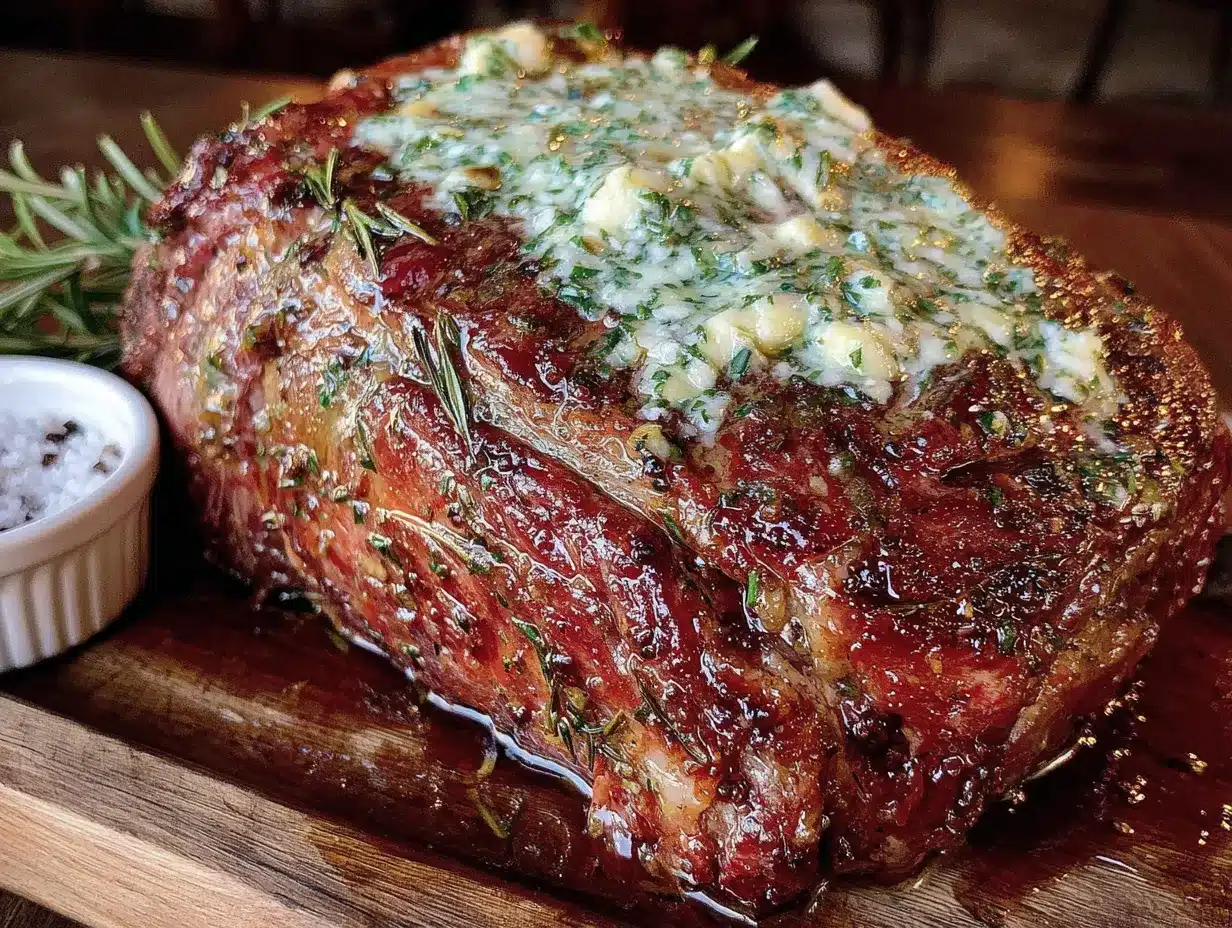
- 1 (4-5 pound) boneless prime rib roast (look for one with good marbling—the fat is what keeps it moist and tender. A ribeye roast works perfectly too)
- 2 tablespoons olive oil or avocado oil (for searing; use an oil with a high smoke point)
- 1 cup beef broth, low sodium (Better Than Bouillon beef base dissolved in water is my secret weapon for deep flavor)
- 1 tablespoon Worcestershire sauce (adds umami and depth to the cooking liquid)
- Salt and pepper, for seasoning the roast before searing
Ingredient Selection Tips: When choosing your prime rib, look for a roast that has a nice fat cap on top. That fat will render during cooking and baste the meat, keeping it incredibly juicy. If your roast is already tied, leave the twine on—it helps the roast hold its shape during cooking. For the best results, take your roast out of the fridge 30-45 minutes before you start cooking to let it come to room temperature. This ensures more even cooking.
Substitution Guidance: If you don’t have fresh herbs, use half the amount of dried herbs. You can also swap the rosemary for oregano or marjoram. For a dairy-free version, use vegan butter or ghee, though the flavor will be slightly different. No Worcestershire sauce? A splash of soy sauce or fish sauce works beautifully in its place.
Equipment Needed
You don’t need a fancy kitchen to pull off this recipe, but having the right tools makes the process smoother. Here’s what you’ll need:
- 6-quart or larger slow cooker (this is essential—your roast needs room to fit without touching the lid. I use a Cuisinart 6-quart model and it works perfectly)
- Cast iron skillet or heavy-bottomed pan (for searing the roast. A good sear is non-negotiable for flavor, and cast iron holds heat best)
- Meat thermometer (an instant-read thermometer is your best friend here. I recommend the Thermapen for accuracy, but any reliable digital thermometer will work)
- Tongs (long, sturdy tongs make flipping the hot roast much safer)
- Cutting board (a large one with a groove to catch juices is ideal)
- Sharp carving knife (a long, thin knife makes slicing the tender roast much easier)
- Aluminum foil (for resting the roast after cooking)
- Small bowl (for mixing the garlic herb butter)
Budget-Friendly Alternatives: If you don’t have a cast iron skillet, any heavy-bottomed stainless steel or non-stick pan will work for searing. Just make sure it’s hot enough. No meat thermometer? You can check doneness by touch, but I strongly recommend investing in one—it’s the difference between perfect prime rib and an expensive mistake. A slow cooker liner can make cleanup a breeze, especially if you’re serving a crowd.
Preparation Method
Alright, let’s get cooking. This method is straightforward, but I’ve included all the little details that make the difference between a good roast and a legendary one. Take your time with the searing step—it’s where all the flavor lives.
- Make the garlic herb butter: In a small bowl, combine the softened butter, minced garlic, chopped rosemary, thyme, parsley, kosher salt, black pepper, and red pepper flakes if using. Mix everything together with a fork until it’s well combined and looks like a beautiful, fragrant paste. Set it aside at room temperature. (Pro tip: If your butter is too cold to mix, microwave it for 5-10 seconds—just don’t melt it.)
- Prepare the prime rib: Pat the prime rib roast dry with paper towels. This is crucial—moisture is the enemy of a good sear. Season the roast generously on all sides with salt and pepper. Don’t be shy here; you want a good crust. Let the roast sit at room temperature for 30 minutes while you get your searing station ready.
- Sear the roast: Heat your cast iron skillet over high heat for a good 3-4 minutes until it’s smoking hot. Add the olive oil and swirl to coat. Carefully place the prime rib in the pan—it should sizzle loudly. Sear for 2-3 minutes per side, including the ends, until you have a deep, dark brown crust on all surfaces. This is where the magic happens, so don’t rush it. Use your tongs to hold the roast steady while searing the ends.
- Apply the herb butter: Transfer the seared roast to a cutting board or plate. Let it cool for just 2 minutes—you don’t want to burn your hands. Then, using your hands (yes, get in there), rub the garlic herb butter all over the roast. Really work it into every nook and cranny. The butter will melt slightly from the residual heat, which is exactly what we want.
- Prepare the slow cooker: Pour the beef broth and Worcestershire sauce into the bottom of your slow cooker. This creates a humid environment that keeps the meat moist. Place the buttered prime rib into the slow cooker, fat side up. If your roast is tied, leave the twine on—it helps maintain its shape during cooking.
- Cook low and slow: Cover the slow cooker with the lid and cook on LOW for 5-6 hours for medium-rare (130-135°F internal temperature). For medium (140-145°F), cook for 6-7 hours. I strongly recommend checking the internal temperature with your meat thermometer starting at the 5-hour mark. Every slow cooker runs a little differently, so trust your thermometer over the clock.
- Rest the roast: This is the hardest part—waiting. When the roast reaches your desired temperature, carefully transfer it to a cutting board. Tent it loosely with aluminum foil and let it rest for 15-20 minutes. Do not skip this step. Resting allows the juices to redistribute throughout the meat, ensuring every slice is juicy and tender. If you cut into it too soon, all those beautiful juices will run out onto the cutting board.
- Make the au jus (optional but recommended): While the roast rests, pour the cooking liquid from the slow cooker through a fine-mesh strainer into a small saucepan. Skim off any excess fat from the top. Bring the liquid to a simmer over medium heat and let it reduce for 5-7 minutes until it’s slightly thickened and intensely flavorful. Season with salt and pepper to taste. This makes an incredible au jus for serving.
- Slice and serve: Remove the twine from the roast if it was tied. Using your sharp carving knife, slice the prime rib against the grain into 1/2-inch thick slices. The meat should be incredibly tender and slice like butter. Arrange the slices on a warm platter and spoon a little of the au jus over the top. Serve immediately with the remaining au jus on the side.
Cooking Tips & Techniques
I’ve made this recipe enough times to know exactly where things can go wrong. Let me share some hard-earned wisdom so your first attempt is a triumph.
The biggest mistake I see people make is skipping the sear. I get it—it’s an extra step, and you’re already using the slow cooker for convenience. But that deep brown crust is where the flavor lives. It’s not just about appearance; the Maillard reaction creates hundreds of flavor compounds that make your roast taste complex and rich. Don’t skip it. If you’re short on time, sear the roast the night before and refrigerate it, then apply the butter and cook the next day.
Another common pitfall is overcooking. Prime rib is an expensive cut, and it deserves your attention. I once got distracted by a phone call and let my roast cook for an extra hour. It was still good, but it wasn’t the showstopper it could have been. Set a timer for 5 hours and start checking the temperature. Remember, the roast will continue to cook while it rests, so pull it out about 5 degrees before your target temperature.
Let’s talk about multitasking. This recipe is perfect for holiday cooking because the slow cooker does the work while you focus on sides. Start your roast in the morning, then use the oven for your roasted vegetables, stuffing, and rolls. Everything finishes around the same time, and you’re not running around like a crazy person. I usually start my roast around 10 AM for a 5 PM dinner, and it’s always perfect.
For consistent results, invest in a good meat thermometer. I cannot stress this enough. The difference between a perfect medium-rare and a well-done roast is about 10 degrees and 20 minutes. An instant-read thermometer takes the guesswork out of the equation. I keep mine in the slow cooker for the last hour of cooking so I can monitor the temperature without opening the lid.
Variations & Adaptations
One of the best things about this recipe is how adaptable it is. Here are some of my favorite variations that I’ve tried over the years.
Herb Variations
Don’t have rosemary and thyme? Try a different herb combination. I’ve made this with a sage and garlic butter for a more earthy flavor profile, and it was incredible with mashed potatoes. You can also use a store-bought herb de Provence blend mixed into the butter for a French-inspired twist. Once, I ran out of fresh herbs entirely and used a tablespoon of dried Italian seasoning—it was surprisingly good and saved the day.
Spicy Kick Version
If you like a little heat, add a tablespoon of chipotle powder or smoked paprika to the herb butter. The smoky spice pairs beautifully with the rich beef. I tried this version for a game day gathering, and it was a huge hit. You can also add a teaspoon of cayenne pepper if you want something really fiery. Just be careful—a little goes a long way.
Low-Carb/Keto Adaptation
This recipe is already naturally low-carb, but if you’re on a keto diet, skip the Worcestershire sauce (which has a small amount of sugar) and use a sugar-free beef broth. The garlic herb butter is perfect for keto since it’s high in healthy fats. Serve it with roasted cauliflower or a big green salad instead of potatoes. I’ve made this for keto friends, and they always appreciate having a decadent, satisfying main course that fits their diet.
Different Cooking Methods
Don’t have a slow cooker? You can adapt this recipe for an Instant Pot. Sear the roast using the sauté function, then pressure cook on high for 60-70 minutes for a 4-pound roast, followed by a natural release. The texture will be slightly different—more like a pot roast than a traditional prime rib—but it’s still delicious. For the oven, roast at 450°F for 15 minutes to sear, then reduce to 325°F and cook until the internal temperature reaches 130°F, about 15-18 minutes per pound.
Serving & Storage Suggestions
This prime rib is the star of any meal, but the right accompaniments make it shine even brighter. Here’s how I like to serve and store it.
Serving: Serve the prime rib slices on a warm platter, arranged slightly overlapping. Spoon a little of the au jus over the top to keep the slices moist and glossy. I love to garnish with a few sprigs of fresh rosemary and thyme for a beautiful presentation. The roast is best served immediately after resting, while it’s still warm and the butter is meltingly delicious.
Perfect Pairings: This prime rib pairs beautifully with classic sides. Creamy mashed potatoes are a no-brainer—they soak up the au jus perfectly. Roasted asparagus or green beans add a fresh, bright contrast to the rich meat. A simple arugula salad with lemon vinaigrette cuts through the richness beautifully. For drinks, a full-bodied red wine like a Cabernet Sauvignon or a Malbec is a classic choice. If you’re serving beer, go for a dark stout or a rich porter.
Storage: Leftover prime rib is a gift. Let the roast cool completely, then wrap it tightly in plastic wrap or aluminum foil. Store it in the refrigerator for up to 4 days. The flavors actually deepen overnight, making leftovers even more delicious. I often slice the leftover roast and use it for sandwiches the next day—try it on a crusty roll with horseradish sauce and arugula. It’s almost better than the original meal.
Reheating: The key to reheating prime rib is to do it gently. You don’t want to dry it out. Place the slices in a baking dish with a little beef broth or au jus, cover with foil, and warm in a 300°F oven for 10-15 minutes. You can also reheat individual slices in a skillet over medium-low heat with a splash of broth. Avoid the microwave if possible—it tends to make the meat tough and rubbery.
Freezing: You can freeze cooked prime rib for up to 3 months. Slice the roast first, then wrap individual portions tightly in plastic wrap and place them in a freezer-safe bag. When you’re ready to eat, thaw in the refrigerator overnight and reheat using the gentle oven method above. The texture won’t be quite as perfect as fresh, but it’s still a wonderful treat to have on hand.
Nutritional Information & Benefits
While prime rib is definitely a treat, it does offer some nutritional benefits when enjoyed in moderation. Here’s a breakdown of what you’re getting in a typical 6-ounce serving.
| Nutrient | Amount per Serving (6 oz) |
|---|---|
| Calories | 450-550 |
| Protein | 45-50g |
| Fat | 30-35g |
| Saturated Fat | 12-15g |
| Cholesterol | 130-150mg |
| Sodium | 500-700mg (varies with seasoning) |
| Iron | 15-20% of Daily Value |
| Vitamin B12 | 80-100% of Daily Value |
Health Benefits: Prime rib is an excellent source of high-quality protein, which is essential for muscle repair and growth. It’s also rich in iron, which supports healthy blood oxygen levels, and vitamin B12, which is crucial for nerve function and energy production. The fat content, while high, includes beneficial monounsaturated fats and conjugated linoleic acid (CLA), which has been linked to some health benefits in moderation.
Dietary Considerations: This recipe is naturally gluten-free, low-carb, and keto-friendly. It’s also suitable for paleo diets. The main allergens are dairy (butter) and potentially sulfites in the Worcestershire sauce. For a dairy-free version, use ghee or a high-quality vegan butter. Always check your specific ingredient labels if you have allergies or sensitivities.
My personal perspective? This is a special occasion meal, and I believe in enjoying it fully without guilt. Pair it with plenty of vegetables, watch your portion sizes, and savor every bite. Food is about joy and connection, and this prime rib delivers both.
Conclusion
This slow cooker prime rib with garlic herb butter has saved my holidays more times than I can count. It’s the recipe that makes you look like a culinary hero while you actually spend most of your time relaxing with your guests. The deep, rich flavor from the sear, the tender, juicy meat from the slow cooker, and the aromatic garlic herb butter come together to create something truly special.
I encourage you to make this recipe your own. Try different herb combinations, play with the spice level, or experiment with different sides. The beauty of this dish is that it’s forgiving and adaptable. Whether you’re cooking for a Christmas feast, a birthday dinner, or just a Sunday dinner that feels fancy, this prime rib delivers every single time.
I’d love to hear how yours turns out! Drop a comment below and let me know what variations you tried, or share a photo of your beautiful roast. Don’t forget to pin this recipe for later and share it with your friends who need a stress-free holiday main course. Happy cooking, friend—you’ve got this.
Frequently Asked Questions
Can I use a frozen prime rib in the slow cooker?
I strongly recommend against it. Cooking a frozen roast in a slow cooker can lead to uneven cooking and keep the meat in the “danger zone” temperature for too long, which is a food safety risk. Always thaw your prime rib completely in the refrigerator for 24-48 hours before cooking.
How do I get a crispy crust if I’m using a slow cooker?
The key is a hard sear before the roast goes into the slow cooker. Make sure your pan is smoking hot and the roast is patted completely dry. Don’t overcrowd the pan—sear one side at a time. If you want an even crispier crust after cooking, you can pop the finished roast under the broiler for 2-3 minutes, but watch it carefully so it doesn’t burn.
Can I cook this on HIGH instead of LOW?
Technically yes, but I don’t recommend it. Cooking on HIGH will cook the roast faster, but it won’t be as tender or evenly cooked. Low and slow is the way to go for prime rib—it allows the connective tissue to break down gently while keeping the center perfectly pink. If you’re in a real time crunch, you can cook on HIGH for 3-4 hours, but check the temperature frequently.
What if my roast is bigger or smaller than 4-5 pounds?
The cooking time will vary based on the size of your roast. For a 3-pound roast, start checking at 4 hours. For a 6-7 pound roast, it may need 6-7 hours. Always rely on your meat thermometer rather than the clock. The internal temperature is the only true indicator of doneness.
Can I make the garlic herb butter ahead of time?
Absolutely! This is a great make-ahead step. Prepare the butter up to 3 days in advance and store it in the refrigerator. Let it come to room temperature for about 30 minutes before you’re ready to use it so it’s spreadable. You can also freeze the butter for up to 3 months—just wrap it tightly in plastic wrap and thaw in the refrigerator overnight.
Pin This Recipe!
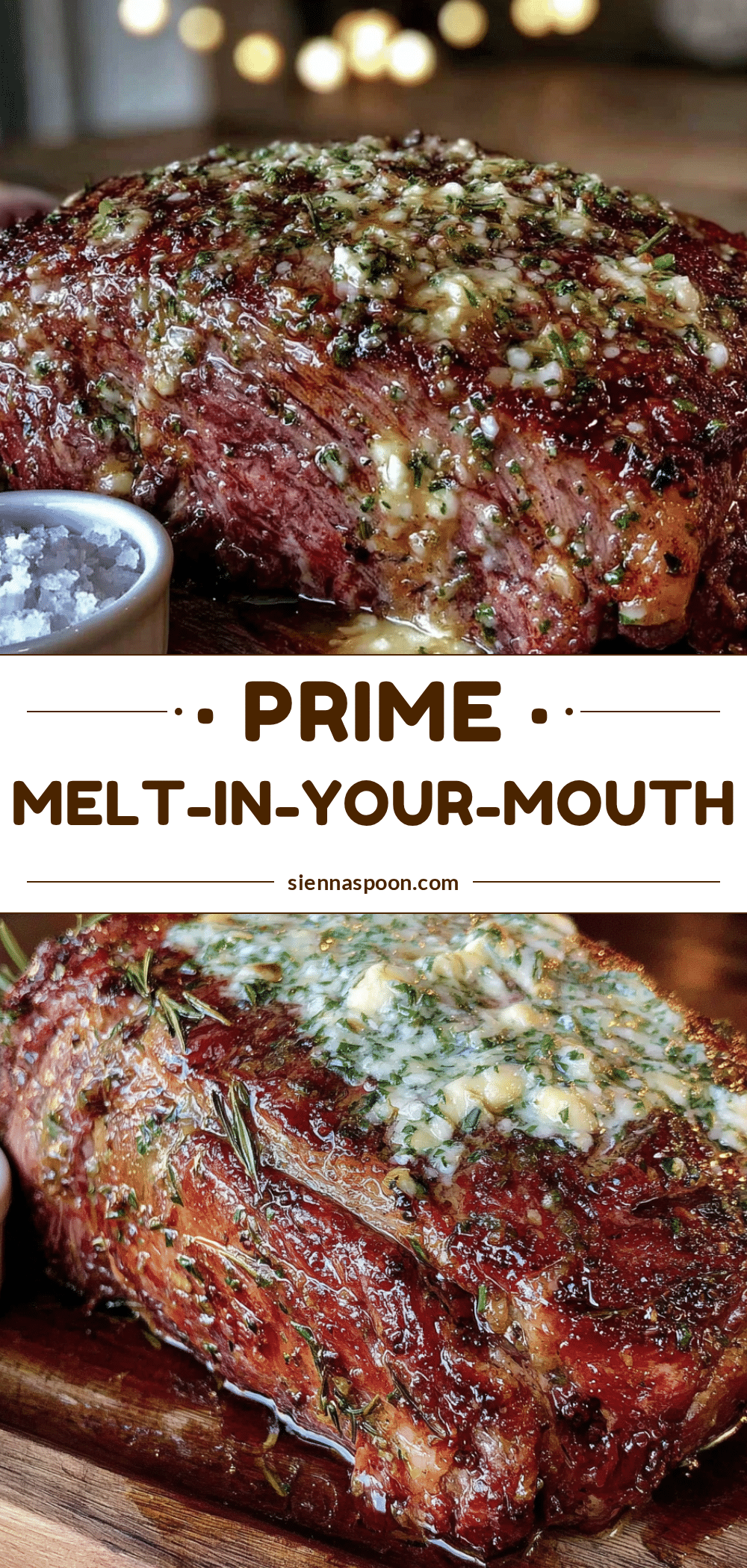
Perfect Slow Cooker Prime Rib with Garlic Herb Butter Recipe
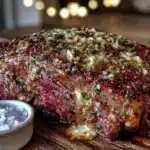
This slow cooker prime rib with garlic herb butter is incredibly tender, juicy, and infused with garlicky, herby goodness. It’s the perfect stress-free holiday main course that makes you look like a culinary hero.
- Prep Time: 30 minutes
- Cook Time: 5-6 hours
- Total Time: 5 hours 30 minutes to 6 hours 30 minutes
- Yield: 8 servings 1x
- Category: Main Course
- Cuisine: American
Ingredients
- 1/2 cup unsalted butter, softened
- 6 cloves garlic, minced
- 2 tablespoons fresh rosemary, chopped
- 2 tablespoons fresh thyme leaves, chopped
- 1 tablespoon fresh parsley, chopped
- 1 teaspoon kosher salt
- 1/2 teaspoon black pepper, freshly ground
- 1/2 teaspoon red pepper flakes (optional)
- 1 (4-5 pound) boneless prime rib roast
- 2 tablespoons olive oil or avocado oil
- 1 cup low sodium beef broth
- 1 tablespoon Worcestershire sauce
- Salt and pepper, for seasoning
Instructions
- Make the garlic herb butter: In a small bowl, combine the softened butter, minced garlic, chopped rosemary, thyme, parsley, kosher salt, black pepper, and red pepper flakes if using. Mix until well combined and set aside at room temperature.
- Prepare the prime rib: Pat the prime rib roast dry with paper towels. Season generously on all sides with salt and pepper. Let sit at room temperature for 30 minutes.
- Sear the roast: Heat a cast iron skillet over high heat for 3-4 minutes until smoking hot. Add the olive oil and swirl to coat. Carefully place the prime rib in the pan and sear for 2-3 minutes per side, including the ends, until a deep, dark brown crust forms.
- Apply the herb butter: Transfer the seared roast to a cutting board. Let cool for 2 minutes, then rub the garlic herb butter all over the roast, working it into every nook and cranny.
- Prepare the slow cooker: Pour the beef broth and Worcestershire sauce into the bottom of the slow cooker. Place the buttered prime rib into the slow cooker, fat side up.
- Cook low and slow: Cover and cook on LOW for 5-6 hours for medium-rare (130-135°F internal temperature) or 6-7 hours for medium (140-145°F). Check internal temperature with a meat thermometer starting at the 5-hour mark.
- Rest the roast: Carefully transfer the roast to a cutting board. Tent loosely with aluminum foil and let rest for 15-20 minutes.
- Make the au jus (optional): Pour the cooking liquid through a fine-mesh strainer into a small saucepan. Skim off excess fat. Bring to a simmer over medium heat and reduce for 5-7 minutes until slightly thickened. Season with salt and pepper to taste.
- Slice and serve: Remove twine if tied. Slice the prime rib against the grain into 1/2-inch thick slices. Arrange on a warm platter, spoon a little au jus over the top, and serve immediately with remaining au jus on the side.
Notes
For best results, let the roast come to room temperature before cooking. Always rely on a meat thermometer for doneness. The roast will continue to cook while resting, so remove it from the slow cooker about 5 degrees before your target temperature. Leftovers can be stored in the refrigerator for up to 4 days or frozen for up to 3 months.
Nutrition
- Serving Size: 6 ounces
- Calories: 500
- Sugar: 1
- Sodium: 600
- Fat: 32.5
- Saturated Fat: 13.5
- Carbohydrates: 2
- Protein: 47.5
Keywords: slow cooker prime rib, prime rib recipe, garlic herb butter prime rib, holiday prime rib, easy prime rib, Christmas dinner, beef roast