Love this? Save it for later!
Share the inspiration with your friends
Hand me that mug, my neighbor said, not looking up from her garden. She was knee-deep in tomato plants, dirt smudged across her forehead, and I was standing on her porch complaining—loudly—about my latest protein shake disaster. I had been trying, for weeks, to find a dessert that actually tasted good and didn’t leave me feeling like I was chewing on cardboard. She laughed, wiped her hands on her jeans, and said, “You’re overthinking it. Cottage cheese. A mug. A microwave. Come back tomorrow.” I honestly thought she was joking. Cottage cheese in a cake? In a mug? In a microwave? I mean, I’ve made some questionable kitchen decisions in my time, but this sounded like a recipe for regret.
The next day, I showed up with a block of cream cheese as a backup plan—just in case. She handed me a half-empty tub of cottage cheese, a dusty bag of cocoa powder, and a mug with a chip in the rim. “Don’t overmix it,” she said, already walking back to her garden. I followed her instructions, though I honestly forgot the vanilla extract because I was too busy swatting at a bee. The microwave beeped, and I pulled out this little puffy dome of chocolate that smelled, well, like actual cake. I let it cool for maybe thirty seconds before digging in, and let me tell you—that first bite was a revelation. It was fudgy, rich, and somehow not dry. I texted her a photo, and she replied with a single thumbs-up emoji.
That mug cake became my little secret weapon. I tweaked it over the next few weeks—added a pinch of salt, swapped in a different sweetener, figured out the exact timing so it wouldn’t turn into a rubbery disc. Now, it’s the thing I make when I want dessert but don’t want to feel like I’ve derailed my whole day. Maybe you’ve been there—staring into your pantry, craving something chocolatey, but not wanting to commit to a full batch of brownies or a store-bought bar that’s basically just sugar and disappointment. This one’s for you. It’s fast, it’s forgiving, and honestly, it’s better than it has any right to be.
Why You’ll Love This Recipe
Let’s be real for a second. Most “healthy” desserts are a compromise. You trade flavor for macros, or texture for convenience. This mug cake? It doesn’t make you choose. I’ve tested this recipe more times than I care to admit—including one memorable attempt where I forgot the cocoa powder and ended up with a sad, beige puck. That failure taught me exactly how important each ingredient is. So trust me when I say this version is the real deal.
- Quick & Easy: From mug to mouth in under 5 minutes. No oven preheating, no complicated steps, no waiting around.
- Simple Ingredients: You probably have everything in your kitchen right now. Cottage cheese, cocoa powder, an egg, a little sweetener. That’s it.
- Perfect for Late-Night Cravings: When that chocolate urge hits at 10 PM, this is your answer. It’s portion-controlled and doesn’t leave you with a whole pan of brownies to eat.
- Crowd-Pleaser: I’ve made this for skeptical friends who swore they hated cottage cheese. Every single one of them asked for the recipe.
- Unbelievably Delicious: The texture is the star here. It’s dense, fudgy, and almost brownie-like—not at all what you’d expect from a protein-packed mug cake.
What makes this recipe different from every other mug cake out there? It’s the cottage cheese. Blended smooth, it adds protein and moisture without any weird aftertaste. The result is a cake that’s actually satisfying—not a dry, spongy disappointment. This isn’t just another version of a mug cake; it’s the one I keep coming back to, week after week.
There’s something special about a dessert that feels indulgent but doesn’t leave you feeling heavy or guilty. This recipe hits that sweet spot perfectly. It’s comfort food, reimagined for real life—healthier, faster, and honestly, more delicious than most of the boxed mixes I grew up on. Whether you’re impressing a friend with a quick treat or just treating yourself after a long day, this mug cake delivers.
What Ingredients You Will Need
This recipe relies on a handful of simple ingredients that work together to create something surprisingly decadent. The magic is in the blending—literally. Here’s what you’ll need and why each one matters.
- Cottage Cheese (1/4 cup, full-fat or low-fat): This is the backbone of the recipe. It provides protein, moisture, and a creamy texture when blended. I prefer full-fat for a richer result, but low-fat works fine too. Just make sure it’s small-curd and not overly watery—drain it slightly if needed.
- Egg (1 large): The egg gives structure and helps the cake rise in the microwave. Use a room-temperature egg if you can; it blends more smoothly. For a vegan option, a flax egg works but the texture will be a bit less fluffy.
- Unsweetened Cocoa Powder (2 tablespoons): This is where the chocolate flavor comes from. I use Dutch-process cocoa for a deeper, more mellow taste, but natural cocoa powder works perfectly too. Sift it if it’s lumpy—nobody wants a pocket of dry powder in their cake.
- Sweetener (1-2 tablespoons, to taste): You can use honey, maple syrup, agave, or a granulated sweetener like coconut sugar or monk fruit. I usually go with 1.5 tablespoons of maple syrup for a subtle sweetness that doesn’t overpower the cocoa. Adjust based on your preference.
- Vanilla Extract (1/2 teaspoon): A little vanilla rounds out the chocolate flavor and adds warmth. Don’t skip it—it makes a surprising difference. I use pure vanilla extract, but imitation works in a pinch.
- Salt (a pinch): Salt is non-negotiable in chocolate desserts. It enhances the cocoa flavor and balances the sweetness. I use fine sea salt.
- Optional Mix-Ins: A handful of chocolate chips, a teaspoon of peanut butter, or a few raspberries can take this mug cake to the next level. I often add a few dark chocolate chips on top before microwaving—they melt into little puddles of fudgy goodness.
For the best texture, I recommend blending the cottage cheese and egg together first until completely smooth. A small blender or immersion blender works perfectly. If you don’t have one, you can mash the cottage cheese with a fork until it’s mostly smooth, though the texture won’t be quite as uniform. I’ve tried both methods, and blending is definitely worth the extra thirty seconds.
One thing I learned the hard way: don’t use flavored cottage cheese. Stick with plain. The flavored ones have added sugar and often a weird aftertaste that doesn’t play well with cocoa. Trust me on this one.
Equipment Needed
You don’t need much for this recipe, which is honestly my favorite part. Here’s what you’ll need:
- Microwave-Safe Mug (12-ounce or larger): Size matters here. A 12-ounce mug gives the cake room to rise without spilling over. I’ve used smaller mugs and ended up with a mess in the microwave—learn from my mistakes. A wide, shallow mug works better than a tall, narrow one for even cooking.
- Small Blender or Immersion Blender: This is key for getting the cottage cheese smooth. A regular blender works too, but you’ll have to scrape down the sides. I use a small personal blender that I got for under $20, and it’s perfect for single-serving recipes like this.
- Measuring Spoons and Cups: Precision matters in mug cakes. Too much flour or cocoa, and you’ll get a dry, crumbly mess. Too little, and it won’t set properly.
- Spatula or Small Whisk: For mixing the dry ingredients into the wet. A fork works in a pinch, but a small whisk does a better job of incorporating the cocoa without lumps.
- Microwave: Obviously. Most microwaves are around 900-1200 watts. If yours is more powerful, reduce the cooking time by 10-15 seconds. If it’s less powerful, add a few seconds. It takes some trial and error, but once you nail the timing, it’s consistent every time.
If you don’t have a blender, you can press the cottage cheese through a fine-mesh sieve or mash it thoroughly with a fork. The texture won’t be as silky, but it’ll still work. I’ve done it that way when traveling, and honestly, the little curds just add a bit of texture—some people even prefer it.
Preparation Method
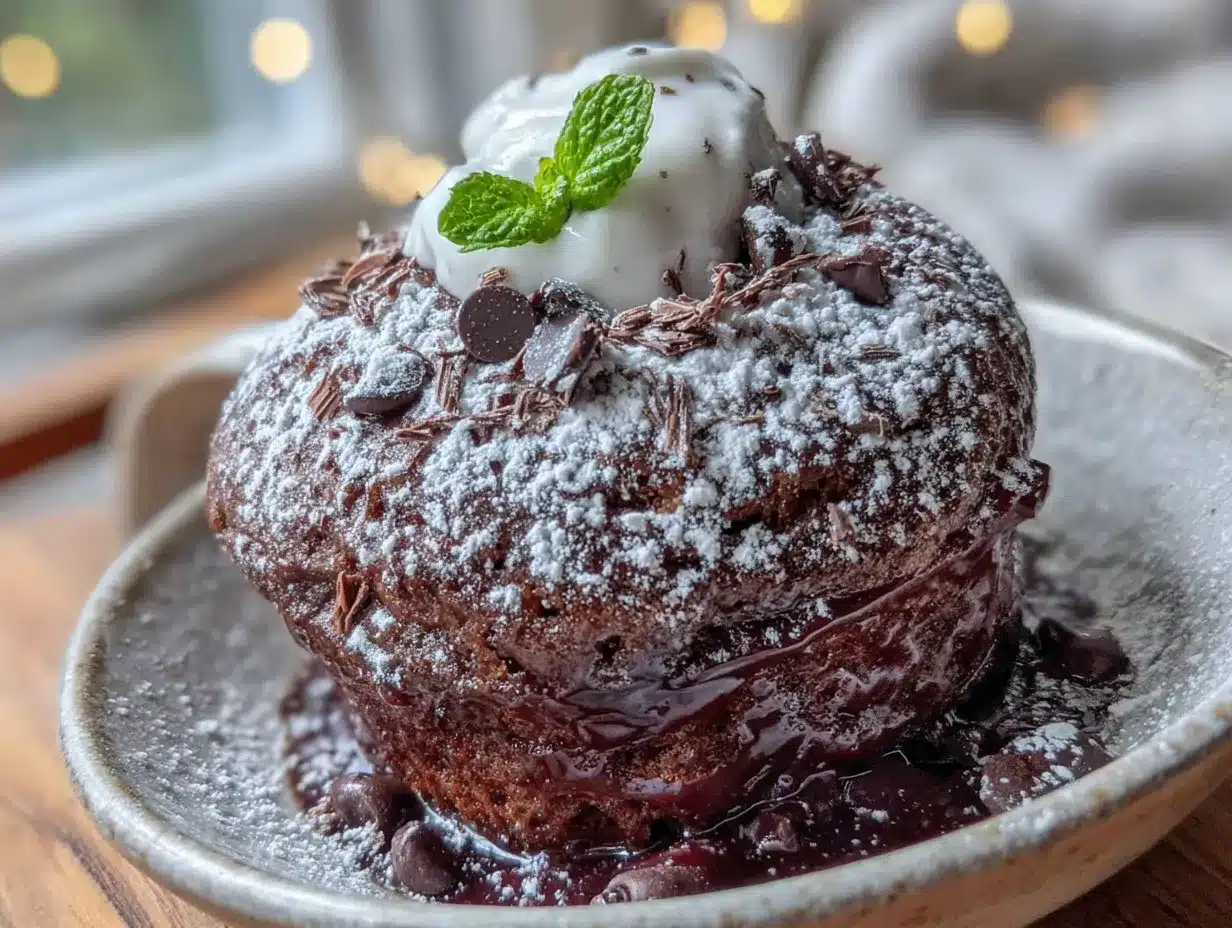
- Blend the wet ingredients: In your small blender, combine the cottage cheese, egg, sweetener, and vanilla extract. Blend on high for about 20-30 seconds, until the mixture is completely smooth and no curds remain. Scrape down the sides if needed. The mixture should look like a thin, pale milkshake. If it’s too thick, add a teaspoon of water or milk.
- Add the dry ingredients: Pour the blended mixture into your mug. Add the cocoa powder and salt on top. Use a small whisk or fork to stir everything together until no dry streaks remain. Don’t overmix—about 15-20 strokes is enough. Overmixing can make the cake tough. You want a smooth, dark batter that’s slightly thinner than traditional cake batter.
- Fold in optional mix-ins: If you’re adding chocolate chips, peanut butter, or berries, gently fold them in now. I like to save a few chocolate chips to sprinkle on top—they melt into little pools of chocolate that make the cake look even more decadent.
- Microwave on high: Place the mug in the microwave and cook on high for 60-90 seconds. Start checking at 60 seconds. The cake should be puffed up and set on top, but still slightly moist in the center. A toothpick inserted should come out with a few moist crumbs, not raw batter. Every microwave is different, so watch closely the first time. My 1100-watt microwave takes exactly 75 seconds.
- Let it rest: Remove the mug carefully—it will be hot! Let the cake rest for 1-2 minutes. This allows the center to finish cooking from residual heat and the texture to settle. If you dig in immediately, it might seem underdone. Patience, my friend. It’s worth it.
- Top and serve: Add a dollop of Greek yogurt, a sprinkle of flaky salt, or a few fresh berries. I love a tiny drizzle of peanut butter or a dusting of powdered sugar. Eat it straight from the mug with a spoon—no need to plate it. That’s the beauty of mug cakes.
Visual cues: During cooking, you’ll see the cake rise and puff up. The surface should look dry and slightly domed. The edges will pull away from the mug slightly. If you see liquid pooling on top, it needs another 10-15 seconds. If the top is cracking or the cake is shrinking away from the sides dramatically, you’ve overcooked it—it’ll be a bit dry, but still edible.
Troubleshooting tip: If your cake turns out rubbery or tough, you likely overcooked it. Reduce the time by 10 seconds next time. If it’s too wet or soupy in the center, add 10 seconds. Keep notes on your microwave’s timing—it’s the single most important variable in this recipe.
Cooking Tips & Techniques
I’ve made this mug cake probably fifty times now, and I’ve learned a few things the hard way. Let me save you some trouble.
Blend until truly smooth. The first few times I made this, I was impatient and left tiny curds in the batter. The cake came out with little chewy spots that weren’t unpleasant, but not ideal. Blending for a full 30 seconds makes a huge difference. The batter should look like a thin chocolate pudding when you’re done.
Don’t overfill your mug. The cake will rise significantly during cooking. If your mug is too small, it will spill over and make a mess. I learned this when I used a cute little espresso mug—the cake erupted like a chocolate volcano. Stick with a 12-ounce mug at minimum.
Watch the microwave like a hawk. Mug cakes go from perfect to overdone in about 10 seconds. Stand there and watch it through the door. The moment it puffs up and looks set, stop the microwave. If you walk away, you’re playing a dangerous game.
Add a splash of milk if needed. If your batter looks too thick after adding the cocoa, add a teaspoon of milk or water. The batter should be pourable, not paste-like. A slightly thinner batter yields a more tender cake.
Let it cool completely before adding toppings. If you add yogurt or ice cream to a piping hot cake, it’ll melt into a puddle. Give it those 2 minutes of rest time. The cake will still be warm, but not scorching.
Double the recipe for a bigger treat. If you’re sharing or just really hungry, double the ingredients and use a larger bowl (microwave-safe). Cook for 2-3 minutes, checking at the 2-minute mark. It won’t be as neat as a mug cake, but it’ll taste just as good.
Variations & Adaptations
This recipe is endlessly adaptable. Here are a few of my favorite variations:
- Peanut Butter Chocolate: Add 1 tablespoon of peanut butter to the blender with the wet ingredients. Swirl an extra teaspoon on top before microwaving. The combination is absolutely deadly. I’ve also used almond butter and cashew butter—they all work beautifully.
- Mint Chocolate: Add 1/4 teaspoon of peppermint extract to the wet ingredients. Top with a few crushed sugar-free mint candies or a drizzle of melted dark chocolate. It tastes like a thin mint in cake form.
- Vegan Version: Replace the egg with a flax egg (1 tablespoon ground flaxseed + 3 tablespoons water, let sit for 5 minutes). Use a plant-based cottage cheese or silken tofu blended smooth. The texture will be slightly denser, but still delicious. I’ve tested this with silken tofu, and it works surprisingly well.
- Gluten-Free: This recipe is naturally gluten-free as written, since there’s no flour. Just make sure your cocoa powder and any mix-ins are certified gluten-free if you’re sensitive.
- Low-Carb/Keto: Use a sugar-free sweetener like monk fruit or erythritol. Replace the maple syrup with a liquid stevia or allulose syrup. The cake will be less moist, so add an extra tablespoon of cottage cheese or a splash of almond milk.
- Spiced Chocolate: Add 1/4 teaspoon of cinnamon and a pinch of cayenne pepper to the dry ingredients. The warmth of the spices pairs beautifully with the rich cocoa. It’s like a Mexican hot chocolate in cake form.
I once made a version with a spoonful of pumpkin puree and pumpkin pie spice mixed in—it was surprisingly good, though the texture was a bit denser. Don’t be afraid to experiment. Mug cakes are forgiving, and worst case, you’re out a few ingredients and five minutes.
Serving & Storage Suggestions
This mug cake is best enjoyed fresh, right out of the microwave. That’s the whole point of a mug cake—instant gratification. But here are a few tips for making it feel extra special:
Serving temperature: Serve it warm, not hot. After the 2-minute rest, it should be pleasantly warm with a fudgy, almost molten center. If you let it cool completely, it becomes more like a dense brownie—still good, but different.
Toppings: A dollop of Greek yogurt adds protein and tangy contrast. A scoop of vanilla ice cream is classic. Fresh raspberries or strawberries cut through the richness. A sprinkle of flaky sea salt is my personal favorite—it makes the chocolate taste even more intense.
Storage: If you somehow have leftovers, cover the mug with plastic wrap or transfer the cake to an airtight container. It will keep in the refrigerator for up to 2 days. The texture will become denser and more fudge-like. Some people actually prefer it cold—it’s like a chocolate truffle.
Reheating: To reheat, microwave for 15-20 seconds. Don’t overdo it, or it’ll dry out. You can also eat it cold straight from the fridge—no judgment here.
Flavor development: Interestingly, the chocolate flavor deepens after the cake sits for a few hours. If you make it ahead and refrigerate it, the next day it tastes even more chocolatey. I’ve made a batch of these in small ramekins for meal prep—they’re a great grab-and-go dessert.
Nutritional Information & Benefits
Here’s the approximate nutritional breakdown for one mug cake (using full-fat cottage cheese and maple syrup):
- Calories: 220-260
- Protein: 18-22 grams
- Fat: 8-10 grams
- Carbohydrates: 18-22 grams (depending on sweetener)
- Fiber: 3-4 grams
- Sugar: 10-14 grams
Health benefits: Cottage cheese is packed with casein protein, which digests slowly and keeps you full. It’s also a good source of calcium and B vitamins. Cocoa powder is rich in antioxidants called flavonoids, which support heart health and reduce inflammation. This mug cake is a great post-workout treat or a satisfying way to end the day without spiking your blood sugar.
Dietary considerations: This recipe is naturally gluten-free and can be made low-carb, keto-friendly, or vegan with simple substitutions. It contains dairy and eggs in its standard form, so it’s not suitable for those with allergies to those ingredients unless modified.
I personally love that this dessert doesn’t leave me feeling sluggish. It’s satisfying enough to curb a chocolate craving, but light enough that I don’t regret it an hour later. That’s a win in my book.
Conclusion
This high-protein fudgy cottage cheese mug cake is proof that you don’t have to sacrifice flavor for nutrition. It’s quick, it’s easy, and honestly, it’s one of the most satisfying desserts I’ve ever made in under five minutes. Whether you’re a cottage cheese skeptic or a lifelong fan, this recipe will surprise you.
I love that I can whip this up on a busy weeknight or a lazy Sunday afternoon. It feels like a treat, but it’s actually good for me. That’s the kind of kitchen magic I can get behind. And the best part? You can customize it a hundred different ways—make it your own. Add your favorite mix-ins, adjust the sweetness, top it with whatever you’re craving.
So go ahead—grab a mug, raid your pantry, and give this a try. I promise you won’t be disappointed. And when you make it, come back and let me know how it turned out. Did you add peanut butter? Did you double the chocolate chips? I want to hear about your version. Drop a comment below, share a photo, or tag me in your creation. Happy cooking, friend!
Frequently Asked Questions
Can I make this without a blender?
Yes, you can. Mash the cottage cheese with a fork until it’s as smooth as possible. The texture won’t be as silky, but it will still work. Some people actually prefer the little curds for added texture.
Can I use a different sweetener?
Absolutely. Honey, maple syrup, agave, coconut sugar, or a granulated sweetener like monk fruit all work. Just adjust the amount to your taste. Liquid sweeteners add moisture, so you may need to reduce the cooking time slightly.
Why did my mug cake turn out rubbery?
This usually means it was overcooked. Every microwave is different, so start checking at 60 seconds. The cake should be set but still moist in the center. Reduce the cooking time by 10-15 seconds next time.
Can I double the recipe?
Yes, you can double all the ingredients and use a larger microwave-safe bowl. Cook for 2-3 minutes, checking at the 2-minute mark. The texture will be slightly different, but it’s still delicious.
Is this recipe suitable for meal prep?
Yes, you can make the batter ahead of time and store it in the refrigerator for up to 24 hours. Give it a stir before microwaving. You can also bake the cakes in small ramekins and store them in the fridge for up to 2 days.
Pin This Recipe!
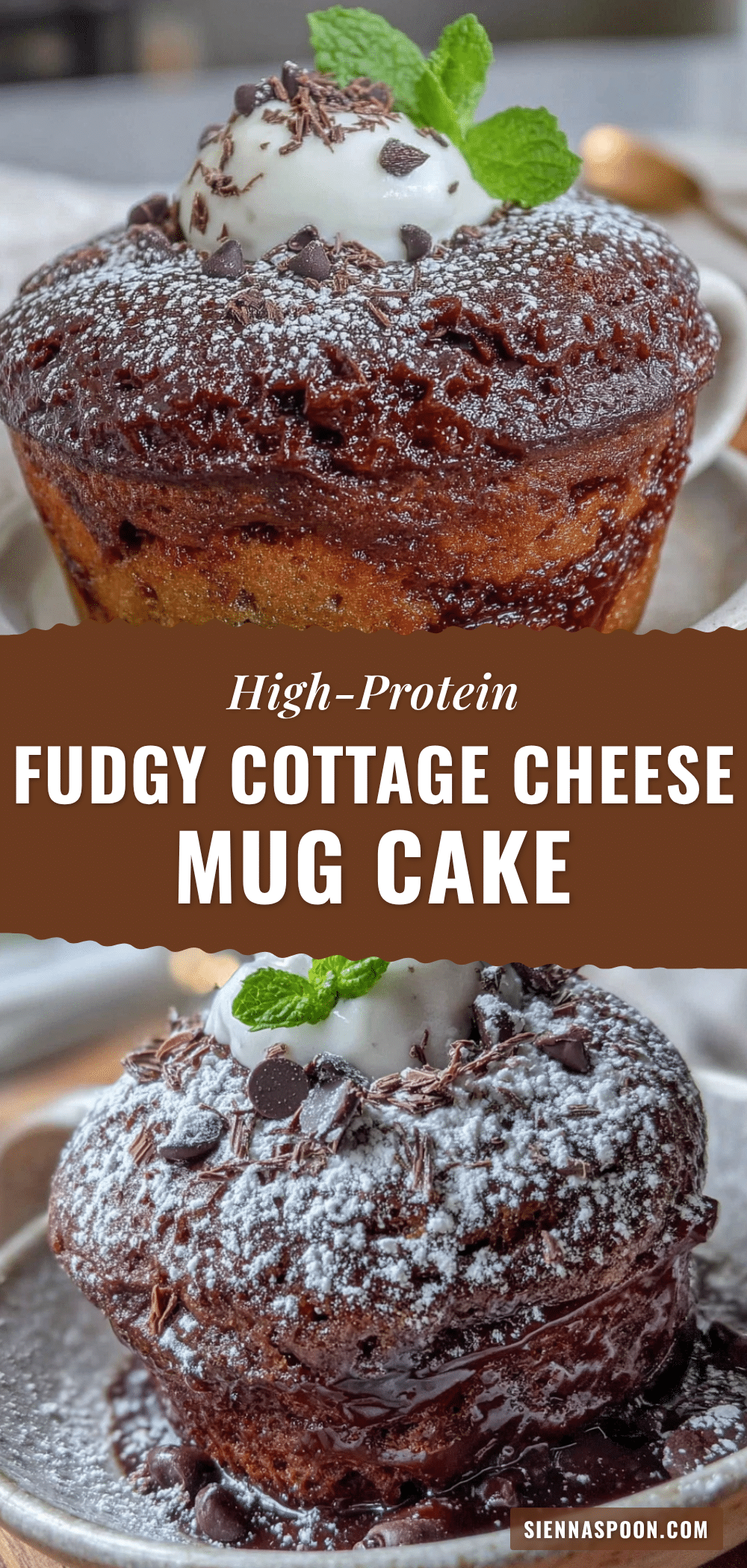
High-Protein Fudgy Cottage Cheese Mug Cake

A quick, easy, and surprisingly delicious high-protein mug cake made with cottage cheese, cocoa powder, and an egg. Ready in under 5 minutes, it’s a fudgy, brownie-like dessert that satisfies chocolate cravings without the guilt.
- Prep Time: 3 minutes
- Cook Time: 1-2 minutes
- Total Time: 5 minutes
- Yield: 1 serving 1x
- Category: Dessert
- Cuisine: American
Ingredients
- 1/4 cup cottage cheese (full-fat or low-fat)
- 1 large egg
- 2 tablespoons unsweetened cocoa powder
- 1–2 tablespoons sweetener (honey, maple syrup, agave, or granulated sweetener like coconut sugar or monk fruit)
- 1/2 teaspoon vanilla extract
- a pinch of fine sea salt
- optional: a handful of chocolate chips, 1 teaspoon peanut butter, or a few raspberries
Instructions
- In a small blender, combine the cottage cheese, egg, sweetener, and vanilla extract. Blend on high for 20-30 seconds until completely smooth and no curds remain. Scrape down the sides if needed.
- Pour the blended mixture into a 12-ounce microwave-safe mug. Add the cocoa powder and salt on top. Use a small whisk or fork to stir until no dry streaks remain, about 15-20 strokes. Do not overmix.
- If using optional mix-ins, gently fold them in now. Reserve a few chocolate chips to sprinkle on top if desired.
- Microwave on high for 60-90 seconds. Start checking at 60 seconds. The cake should be puffed up and set on top, but still slightly moist in the center. A toothpick inserted should come out with a few moist crumbs, not raw batter.
- Remove the mug carefully (it will be hot) and let the cake rest for 1-2 minutes. This allows the center to finish cooking from residual heat.
- Top with Greek yogurt, flaky salt, fresh berries, a drizzle of peanut butter, or a dusting of powdered sugar. Eat straight from the mug with a spoon.
Notes
Blend the cottage cheese and egg until completely smooth for the best texture. Watch the microwave closely as mug cakes go from perfect to overdone in about 10 seconds. Let the cake rest for 1-2 minutes before eating to allow the center to set. For a vegan version, replace the egg with a flax egg and use plant-based cottage cheese or silken tofu. For a keto version, use a sugar-free sweetener and replace maple syrup with liquid stevia or allulose syrup.
Nutrition
- Serving Size: 1 mug cake
- Calories: 220260
- Sugar: 1014
- Sodium: 300400
- Fat: 810
- Saturated Fat: 34
- Carbohydrates: 1822
- Fiber: 34
- Protein: 1822
Keywords: high-protein mug cake, cottage cheese mug cake, fudgy mug cake, healthy chocolate dessert, quick dessert, microwave cake, protein dessert, low-carb dessert, gluten-free dessert