Love this? Save it for later!
Share the inspiration with your friends
“You ever get that feeling when you find a meal that just clicks?” My friend Lisa asked me that on a sweltering July afternoon, as we sat down with bowls of her latest kitchen experiment. Lisa’s battled IBS for years, and summer used to be a nightmare, full of guesswork and discomfort. But that day, she handed me a plate of a fresh, vibrant salad that was not only gentle on her stomach but tasted like sunshine on a plate. Honestly, I wasn’t expecting much, but one bite told me this was something special.
It wasn’t from some fancy health food shop or a trendy new diet fad—it came from her own little garden, a few trusted ingredients, and a whole lot of trial and error. Lisa’s story reminded me how tricky summer meals can be for people with digestive sensitivities, especially IBS. You want fresh, light meals that don’t leave you regretting every bite, but most summer recipes are bursting with garlic, onions, or other high-FODMAP ingredients that can set you off.
Maybe you’ve been there—scanning recipes, wondering if you can tweak this or that, or stuck eating the same bland dishes over and over. That afternoon, Lisa’s simple, flavorful low-FODMAP summer recipes changed my perspective. They showed me how relaxing and delicious summer eating can be without the digestive drama. So, I gathered her best 10 IBS-friendly meal ideas that you can make easily at home—meals that respect your gut and celebrate summer’s bounty without missing out on flavor.
Let me tell you, some of these recipes involve surprising swaps and fresh twists that make you forget you’re on a special diet. I’m pretty sure you’ll find a new favorite or two here, just like Lisa did. So, whether you’re new to low-FODMAP cooking or just looking for some fresh inspiration for this summer, stick around—these meals are about keeping things simple, satisfying, and totally doable.
Why You’ll Love This Recipe Collection
After testing these fresh low-FODMAP summer recipes countless times (and trust me, I’ve made my fair share of kitchen messes), I can say this collection hits the spot for so many reasons. This isn’t your average “safe” food list—these meals bring fun, flavor, and ease to the table.
- Quick & Easy: Most recipes come together in under 30 minutes, perfect for those hot days when you just want to eat and relax.
- Simple Ingredients: You won’t need to hunt down exotic items. These recipes use pantry staples and fresh produce that’s easy to find, like zucchini, carrots, and fresh herbs.
- Perfect for Summer: These meals are light and refreshing, ideal for brunches, picnics, or lazy dinners on the porch.
- Crowd-Pleaser: Even if your guests aren’t on a low-FODMAP diet, these dishes get rave reviews—people love the bright flavors and satisfying textures.
- Unbelievably Delicious: The secret’s in the seasoning balance and fresh ingredients, making every bite memorable without the usual IBS worries.
What sets these recipes apart? Well, they’re crafted with care and tested for gut comfort. For example, instead of using onion, we lean on chives and the green parts of scallions for that subtle allium flavor without the FODMAP overload. Or swapping traditional wheat pasta for gluten-free options that keep things light and tummy-friendly. It’s the kind of cooking that respects your health but doesn’t skimp on the joy of eating.
Honestly, these meals have become my go-to for summer. They make me feel good inside and out—and I bet you’ll feel the same.
What Ingredients You Will Need
This collection of fresh low-FODMAP summer recipes uses straightforward, wholesome ingredients. The focus is on freshness and gut-friendly options that deliver plenty of flavor without fuss or confusion. Here’s a helpful breakdown of common ingredients you’ll see across the recipes:
- Fresh Vegetables: Zucchini (sliced or spiralized), carrots (shredded or roasted), cucumbers (seeded for extra digestibility), bell peppers (red or yellow for sweetness)
- Herbs: Fresh parsley, cilantro, basil, and chives (green parts only) – these add vibrant flavor without triggering IBS symptoms
- Proteins: Grilled chicken breast (skinless), canned tuna in spring water, firm tofu (pressed and marinated), eggs (hard-boiled or poached)
- Carbs & Grains: Gluten-free pasta (brown rice or corn-based), quinoa (rinsed), and low-FODMAP bread (check labels carefully)
- Healthy Fats: Olive oil (extra virgin for dressings and cooking), avocado (limit to 1/8 medium per serving), and small amounts of nuts like walnuts or pecans (toasted)
- Flavor Enhancers: Lemon juice (freshly squeezed), garlic-infused oil (for that garlic taste without the FODMAPs), rice vinegar, and low-FODMAP spices like cumin and smoked paprika
Some notes on selection:
- For best texture in salads, I recommend using firm cucumbers and crisp bell peppers from your local farmer’s market if you can — they just taste fresher.
- When buying canned tuna, opt for brands with minimal additives like SafeCatch or Wild Planet for cleaner flavor.
- Quinoa is a fantastic gluten-free grain that holds up well in salads and bowls, plus it’s packed with protein.
- If you want to make these meals vegan or vegetarian, tofu and eggs are your best friends here; I’ve tried both and they keep the dishes satisfying.
Substitutions:
- Use almond milk or lactose-free milk in dressings if you want a creamy touch without discomfort.
- For gluten-free pasta, feel free to swap in shirataki noodles for a lower-carb option.
- Skip nuts if you have allergies and add extra seeds like pumpkin or sunflower for crunch.
Equipment Needed
One of the best things about these fresh low-FODMAP summer recipes is how little gear you actually need. Here’s what I usually keep handy:
- A sharp chef’s knife – absolutely essential for quickly prepping veggies and herbs without bruising them.
- Cutting board – preferably one dedicated to veggies to avoid cross-contamination.
- Mixing bowls – a medium and large bowl helps keep things organized while prepping.
- Non-stick skillet or grill pan – great for cooking proteins like chicken or tofu without sticking or excess oil.
- Colander or fine mesh strainer – perfect for rinsing quinoa or draining gluten-free pasta.
- Measuring cups and spoons – accuracy matters, especially for dressings and spice blends.
If you don’t have a grill pan, a regular skillet works just as well. I’ve even made grilled chicken on a cast iron skillet with great results. For spiralizing zucchini, a handheld spiralizer is handy but a vegetable peeler or mandoline can create ribbons too.
One tip from experience: keep your knives sharp. I learned the hard way that a dull knife makes prep slower and more dangerous. Also, if you’re prepping ahead, store chopped veggies in airtight containers with a damp paper towel to keep them crisp.
Preparation Method
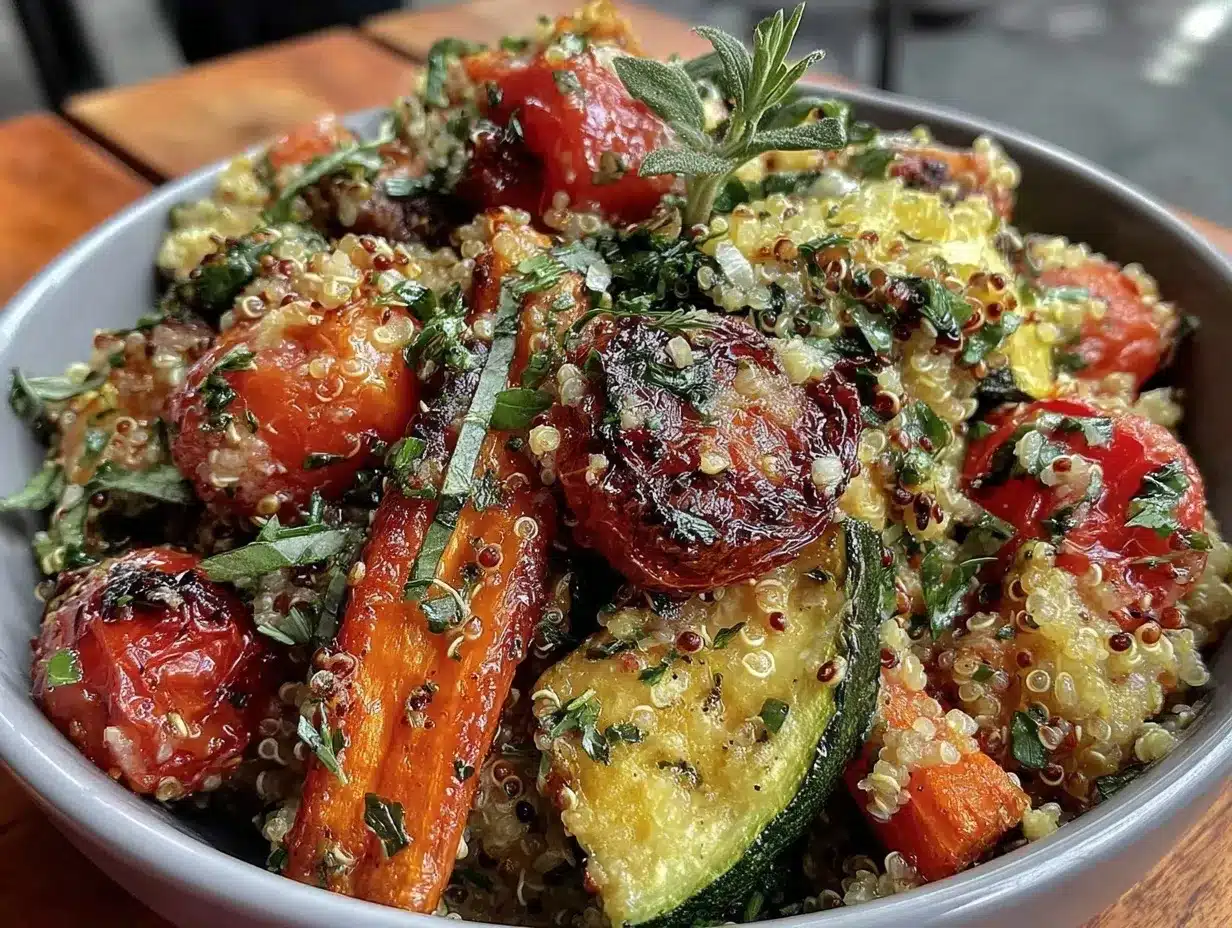
- Prep the Vegetables (10–15 minutes)
Wash all fresh produce thoroughly. Slice zucchini into ribbons or spirals using a spiralizer. Peel and shred carrots with a grater. Seed and dice cucumbers to avoid excess moisture. Chop bell peppers into bite-sized pieces. Mince fresh herbs finely to release their flavor. - Cook the Protein (15–20 minutes)
Heat a non-stick skillet over medium heat. Season chicken breasts with salt, pepper, and smoked paprika, then cook for 6–7 minutes per side until cooked through. Let rest for 5 minutes before slicing thinly. For tofu, press out moisture, marinate briefly in garlic-infused oil and lemon juice, then pan-fry until golden. - Prepare Grains or Pasta (10–12 minutes)
Rinse quinoa under cold water to remove bitterness. Cook using a 2:1 water to quinoa ratio—bring to a boil, then simmer covered for about 15 minutes until water is absorbed. For gluten-free pasta, follow package instructions closely to avoid overcooking. Drain and rinse under cold water to keep it firm. - Mix the Dressing (5 minutes)
Combine ¼ cup extra virgin olive oil, 2 tablespoons lemon juice, 1 teaspoon garlic-infused oil, a pinch of salt, and freshly ground black pepper. Whisk well until emulsified. Taste and adjust acidity or seasoning as needed. - Assemble the Salad or Bowl (5 minutes)
In a large bowl, combine vegetables, protein, and grains. Pour the dressing over and toss gently but thoroughly. The salad should look vibrant and fresh with a light coating of dressing—avoid drowning it. - Final Touches
Top with toasted walnuts or pecans for crunch. Garnish with extra herbs. Serve immediately or chill briefly if you prefer it cold.
Note: If you find your salad a bit watery, it’s usually from excess moisture in cucumbers or zucchini. Salting these lightly and letting them drain in a colander for 10 minutes before mixing helps avoid sogginess.
Cooking Tips & Techniques
One thing I’ve learned after making fresh low-FODMAP summer recipes multiple times is that timing and ingredient prep are key. For example, cooking quinoa just right is a little trickier than it looks—it should be fluffy, not mushy. Rinse it well and keep an eye on water absorption.
Another tip is about the garlic flavor—using garlic-infused olive oil is a game-changer. It gives you that savory depth without the IBS-triggering FODMAPs in actual garlic. Don’t rush the dressing; whisk it well so the oil and acid combine smoothly for a silky finish.
When working with tofu, pressing it well removes excess water that can make your dish soggy. Marinating it briefly in lemon juice and garlic oil adds flavor without overpowering the other ingredients.
Beware of overcooking proteins—chicken breast can dry out fast, so use a meat thermometer if you have one (145°F / 63°C is a safe internal temp). Letting it rest before slicing keeps it juicy.
For multitasking, cook your grains first, then prep veggies while they cool. That way, you’re not waiting around and your salad comes together quickly.
Variations & Adaptations
These fresh low-FODMAP summer recipes are super adaptable depending on your preferences and dietary needs. Here are some ideas I’ve tried and loved:
- Vegetarian Version: Replace chicken with pan-fried firm tofu or hard-boiled eggs. Adding toasted pine nuts gives extra texture and flavor.
- Seasonal Swaps: In late summer, swap zucchini for fresh green beans or baby spinach to keep things interesting and in season.
- Spice it Up: Add a pinch of smoked paprika or cumin to the dressing for a warm, smoky note. A dash of chili oil works if you like heat and tolerate it.
- Low-Carb Option: Skip quinoa and pasta, and load up on extra roasted veggies and proteins for a filling, carb-conscious meal.
- Nut-Free: Omit nuts and add extra seeds like pumpkin or sunflower to maintain crunch and nutrition.
Personally, I once added fresh mango chunks to a salad for a sweet surprise, and it worked beautifully! The juicy fruit paired well with the lemony dressing and kept things light.
Serving & Storage Suggestions
These fresh low-FODMAP summer meals are best served chilled or at room temperature—perfect for warm weather. I like to plate them in colorful bowls, garnished with fresh herbs and a wedge of lemon on the side.
Pair these meals with a crisp glass of chilled white wine or a sparkling water with a splash of lime for a truly refreshing experience.
If you have leftovers, store them in airtight containers in the refrigerator for up to 2 days. The flavors often deepen overnight, but the fresh herbs are best added right before serving again.
Reheat proteins gently if needed—microwaving on low or warming in a skillet with a splash of water keeps them moist. Avoid reheating the whole salad; dress it fresh each time.
Nutritional Information & Benefits
On average, each serving of these low-FODMAP summer recipes has approximately 350–450 calories, 25 grams of protein, 30 grams of carbs, and 15 grams of healthy fats.
Key benefits include:
- Rich in fiber from vegetables and quinoa, which supports digestion without triggering IBS symptoms.
- High-quality protein from chicken, tofu, or eggs to keep you feeling full and energized.
- Healthy fats from olive oil and nuts that promote heart health and satiety.
- Low in fermentable carbohydrates, reducing bloating and discomfort for IBS sufferers.
These meals are naturally gluten-free (when using gluten-free pasta and bread), lactose-free, and can be customized to be vegan or nut-free, making them accessible to many dietary restrictions.
Conclusion
Fresh low-FODMAP summer recipes don’t have to be boring or complicated. With simple ingredients, thoughtful swaps, and a few kitchen tricks, you can enjoy flavorful, gut-friendly meals all season long. I love these recipes because they bring back the joy of eating without the fear of IBS flare-ups—plus, they’re just downright tasty.
Feel free to play with the ingredients and find what suits your taste and tummy best. And hey, if you try any of these recipes, I’d love to hear how they worked for you or how you made them your own. Sharing your experiences helps all of us eat better and feel better.
Remember, summer is for savoring fresh flavors and good company—let these low-FODMAP meals be part of your story this season. Happy cooking!
Frequently Asked Questions
What is a low-FODMAP diet, and why is it good for IBS?
The low-FODMAP diet limits certain fermentable carbs that can cause gas and bloating in people with IBS. It helps reduce symptoms by avoiding foods that are hard to digest.
Can I use fresh garlic or onion in these low-FODMAP recipes?
Fresh garlic and onions are high in FODMAPs and can trigger IBS symptoms. Instead, use garlic-infused oil and the green parts of scallions or chives for flavor without the digestive issues.
Are these recipes suitable for people without IBS?
Absolutely! These meals are healthy, fresh, and flavorful—great for anyone looking for light, nutritious summer dishes.
How can I make these recipes vegan or vegetarian?
Replace animal proteins with tofu, tempeh, or eggs. Use plant-based dressings and check that all ingredients fit your dietary needs.
Can I prepare these recipes ahead of time?
Yes! Most of these dishes hold up well refrigerated for a day or two. Just add fresh herbs and dressings right before serving for the best taste and texture.
Pin This Recipe!
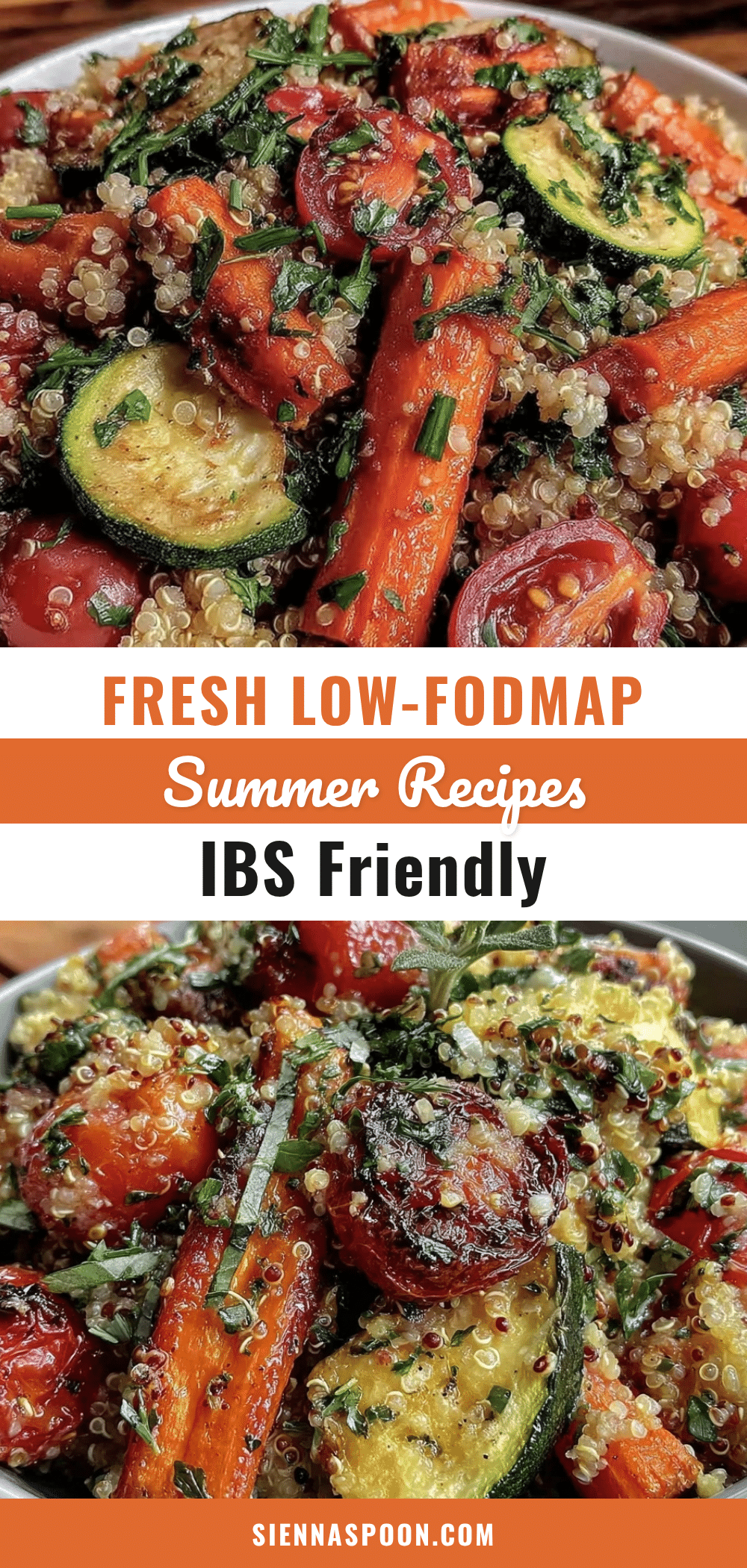
Fresh Low-FODMAP Summer Recipes 10 Easy IBS-Friendly Meal Ideas
A collection of fresh, vibrant, and gut-friendly low-FODMAP summer recipes designed to be easy, flavorful, and suitable for people with IBS or digestive sensitivities.
- Prep Time: 15 minutes
- Cook Time: 20 minutes
- Total Time: 35 minutes
- Yield: 4 servings
- Category: Main Course
- Cuisine: Low-FODMAP, IBS-Friendly, Summer
Ingredients
- Zucchini (sliced or spiralized)
- Carrots (shredded or roasted)
- Cucumbers (seeded)
- Bell peppers (red or yellow)
- Fresh parsley
- Cilantro
- Basil
- Chives (green parts only)
- Grilled chicken breast (skinless)
- Canned tuna in spring water
- Firm tofu (pressed and marinated)
- Eggs (hard-boiled or poached)
- Gluten-free pasta (brown rice or corn-based)
- Quinoa (rinsed)
- Low-FODMAP bread
- Olive oil (extra virgin)
- Avocado (limit to 1/8 medium per serving)
- Nuts like walnuts or pecans (toasted)
- Lemon juice (freshly squeezed)
- Garlic-infused oil
- Rice vinegar
- Low-FODMAP spices like cumin and smoked paprika
Instructions
- Prep the Vegetables (10–15 minutes): Wash all fresh produce thoroughly. Slice zucchini into ribbons or spirals using a spiralizer. Peel and shred carrots with a grater. Seed and dice cucumbers to avoid excess moisture. Chop bell peppers into bite-sized pieces. Mince fresh herbs finely to release their flavor.
- Cook the Protein (15–20 minutes): Heat a non-stick skillet over medium heat. Season chicken breasts with salt, pepper, and smoked paprika, then cook for 6–7 minutes per side until cooked through. Let rest for 5 minutes before slicing thinly. For tofu, press out moisture, marinate briefly in garlic-infused oil and lemon juice, then pan-fry until golden.
- Prepare Grains or Pasta (10–12 minutes): Rinse quinoa under cold water to remove bitterness. Cook using a 2:1 water to quinoa ratio—bring to a boil, then simmer covered for about 15 minutes until water is absorbed. For gluten-free pasta, follow package instructions closely to avoid overcooking. Drain and rinse under cold water to keep it firm.
- Mix the Dressing (5 minutes): Combine ¼ cup extra virgin olive oil, 2 tablespoons lemon juice, 1 teaspoon garlic-infused oil, a pinch of salt, and freshly ground black pepper. Whisk well until emulsified. Taste and adjust acidity or seasoning as needed.
- Assemble the Salad or Bowl (5 minutes): In a large bowl, combine vegetables, protein, and grains. Pour the dressing over and toss gently but thoroughly. The salad should look vibrant and fresh with a light coating of dressing—avoid drowning it.
- Final Touches: Top with toasted walnuts or pecans for crunch. Garnish with extra herbs. Serve immediately or chill briefly if you prefer it cold.
Notes
Keep knives sharp for safe and efficient prep. Salt and drain cucumbers and zucchini to avoid watery salads. Use garlic-infused oil for garlic flavor without FODMAPs. Press tofu well to remove excess moisture. Cook quinoa until fluffy, not mushy. Let cooked chicken rest before slicing to keep it juicy. Store leftovers in airtight containers for up to 2 days and add fresh herbs and dressing before serving again.
Nutrition
- Serving Size: 1 bowl or salad serv
- Calories: 400
- Sugar: 6
- Sodium: 350
- Fat: 15
- Saturated Fat: 2
- Carbohydrates: 30
- Fiber: 5
- Protein: 25
Keywords: low-FODMAP, IBS-friendly, summer recipes, gluten-free, dairy-free, healthy fats, fresh vegetables, gut-friendly, easy meals, gluten-free pasta, quinoa, chicken, tofu, salad