Love this? Save it for later!
Share the inspiration with your friends
There used to be this tiny seafood spot tucked behind a laundromat on the Oregon coast that made the most incredible crispy salmon I have ever eaten. When they closed two summers ago—just a handwritten sign on the door saying “gone fishin'”—I honestly felt a little ridiculous being so upset about a restaurant. But I was. That salmon had this perfect crust, sweet and sticky with honey, and the edges were so crispy they shattered when you cut into them. After about twelve tries—some burnt, some soggy, one that I accidentally dropped on the floor—I finally got it.
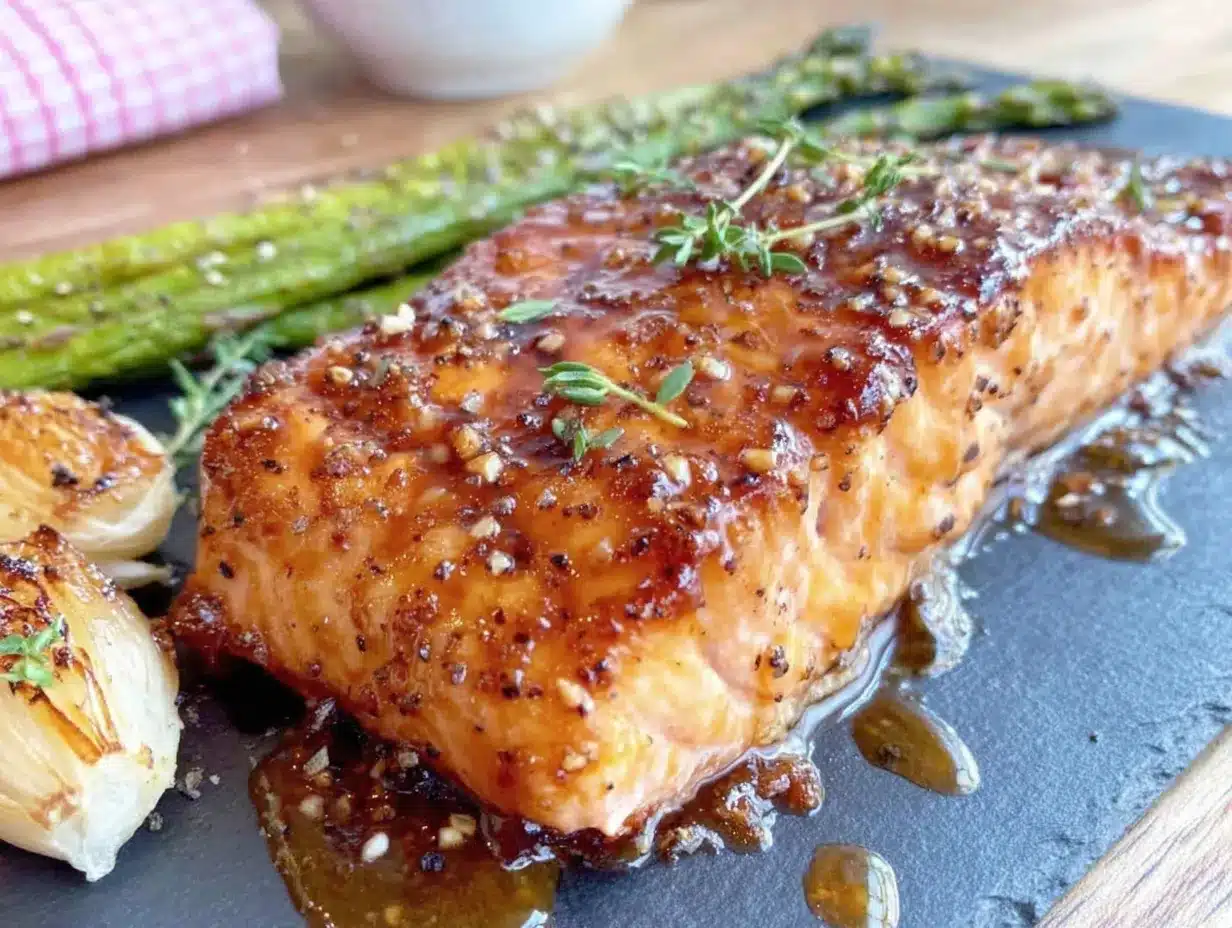
This Crispy Honey Garlic Baked Salmon is that exact recreation. The trick, I learned the hard way, is all in how you prep the fish and the timing of the glaze. You cannot just dump honey on salmon and hope for crispy edges—trust me, I tried that route and ended up with sad, steamed fish that tasted fine but had zero texture. The real magic happens when you pat the salmon completely dry, season it generously, and let the oven do that initial sear before brushing on the honey garlic mixture. That two-step process changes everything.
I make this all year round, but honestly, it hits different on spring evenings when the light lingers longer and you want something that feels special without spending hours in the kitchen. Maybe you have been there—craving that restaurant-quality meal but not wanting to deal with the fuss or the bill. This recipe delivers that exact experience. The honey caramelizes into these golden-brown edges that are almost candied, and the garlic gets mellow and sweet instead of sharp. It is the kind of dinner that makes you slow down and actually taste what you are eating.
Let me tell you, the first time I nailed it, I stood in my kitchen eating straight off the baking sheet. No plate. No shame. That is when I knew I had to share it.
Why You’ll Love This Recipe
This isn’t just another salmon recipe. I have tested this more times than I care to admit, and every single version taught me something new about what makes it work. Here is why this one stands out:
- Quick & Easy: From start to finish, this comes together in about 25 minutes. Perfect for those spring evenings when you want something impressive but do not want to spend your whole evening in the kitchen.
- Simple Ingredients: You probably have most of these already—honey, garlic, soy sauce, salmon. No weird specialty items that you will use once and forget about.
- Perfect for Spring Evenings: Light enough for warmer weather but satisfying enough to feel like a real meal. Serve it with a simple salad or some roasted asparagus, and you have the perfect seasonal dinner.
- Crowd-Pleaser: I have served this to people who claimed they “did not like salmon,” and they asked for seconds. The honey garlic glaze is universally loved.
- Unbelievably Delicious: The contrast between the crispy, caramelized edges and the tender, flaky center is next-level. You get crunch, you get sweetness, you get savory depth—all in one bite.
What makes this different from other honey garlic salmon recipes is the technique. Most versions just brush the glaze on and bake, which gives you a nice flavor but zero texture. My method involves a dry brine, a hot oven, and a strategic glaze application that builds that signature crispy crust. I learned this from a chef friend who told me, “You have to let the fish speak first before you add the sweet stuff.” That advice changed everything.
This recipe is comfort food reimagined—healthier than takeout, faster than most restaurant meals, but with the same soul-soothing satisfaction. It is the kind of dinner that makes you close your eyes after the first bite. Honestly, it is perfect for impressing guests without stress, or turning a simple Tuesday into something memorable.
What Ingredients You Will Need
This recipe uses simple, wholesome ingredients to deliver bold flavor and satisfying texture without the fuss. Most of these are pantry staples or easy to find at any grocery store.
- Salmon fillets (4 fillets, about 6 ounces each) — Look for center-cut fillets that are roughly the same thickness so they cook evenly. I prefer wild-caught when available, but good-quality farmed salmon works beautifully too. Pat them completely dry with paper towels before starting—this is non-negotiable for that crispy crust.
- Honey (1/3 cup) — Use a runny, liquid honey for easy brushing. The honey caramelizes in the oven, creating those gorgeous golden-brown edges. Local honey adds a nice floral note if you can find it.
- Soy sauce (3 tablespoons) — I use low-sodium soy sauce to control the salt level. Tamari or coconut aminos work great for gluten-free options.
- Garlic (4 cloves, minced) — Fresh garlic is essential here. The jarred stuff just does not have the same punch. Mince it finely so it distributes evenly in the glaze.
- Olive oil (2 tablespoons) — Helps the seasoning stick and promotes browning. Avocado oil works too if that is what you have.
- Rice vinegar (1 tablespoon) — Adds a subtle acidity that balances the sweetness of the honey. Apple cider vinegar is a fine substitute.
- Cornstarch (1 teaspoon) — This is the secret ingredient for extra crispiness. It helps dry out the surface of the salmon so the glaze can caramelize instead of steaming.
- Salt (1 teaspoon) — I use kosher salt for its clean flavor and easy handling. Diamond Crystal is my go-to brand.
- Black pepper (1/2 teaspoon) — Freshly ground is best. It adds a gentle heat that complements the sweet glaze.
- Optional garnish: sesame seeds, sliced green onions, red pepper flakes — These add color, texture, and a little extra flavor. Totally optional but highly recommended.
Ingredient tips: For the best texture, let your salmon sit at room temperature for about 10 minutes before cooking. This helps it cook more evenly. If you are using frozen salmon, thaw it completely in the refrigerator overnight and pat it very dry before proceeding. I have tested this with both fresh and frozen, and the key is always the same—dry fish equals crispy fish.
Equipment Needed
- Baking sheet or oven-safe skillet — A rimmed baking sheet works perfectly. Line it with parchment paper or foil for easy cleanup. I use a half-sheet pan for even heat distribution.
- Small bowl — For mixing the honey garlic glaze.
- Whisk or fork — To combine the glaze ingredients smoothly.
- Pastry brush — For applying the glaze evenly. A silicone brush works great and is easy to clean.
- Paper towels — Absolutely essential for drying the salmon thoroughly.
- Instant-read thermometer — Not strictly necessary, but it takes the guesswork out of doneness. Salmon is perfectly cooked at 125°F to 130°F in the center.
- Cooling rack — Optional, but placing the salmon on a rack set inside the baking sheet allows hot air to circulate underneath, promoting even crisping.
Budget-friendly tip: If you do not have a pastry brush, you can use the back of a spoon to spread the glaze. It is not as precise, but it gets the job done. And if you do not have an instant-read thermometer, just look for the salmon to flake easily with a fork and have a slightly translucent center—it will continue cooking from residual heat after you take it out.
Preparation Method
- Preheat your oven to 400°F (200°C). Position the rack in the upper third of the oven for better browning. While the oven heats, take your salmon out of the refrigerator and let it sit at room temperature for about 10 minutes.
- Pat the salmon fillets completely dry with paper towels. This is the most important step. Any moisture on the surface will steam instead of crisp. I usually use about three paper towels per fillet and press firmly. You want the fish to feel dry to the touch.
- Season the salmon with salt and pepper on both sides. Sprinkle the cornstarch evenly over the skinless side (or both sides if your fillets are skinless). Rub it in gently so it disappears into the surface. This helps create that shatteringly crisp exterior.
- Prepare the honey garlic glaze by whisking together the honey, soy sauce, minced garlic, olive oil, and rice vinegar in a small bowl. Set it aside. The mixture should be smooth and well-combined.
- Place the salmon on your prepared baking sheet (lined with parchment or foil). If you have a cooling rack, set it inside the baking sheet and place the salmon on the rack. This allows air to circulate underneath for maximum crispiness.
- Bake the salmon for 6 minutes without any glaze. This initial bake starts the cooking process and begins to dry out the surface. You will see the edges start to turn opaque.
- Remove the baking sheet from the oven and brush the honey garlic glaze generously over each fillet. Use about half the glaze for this first coating. Be careful—the pan is hot.
- Return the salmon to the oven and bake for another 5 to 7 minutes, depending on the thickness of your fillets. The glaze will bubble and caramelize, creating those beautiful golden-brown edges.
- Remove the salmon from the oven and brush with the remaining glaze. This second coating adds extra flavor and creates a glossy finish. Let it rest on the baking sheet for 2 to 3 minutes—the residual heat will set the glaze without overcooking the fish.
- Check for doneness: The salmon should flake easily with a fork and have an internal temperature of 125°F to 130°F (52°C to 54°C) at the thickest part. If it needs more time, return it to the oven in 1-minute increments.
- Garnish and serve: Sprinkle with sesame seeds, sliced green onions, and a pinch of red pepper flakes if desired. Serve immediately while the edges are still crispy.
Preparation note: If your salmon fillets vary in thickness, place the thicker ones toward the back of the oven where it is typically hotter. You can also fold thin tail pieces under themselves to create a more uniform thickness. I learned this after serving one overcooked and one undercooked fillet to guests—not my finest moment.
Sensory cues: When the glaze is ready, you will smell the honey and garlic becoming fragrant and sweet. The edges of the salmon will look dark golden and slightly bubbling. The surface should feel tacky to the touch (carefully!) rather than wet. If the glaze looks like it is burning, your oven might run hot—reduce the temperature to 375°F next time.
Cooking Tips & Techniques
After making this recipe probably thirty times (no exaggeration), I have learned a few things that make the difference between good salmon and unforgettable salmon.
Dry brine for extra crispiness: If you have time, salt the salmon 15 to 20 minutes before cooking. The salt draws out moisture from the surface, which you then pat dry before adding the cornstarch. This extra step creates an even crispier crust. I discovered this accidentally when I got distracted by a phone call and left the salted salmon sitting out—best mistake I ever made.
Watch your oven temperature: Ovens vary wildly. I have tested this in three different ovens, and the cooking time can differ by up to 4 minutes. Start checking at the 10-minute mark total (6 minutes initial + 4 minutes after glaze). If your oven runs hot, reduce the temperature to 375°F. If it runs cool, increase to 425°F. Get to know your oven—it is the most important tool in your kitchen.
Do not overcrowd the pan: Leave at least an inch of space between each fillet. Crowding traps steam and prevents the edges from crisping. If you are cooking for a crowd, use two baking sheets or cook in batches. I learned this the hard way when I tried to cram six fillets onto one sheet—soggy city.
The glaze consistency matters: If your honey is very thick, warm it slightly in the microwave (about 10 seconds) to make it easier to brush. The glaze should be thin enough to spread easily but thick enough to cling to the salmon. If it is too runny, it will pool on the baking sheet instead of coating the fish.
Let it rest: That 2 to 3 minute rest after the final glaze is crucial. It allows the caramelized coating to set so it does not slide off when you plate the salmon. I have made the mistake of serving immediately, and the glaze just pooled on the plate. Patience pays off here.
Variations & Adaptations
One of the things I love about this recipe is how easy it is to adapt. Here are some variations I have tried and loved:
Spicy Honey Garlic Salmon: Add 1 teaspoon of sriracha or gochujang to the glaze for a sweet-heat combo that is absolutely addictive. I make this version when I want something with a little more kick. The heat balances beautifully with the honey.
Lemon Herb Variation: Add the zest of one lemon and 1 tablespoon of fresh thyme or rosemary to the glaze. The citrus brightens everything up, and the herbs add an earthy note. This version is especially good in early spring when you are craving fresh flavors.
Gluten-Free Adaptation: Use tamari or coconut aminos instead of soy sauce. The rest of the ingredients are naturally gluten-free. I have tested this with both, and the flavor is slightly different but equally delicious.
Air Fryer Method: Cook the salmon at 375°F in the air fryer for 8 to 10 minutes, applying the glaze halfway through. The air fryer creates an even crispier exterior because of the intense circulating heat. Just make sure your salmon fits in a single layer without touching.
Maple Garlic Version: Substitute maple syrup for the honey for a deeper, more complex sweetness. This is my go-to in the fall, but it works beautifully in spring too. The maple flavor pairs wonderfully with the garlic.
Personal variation: I once added a tablespoon of Dijon mustard to the glaze on a whim, and it was fantastic. The mustard adds a tangy depth that cuts through the sweetness. Try it if you are feeling adventurous.
Serving & Storage Suggestions
This salmon is best served immediately while the edges are still crispy and the glaze is glossy. The contrast between the crunchy exterior and the tender, flaky interior is the whole point. Serve it over steamed rice, quinoa, or a bed of mixed greens for a complete meal.
Perfect pairings for spring evenings:
- Roasted asparagus with lemon zest
- A simple arugula salad with shaved Parmesan and a light vinaigrette
- Buttered new potatoes with fresh dill
- Steamed sugar snap peas with a squeeze of lime
- A crisp white wine like Sauvignon Blanc or a dry Riesling
Storage: Leftover salmon keeps in an airtight container in the refrigerator for up to 3 days. The glaze will soften the crispy edges, but the flavor remains excellent. I often flake leftover salmon over salads or mix it into rice bowls for lunch the next day.
Reheating: The best way to reheat is in a hot oven (400°F) for about 5 minutes. This helps restore some of the crispiness. Avoid the microwave—it will steam the fish and make the glaze rubbery. If you are in a hurry, a hot skillet with a tiny bit of oil works too, just watch it closely.
Freezing: You can freeze the cooked salmon for up to 2 months. Wrap each fillet individually in plastic wrap and then place in a freezer bag. Thaw in the refrigerator overnight and reheat in the oven. The texture will not be quite as good as fresh, but it is still delicious.
Flavor development: Interestingly, the flavors meld and deepen overnight. Cold leftover salmon straight from the fridge is actually amazing—the honey garlic glaze becomes almost like a savory candy coating. I have been known to eat it standing at the refrigerator door.
Nutritional Information & Benefits
This recipe is not just delicious—it is packed with nutrients that make it a smart choice for spring meals. Here is the approximate nutritional breakdown per serving (one fillet with glaze):
- Calories: 380
- Protein: 35g
- Fat: 18g (mostly healthy omega-3s)
- Carbohydrates: 20g
- Fiber: 0g
- Sugar: 18g (from honey)
Health benefits: Salmon is one of the best sources of omega-3 fatty acids, which support heart health, brain function, and reduce inflammation. The honey provides natural energy, and garlic has immune-boosting properties. This is a meal that tastes indulgent but actually supports your health.
Dietary considerations: This recipe is naturally dairy-free and can be made gluten-free with a simple soy sauce swap. It is also low-carb friendly if you skip the rice and serve it over vegetables. The sugar content comes entirely from honey, which is a natural sweetener with some trace nutrients.
Personal wellness perspective: I love that this recipe feels like a treat but is actually incredibly good for you. It is proof that healthy eating does not have to be boring or bland. When I make this for my family, I feel good knowing they are getting a meal that nourishes them from the inside out.
Conclusion
This Crispy Honey Garlic Baked Salmon has become my go-to spring dinner for good reason. It is quick enough for a weeknight, impressive enough for guests, and delicious enough to make you forget you are eating something healthy. The combination of crispy edges, sweet glaze, and tender fish is honestly hard to beat.
I love that this recipe came from a place of loss—that little restaurant on the Oregon coast—but turned into something I can share with all of you. It reminds me that sometimes the best recipes are born from trying to recreate a memory. And honestly, this version might even be better than the original.
Try it this week and see for yourself. Serve it with whatever spring vegetables look good at the market, pour yourself a glass of something cold, and enjoy the longer evenings. I would love to hear how it turns out for you—leave a comment below and let me know your favorite variation. Did you try the spicy version? The lemon herb? Did you discover a new twist I have not thought of? Share your experience, and do not forget to tag me in your photos. Happy cooking!
Frequently Asked Questions
Can I use frozen salmon for this recipe?
Yes, absolutely. Just make sure to thaw it completely in the refrigerator overnight and pat it very dry before cooking. Frozen salmon tends to release more water as it cooks, so the drying step is even more important.
Why is my salmon not getting crispy?
The most common reason is moisture. Make sure you pat the salmon completely dry with paper towels before seasoning. Also, do not skip the cornstarch—it helps absorb any remaining moisture and promotes browning. If your oven runs cool, try increasing the temperature to 425°F.
Can I make the glaze ahead of time?
Yes, you can prepare the glaze up to 3 days in advance and store it in an airtight container in the refrigerator. Give it a good stir before using, as the honey may separate slightly. Let it come to room temperature for easier brushing.
How do I know when the salmon is done?
The easiest way is to use an instant-read thermometer—125°F to 130°F in the thickest part is perfect. Without a thermometer, look for the salmon to flake easily with a fork and have a slightly translucent center. It will continue cooking from residual heat after you remove it from the oven.
Can I use this glaze on other proteins?
Definitely! This honey garlic glaze works beautifully on chicken thighs, pork chops, or even tofu. Adjust cooking times accordingly—chicken thighs will need about 25 to 30 minutes at 400°F, while tofu needs about 20 minutes. The same principles of drying and glazing apply.
Pin This Recipe!
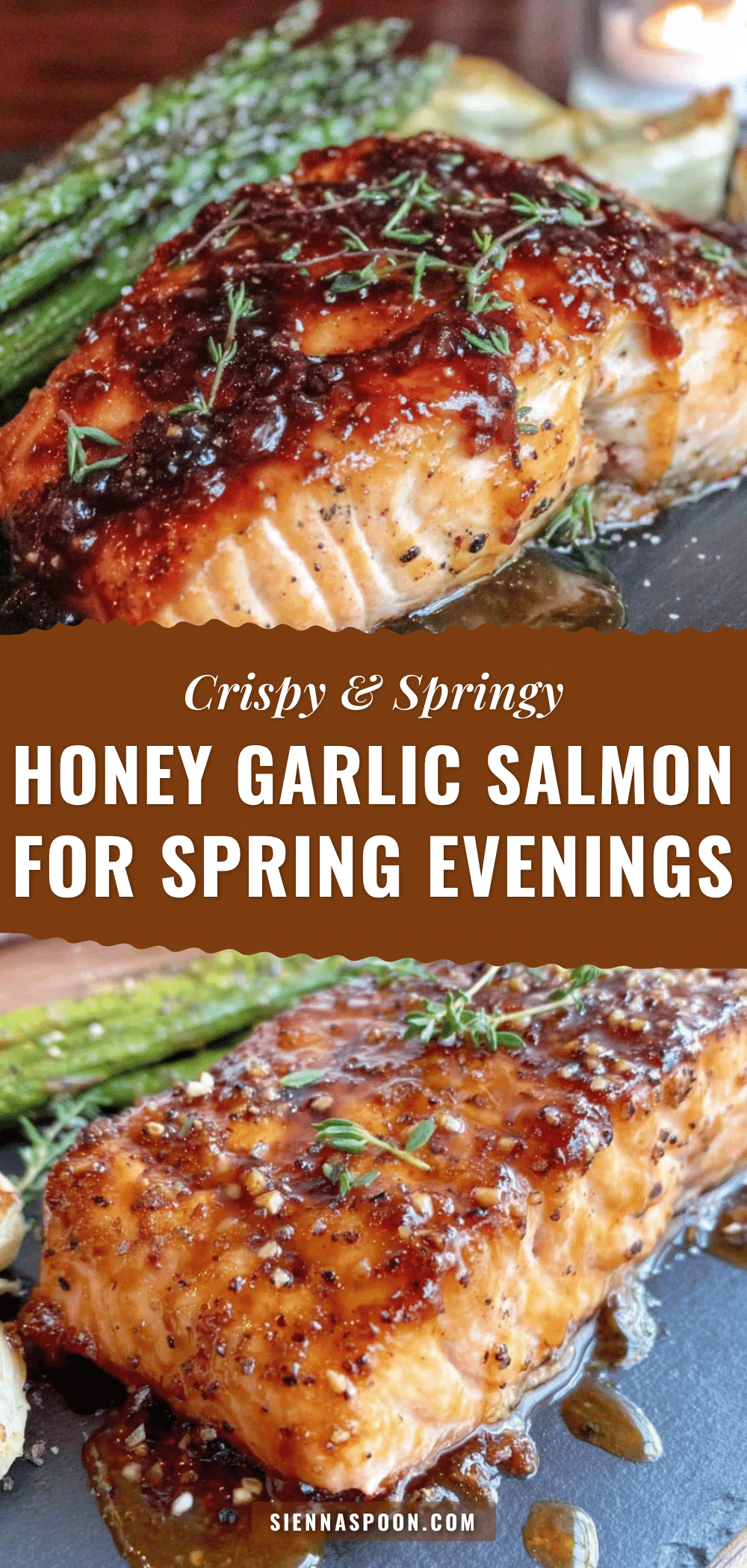
Crispy Honey Garlic Baked Salmon: Best Spring Dinner
This Crispy Honey Garlic Baked Salmon features a perfect crust, sweet and sticky with honey, and edges so crispy they shatter when you cut into them. The trick is all in how you prep the fish and the timing of the glaze, creating a restaurant-quality meal that’s quick enough for a weeknight.
- Prep Time: 10 minutes
- Cook Time: 15 minutes
- Total Time: 25 minutes
- Yield: 4 servings 1x
- Category: Main Course
- Cuisine: American
Ingredients
- 4 salmon fillets (about 6 ounces each)
- 1/3 cup honey
- 3 tablespoons low-sodium soy sauce
- 4 cloves garlic, minced
- 2 tablespoons olive oil
- 1 tablespoon rice vinegar
- 1 teaspoon cornstarch
- 1 teaspoon kosher salt
- 1/2 teaspoon freshly ground black pepper
- Optional garnish: sesame seeds, sliced green onions, red pepper flakes
Instructions
- Preheat your oven to 400°F (200°C). Position the rack in the upper third of the oven for better browning. While the oven heats, take your salmon out of the refrigerator and let it sit at room temperature for about 10 minutes.
- Pat the salmon fillets completely dry with paper towels. This is the most important step. Any moisture on the surface will steam instead of crisp. Use about three paper towels per fillet and press firmly until the fish feels dry to the touch.
- Season the salmon with salt and pepper on both sides. Sprinkle the cornstarch evenly over the skinless side (or both sides if your fillets are skinless). Rub it in gently so it disappears into the surface.
- Prepare the honey garlic glaze by whisking together the honey, soy sauce, minced garlic, olive oil, and rice vinegar in a small bowl. Set it aside.
- Place the salmon on your prepared baking sheet (lined with parchment or foil). If you have a cooling rack, set it inside the baking sheet and place the salmon on the rack for maximum crispiness.
- Bake the salmon for 6 minutes without any glaze. This initial bake starts the cooking process and begins to dry out the surface.
- Remove the baking sheet from the oven and brush the honey garlic glaze generously over each fillet. Use about half the glaze for this first coating.
- Return the salmon to the oven and bake for another 5 to 7 minutes, depending on the thickness of your fillets. The glaze will bubble and caramelize.
- Remove the salmon from the oven and brush with the remaining glaze. Let it rest on the baking sheet for 2 to 3 minutes.
- Check for doneness: The salmon should flake easily with a fork and have an internal temperature of 125°F to 130°F (52°C to 54°C) at the thickest part. If it needs more time, return it to the oven in 1-minute increments.
- Garnish and serve: Sprinkle with sesame seeds, sliced green onions, and a pinch of red pepper flakes if desired. Serve immediately while the edges are still crispy.
Notes
For extra crispiness, dry brine the salmon by salting it 15-20 minutes before cooking, then pat dry before adding cornstarch. Do not overcrowd the pan; leave at least an inch of space between fillets. Let the salmon rest for 2-3 minutes after the final glaze application to allow the caramelized coating to set. If your oven runs hot, reduce temperature to 375°F.
Nutrition
- Serving Size: 1 fillet with glaze
- Calories: 380
- Sugar: 18
- Sodium: 600
- Fat: 18
- Saturated Fat: 3
- Carbohydrates: 20
- Protein: 35
Keywords: crispy salmon, honey garlic salmon, baked salmon, spring dinner, easy salmon recipe, healthy dinner, weeknight dinner