Love this? Save it for later!
Share the inspiration with your friends
This was supposed to be a simple roasted butternut squash side dish. I had the squash cubed and tossed in olive oil, ready for a hot oven. Then I realized my baking dish was still dirty from breakfast, and honestly, I was already running late for a video call. In a fit of frustration, I grabbed the wrong pot—a deep Dutch oven instead of a sheet pan—and tossed the squash in anyway. I figured I would deal with the mess later. What came out of the oven was nothing like the plan. The squash had softened into this sweet, almost caramelized puree, and I had a half-empty box of macaroni staring at me from the pantry. I stirred them together on a whim, added a splash of milk, and threw in some cheddar. That first bite made me stop. It was creamy, a little nutty, and way better than the side dish I had planned.
I mean, let’s be real—I was just trying to salvage a chaotic afternoon. But that happy accident turned into a recipe I now make on purpose. The butternut squash melts into the cheese sauce so smoothly that you barely notice it’s there. It adds a natural sweetness and a velvety texture that regular mac and cheese just can’t match. Maybe you’ve been there—standing in your kitchen, one thing goes wrong, and suddenly you stumble onto something way better. That’s exactly how this creamy baked butternut squash mac and cheese was born. And honestly, I’m not sure I’ll ever go back to the classic version.
Why You’ll Love This Recipe
This isn’t just another mac and cheese recipe. It’s the one you’ll turn to when you want comfort food that feels a little lighter but still hits that deep, cheesy satisfaction. I’ve tested this version more times than I can count, tweaking the squash-to-cheese ratio until it was just right. Here’s why it stands out:
- Quick & Easy: Comes together in under 45 minutes, and most of that is hands-off baking time. Perfect for a busy weeknight when you need something hearty fast.
- Simple Ingredients: No fancy grocery trips. You likely already have pasta, cheese, and milk in your kitchen. The squash is the star, and it’s available year-round.
- Perfect for Fall Gatherings: Great for Thanksgiving sides, cozy Sunday dinners, or even a Halloween party. It’s festive without being fussy.
- Crowd-Pleaser: Even picky eaters love this. The squash blends in so well that kids won’t even know they’re eating a vegetable.
- Unbelievably Delicious: The texture is next-level—creamy, slightly sweet, and topped with a crispy golden crust. It’s comfort food with a twist.
What makes this recipe different from the rest is the technique. Instead of just mashing the squash into the sauce, I roast it first to concentrate the flavor. Then I blend it with the cheese sauce for an ultra-smooth, velvety finish. It’s not just another version—it’s my best version. The kind that makes you close your eyes after the first bite. Honestly, it’s comfort food reimagined—healthier, faster, but with the same soul-soothing satisfaction. Perfect for impressing guests without stress, or turning a simple Tuesday dinner into something memorable.
What Ingredients You Will Need
This creamy baked butternut squash mac and cheese uses simple, wholesome ingredients that work together to create a rich, satisfying dish without any complicated steps. Most of these are pantry staples, and the squash adds a natural sweetness that balances the sharp cheddar perfectly.
- Butternut Squash – 1 medium (about 2 lbs), peeled, seeded, and cubed. Roasting it brings out the natural sugars. (I recommend using a pre-cut bag from the store if you’re short on time.)
- Elbow Macaroni – 8 oz (about 2 cups). You can use any small pasta shape like shells or cavatappi. Whole wheat works too.
- Sharp Cheddar Cheese – 2 cups, shredded. Use a block and shred it yourself—it melts much smoother than pre-shredded bags (which have anti-caking agents).
- Gruyère Cheese – 1 cup, shredded. This adds a nutty, creamy depth. If you can’t find it, use more cheddar or a bit of mozzarella.
- Whole Milk – 2 cups. For the creamiest sauce. You can use 2% or a dairy-free alternative like oat milk, but the texture will be slightly thinner.
- Butter – 2 tablespoons, unsalted. Used for the roux and for sautéing the shallot.
- All-Purpose Flour – 2 tablespoons. This thickens the cheese sauce. Gluten-free flour blends work well as a substitute.
- Shallot – 1 small, finely diced. Adds a mild onion flavor without being overpowering. A small yellow onion works too.
- Garlic – 2 cloves, minced. Fresh is best, but jarred minced garlic is fine in a pinch.
- Dijon Mustard – 1 teaspoon. Don’t skip this! It adds a subtle tang that brightens the whole dish.
- Nutmeg – ¼ teaspoon, freshly grated if possible. It complements the squash beautifully.
- Salt & Black Pepper – To taste. Use kosher salt for better control.
- Panko Breadcrumbs – ½ cup. For the crispy topping. Mix with 1 tablespoon melted butter for extra crunch.
- Fresh Thyme – A few sprigs, for garnish (optional). Adds a lovely earthy note.
Substitution Guidance: For a gluten-free version, use gluten-free pasta and a 1:1 gluten-free flour blend. For a dairy-free option, use vegan butter, oat milk, and dairy-free cheddar shreds (the texture will be slightly less creamy but still delicious).
Equipment Needed
You don’t need a fancy kitchen to pull this off. Here’s what you’ll need:
- Large Baking Sheet – For roasting the squash. A rimmed sheet pan works best to catch any juices.
- Large Pot – For boiling the pasta. A 5-quart pot is ideal.
- Medium Saucepan – For making the cheese sauce. A heavy-bottomed pan prevents scorching.
- 9×13-inch Baking Dish – For the final bake. A 2-quart casserole dish works too.
- Immersion Blender or Regular Blender – For pureeing the roasted squash. A food processor works in a pinch, but you’ll need to scrape down the sides.
- Whisk – For a smooth roux and cheese sauce.
- Wooden Spoon or Silicone Spatula – For stirring the pasta and sauce together.
- Cheese Grater – Please, for the love of good mac and cheese, shred your own cheese. It makes a huge difference.
If you don’t have an immersion blender, let the roasted squash cool slightly, then transfer it to a regular blender with a splash of milk. Blend until smooth. Just be careful with the hot steam—remove the center cap of the lid and cover with a towel. I learned that the hard way!
Preparation Method
- Preheat your oven to 400°F (200°C). Line a baking sheet with parchment paper for easy cleanup.
- Roast the butternut squash. Toss the cubed squash with 1 tablespoon olive oil, a pinch of salt, and a few cracks of black pepper. Spread in a single layer on the baking sheet. Roast for 25-30 minutes, flipping halfway, until fork-tender and lightly caramelized. The edges should be golden brown. Set aside to cool slightly.
- Cook the pasta. While the squash roasts, bring a large pot of salted water to a boil. Add the macaroni and cook according to package directions until al dente (usually 7-8 minutes). Drain and set aside. Don’t rinse it—the starch helps the sauce stick.
- Puree the squash. Transfer the roasted squash to a blender or use an immersion blender directly in the pot. Add ½ cup of the milk and blend until completely smooth. It should look like a thick, creamy puree. Set aside.
- Make the roux. In the same large pot you used for the pasta (wiped clean), melt the butter over medium heat. Add the diced shallot and cook for 2-3 minutes until soft and translucent. Add the minced garlic and cook for 30 seconds until fragrant. Sprinkle the flour over the top and whisk continuously for 1-2 minutes. The mixture should be bubbly and golden.
- Build the cheese sauce. Slowly pour in the remaining 1 ½ cups of milk while whisking constantly to prevent lumps. Continue whisking until the sauce thickens, about 3-4 minutes. It should coat the back of a spoon. Stir in the Dijon mustard, nutmeg, salt, and pepper.
- Add the cheese and squash puree. Reduce the heat to low. Add the shredded cheddar and gruyère cheese, a handful at a time, stirring until fully melted. Then stir in the butternut squash puree until the sauce is smooth and pale orange. Taste and adjust seasoning—you might need a bit more salt.
- Combine everything. Add the cooked macaroni to the sauce and stir until every piece is coated. The sauce will be thick and creamy.
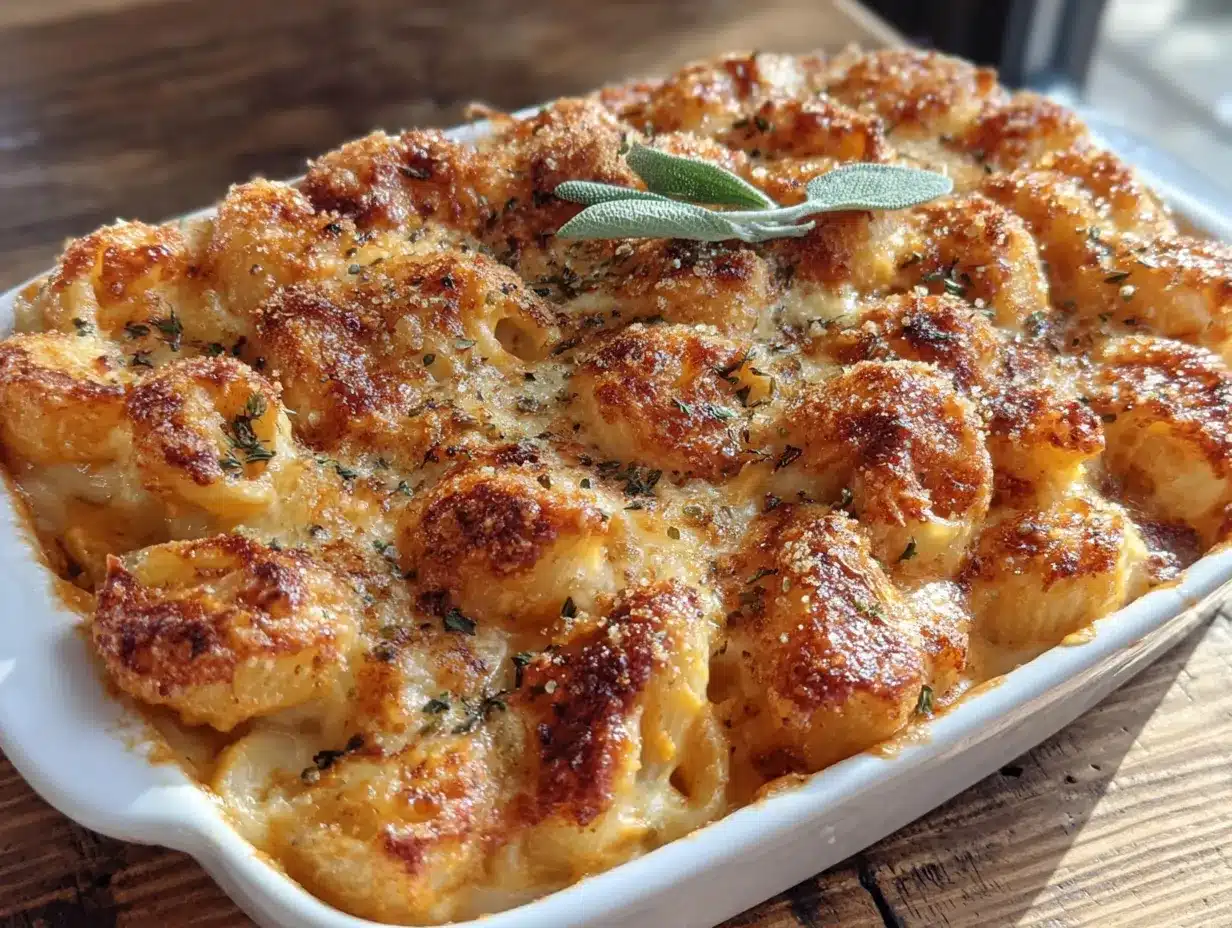
- Assemble and bake. Pour the mac and cheese into the prepared baking dish. In a small bowl, mix the panko breadcrumbs with 1 tablespoon melted butter. Sprinkle evenly over the top. Bake at 375°F (190°C) for 15-20 minutes, until bubbly and the topping is golden brown.
- Rest and serve. Let the dish sit for 5 minutes before serving. This allows the sauce to set slightly. Garnish with fresh thyme if desired.
Pro Tip: If the sauce seems too thick before baking, stir in an extra splash of milk. It will thicken further in the oven.
Cooking Tips & Techniques
I’ve messed up this recipe more times than I’d like to admit. Here are the lessons I learned the hard way so you don’t have to:
- Don’t skip roasting the squash. I tried boiling it once to save time, and the sauce turned out watery and bland. Roasting concentrates the flavor and removes excess moisture. Trust the process.
- Shred your own cheese. Pre-shredded cheese is coated with cellulose to prevent clumping, which means it won’t melt as smoothly. Your sauce will be grainy instead of silky. I know it’s tempting, but just spend the extra two minutes with a grater.
- Whisk constantly when making the roux. The first time I made this, I got distracted by my phone and ended up with a lumpy mess. Keep your eyes on the pan and your wrist moving.
- Season in layers. Salt the pasta water, season the squash, and season the sauce. Each layer builds flavor. Don’t rely on the cheese alone—it needs help.
- Watch the baking time. If you over-bake it, the sauce can separate and become greasy. Bake just until bubbly and the topping is golden. That’s your sweet spot.
- Let it rest. I know it’s hard to wait, but those 5 minutes make a difference. The sauce sets up and doesn’t run all over your plate.
One time, I forgot to add the mustard entirely. The dish was still good, but it lacked that little something. Don’t skip it—it’s a tiny ingredient that does big work.
Variations & Adaptations
This recipe is flexible, and I’ve tried a few twists that turned out great:
- Add Protein: Stir in 1 cup of cooked, crumbled bacon or shredded rotisserie chicken before baking. It turns this into a full meal. I did this for a Super Bowl party, and it disappeared fast.
- Make it Spicy: Add ½ teaspoon of smoked paprika or a pinch of cayenne pepper to the cheese sauce. The heat plays beautifully with the sweet squash. My husband loves this version.
- Vegan Adaptation: Use vegan butter, oat milk, and your favorite dairy-free cheddar shreds. The sauce will be a bit thinner, but it still bakes up nicely. I tested this with a friend who’s vegan, and she gave it two thumbs up.
- Gluten-Free: Swap the pasta for a gluten-free brand like Banza or Jovial. Use a 1:1 gluten-free flour blend for the roux. The texture is slightly different but still creamy.
- Seasonal Swap: In summer, use roasted sweet potatoes instead of butternut squash. The flavor is similar, and it’s a great way to use up farmers’ market finds.
- Topping Twist: Instead of panko, try crushed Ritz crackers or even crushed potato chips for a salty crunch. I did this once when I ran out of breadcrumbs, and it was dangerously good.
Serving & Storage Suggestions
Serve this creamy baked butternut squash mac and cheese hot, straight from the oven. The topping should be crispy, and the inside should be bubbling. I like to let it sit for 5 minutes before scooping—it holds its shape better on the plate.
What to serve with it: This dish is rich enough to stand alone, but it pairs beautifully with a simple green salad dressed with lemon vinaigrette. The acidity cuts through the creaminess. For a heartier meal, serve it alongside roasted chicken or a crispy garlic chicken for a comforting dinner combo. A side of steamed broccoli or roasted Brussels sprouts also works great.
Storage: Leftovers keep in an airtight container in the fridge for up to 4 days. The sauce will thicken as it sits, so don’t be alarmed. To reheat, add a splash of milk and warm it in the microwave or on the stovetop over low heat, stirring occasionally. You can also reheat it in the oven at 350°F (175°C) for 10-15 minutes, covered with foil.
Freezing: This mac and cheese freezes surprisingly well. Assemble the dish completely but don’t bake it. Cover tightly with foil and freeze for up to 3 months. When ready to bake, thaw in the fridge overnight, then bake as directed, adding 5-10 minutes to the cooking time. I’ve done this for meal prep, and it’s a lifesaver on busy weeks.
Flavor development: Honestly, this dish tastes even better the next day. The flavors meld together overnight, and the squash sweetness becomes more pronounced. It’s one of those rare recipes where leftovers are almost better than the first serving.
Nutritional Information & Benefits
Here’s a rough estimate per serving (based on 8 servings):
| Nutrient | Amount |
|---|---|
| Calories | ~410 |
| Protein | 16g |
| Carbohydrates | 42g |
| Fat | 20g |
| Fiber | 4g |
| Sugar | 8g |
| Sodium | 520mg |
Health Benefits: Butternut squash is packed with vitamin A (great for eye health), vitamin C, and fiber. It also adds natural sweetness, which means you can use less cheese without sacrificing flavor. The dish is also a good source of calcium from the dairy. If you’re watching your carbs, you can swap the pasta for chickpea or lentil pasta for a protein boost.
Dietary Considerations: This recipe is vegetarian. For gluten-free or vegan options, see the variations section above. It contains dairy and gluten in its standard form.
I personally love that this dish feels indulgent but has a hidden veggie boost. It’s my go-to when I want comfort food without the guilt.
Conclusion
This creamy baked butternut squash mac and cheese started as a kitchen mistake, but it’s become one of my most-requested recipes. The roasted squash adds a natural sweetness and velvety texture that makes it feel special, while the sharp cheddar and gruyère keep it familiar and comforting. It’s the kind of dish that works for a quiet Tuesday dinner or a holiday table—and it always gets compliments.
I encourage you to make it your own. Try it with bacon, add some heat, or swap the pasta for a gluten-free option. The base is solid, and it’s forgiving enough for experimentation. Honestly, I think you’ll be surprised by how good a vegetable can make mac and cheese taste.
If you make this recipe, I’d love to hear about it. Leave a comment below or tag me in your photos—I’m always thrilled to see your creations. And if you’re looking for another cozy dish, check out my creamy tuscan chicken for a similar vibe with a different protein. Happy cooking, friends!
Frequently Asked Questions
Can I use frozen butternut squash instead of fresh?
Yes, you can. Thaw it first and pat it dry with paper towels to remove excess moisture. Roast it as directed, but reduce the cooking time by 5-10 minutes since frozen squash tends to cook faster. The flavor won’t be quite as concentrated, but it still works well.
Why is my cheese sauce grainy?
This usually happens when you use pre-shredded cheese or heat the sauce too high. Always shred your own cheese from a block, and keep the heat on low when melting it. High heat can cause the proteins to separate, resulting in a grainy texture.
Can I make this ahead of time?
Absolutely. Assemble the dish completely but don’t bake it. Cover and refrigerate for up to 24 hours. When ready to bake, add 5-10 minutes to the cooking time. You can also freeze it unbaked for up to 3 months—just thaw overnight in the fridge before baking.
How do I make the topping extra crispy?
Mix the panko with melted butter and a pinch of salt before sprinkling it on. You can also add a tablespoon of grated parmesan to the breadcrumb mixture for extra flavor and crunch. Broil the dish for the last 1-2 minutes, but watch it closely so it doesn’t burn.
Can I use a different type of squash?
Yes, butternut squash is ideal for its sweetness and smooth texture, but you can substitute with roasted sweet potatoes, kabocha squash, or even pumpkin puree. Each will give a slightly different flavor and color, but all work well in this recipe.
Pin This Recipe!
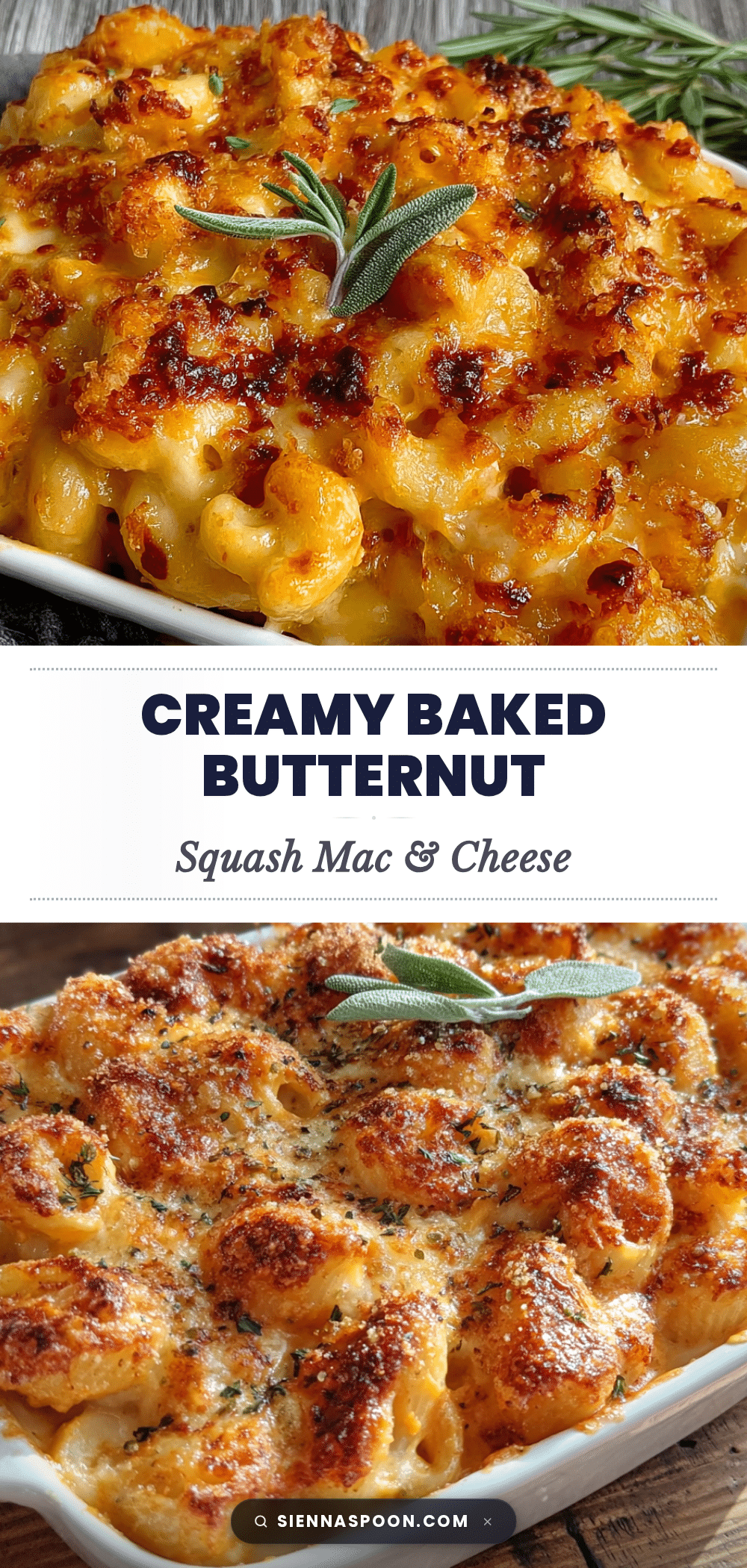
Creamy Baked Butternut Squash Mac and Cheese

A creamy, comforting mac and cheese with a hidden veggie boost from roasted butternut squash. This easy recipe comes together in under an hour and is perfect for weeknights or fall gatherings.
- Prep Time: 15 minutes
- Cook Time: 45 minutes
- Total Time: 1 hour
- Yield: 8 servings 1x
- Category: Main Course
- Cuisine: American
Ingredients
- 1 medium butternut squash (about 2 lbs), peeled, seeded, and cubed
- 8 oz elbow macaroni (about 2 cups)
- 2 cups sharp cheddar cheese, shredded
- 1 cup Gruyère cheese, shredded
- 2 cups whole milk
- 2 tablespoons unsalted butter
- 2 tablespoons all-purpose flour
- 1 small shallot, finely diced
- 2 cloves garlic, minced
- 1 teaspoon Dijon mustard
- ¼ teaspoon nutmeg, freshly grated
- Salt and black pepper to taste
- ½ cup panko breadcrumbs
- 1 tablespoon melted butter (for topping)
- Fresh thyme sprigs for garnish (optional)
Instructions
- Preheat your oven to 400°F (200°C). Line a baking sheet with parchment paper.
- Toss the cubed squash with 1 tablespoon olive oil, a pinch of salt, and black pepper. Spread in a single layer on the baking sheet. Roast for 25-30 minutes, flipping halfway, until fork-tender and lightly caramelized. Set aside to cool slightly.
- While the squash roasts, bring a large pot of salted water to a boil. Cook the macaroni according to package directions until al dente. Drain and set aside (do not rinse).
- Transfer the roasted squash to a blender or use an immersion blender. Add ½ cup of the milk and blend until completely smooth. Set aside.
- In the same large pot (wiped clean), melt the butter over medium heat. Add the diced shallot and cook for 2-3 minutes until soft. Add the minced garlic and cook for 30 seconds. Sprinkle the flour over the top and whisk continuously for 1-2 minutes until bubbly and golden.
- Slowly pour in the remaining 1 ½ cups of milk while whisking constantly. Continue whisking until the sauce thickens, about 3-4 minutes. Stir in the Dijon mustard, nutmeg, salt, and pepper.
- Reduce heat to low. Add the shredded cheddar and Gruyère cheese, a handful at a time, stirring until fully melted. Then stir in the butternut squash puree until smooth. Taste and adjust seasoning.
- Add the cooked macaroni to the sauce and stir until every piece is coated.
- Pour the mac and cheese into a 9×13-inch baking dish. In a small bowl, mix the panko breadcrumbs with 1 tablespoon melted butter. Sprinkle evenly over the top.
- Bake at 375°F (190°C) for 15-20 minutes, until bubbly and the topping is golden brown.
- Let the dish rest for 5 minutes before serving. Garnish with fresh thyme if desired.
Notes
For a gluten-free version, use gluten-free pasta and a 1:1 gluten-free flour blend. For a dairy-free option, use vegan butter, oat milk, and dairy-free cheddar shreds. The sauce may be slightly thinner but still delicious. If the sauce seems too thick before baking, stir in an extra splash of milk. Let the dish rest for 5 minutes after baking to allow the sauce to set.
Nutrition
- Serving Size: 1 serving (about 1 c
- Calories: 410
- Sugar: 8
- Sodium: 520
- Fat: 20
- Saturated Fat: 12
- Carbohydrates: 42
- Fiber: 4
- Protein: 16
Keywords: butternut squash mac and cheese, baked mac and cheese, creamy mac and cheese, fall comfort food, vegetarian mac and cheese