Love this? Save it for later!
Share the inspiration with your friends
I wasn’t expecting cooking advice from the woman who runs the local hardware store, but there I was, standing in the paint aisle on a Tuesday afternoon, listening to Margaret describe exactly how to make a butternut squash mac and cheese that would “change your whole perspective on comfort food.” I had just asked if she knew where they kept the good cheese graters—mine had finally given up after ten years of faithful service—and she just launched into this story about her grandmother’s recipe. The paint samples in my hand were completely forgotten.
Margaret is not the type you’d peg for a culinary genius. She’s the kind of person who wears a flannel shirt with the sleeves rolled up and always has a pencil tucked behind her ear. But let me tell you, when she started talking about roasting squash and the way the cheese pulls through the pasta, I was hooked. She scribbled the basic idea on the back of a receipt for a gallon of primer. I shoved it in my pocket and honestly forgot about it for three weeks.
Then came one of those gray, drizzly evenings where the whole world feels damp and you just want to curl up under a blanket with something warm. I found that receipt crumpled in my coat pocket. I had a butternut squash sitting on the counter that I’d bought on a whim and a block of sharp cheddar that needed using. It felt like the universe was nudging me. So I gave it a shot. The result was so much better than I expected—creamy, slightly sweet from the squash, and deeply satisfying in that way only a really good mac and cheese can be. I’ve been making it ever since, tweaking it here and there, but the heart of it is all Margaret. Maybe you’ve been there, needing a recipe to feel like a hug in a bowl. This is that recipe.
Why You’ll Love This Recipe
This isn’t just another mac and cheese recipe. It’s the one that makes you feel like you’ve got your life together, even on a Tuesday night when you’re running on fumes. I’ve tested this more times than I can count, tweaking the ratio of squash to cheese until it was just right. My neighbor, who is a professional chef, tried it and asked for the recipe—which felt like a pretty solid win.
- Quick & Easy: It comes together in under 30 minutes, start to finish. Perfect for those nights when you need dinner on the table fast.
- Simple Ingredients: No fancy grocery trips needed. You likely have most of these items in your kitchen already.
- Perfect for Cozy Nights: This is the ultimate comfort food for cold weather, a rough day, or just because you feel like treating yourself.
- Crowd-Pleaser: Even picky eaters love this. The squash blends in so smoothly, they won’t even know it’s there.
- Unbelievably Delicious: The texture is ultra-creamy, and the flavor is a perfect balance of savory cheese and sweet, nutty squash.
What makes this recipe different is the method. Instead of making a separate roux and cheese sauce, you cook the pasta directly in a mixture of broth and pureed squash. This not only saves you a pot but also infuses the pasta with flavor from the inside out. The result is a sauce that’s naturally thick and silky, without needing a ton of heavy cream or butter. It’s comfort food reimagined—healthier, faster, but with the same soul-soothing satisfaction. Perfect for impressing guests without stress, or turning a simple meal into something memorable.
What Ingredients You Will Need
This recipe uses simple, wholesome ingredients to deliver bold flavor and satisfying texture without the fuss. Most of these are pantry staples or easy to find at any grocery store.
- Butternut Squash: 2 cups, peeled and cubed (about 1 medium squash). Look for one that feels heavy for its size with a firm, tan skin. You can also use pre-cubed squash from the store to save time.
- Elbow Macaroni: 8 ounces (about 2 cups). I prefer Barilla for its consistent texture, but any small pasta shape like shells or cavatappi works great.
- Vegetable Broth: 2 cups. Use low-sodium so you can control the salt. Swanson’s is a reliable brand.
- Milk: 1 cup. Whole milk gives the creamiest result, but 2% works fine. For a dairy-free version, use unsweetened oat milk.
- Sharp Cheddar Cheese: 1 ½ cups, freshly grated. Pre-shredded cheese has anti-caking agents that prevent smooth melting. Trust me on this one—grate it yourself.
- Parmesan Cheese: ½ cup, freshly grated. Adds a salty, nutty depth. I like using a microplane for this.
- Unsalted Butter: 2 tablespoons. Used for sautéing the aromatics.
- Yellow Onion: ½ medium, diced. Adds a subtle savory base.
- Garlic: 3 cloves, minced. Fresh is best; don’t use the jarred stuff here.
- Dijon Mustard: 1 teaspoon. Sounds weird, but it cuts through the richness and brightens the whole dish.
- Salt: ½ teaspoon, plus more to taste. I use fine sea salt.
- Black Pepper: ¼ teaspoon, freshly ground.
- Nutmeg: ¼ teaspoon, freshly grated if possible. It’s a classic pairing with squash and cheese.
- Optional Topping: ¼ cup panko breadcrumbs mixed with 1 tablespoon melted butter for a crunchy finish.
Ingredient Tips: If your squash is particularly large, you might need a bit more broth to cook the pasta. Always taste and adjust seasoning at the end. For a smoky twist, substitute half the cheddar with smoked gouda.
Equipment Needed
You don’t need a fancy kitchen to pull this off. Here’s what you’ll need:
- Large Pot or Dutch Oven: A 4 to 5-quart pot is ideal. I use my trusty Le Creuset Dutch oven—it distributes heat evenly and looks pretty on the table, too. A heavy-bottomed stockpot works just as well.
- Chef’s Knife: A sharp 8-inch knife makes short work of the squash. A dull knife is a recipe for frustration.
- Cutting Board: Go for a large wooden or plastic board. Give yourself room to work.
- Box Grater or Microplane: For grating the cheese. A microplane is perfect for the parmesan.
- Wooden Spoon or Silicone Spatula: For stirring. A wooden spoon won’t scratch your pot.
- Measuring Cups and Spoons: For accuracy. Eyeballing it can lead to a too-thin or too-thick sauce.
- Immersion Blender or Regular Blender: To puree the cooked squash. An immersion blender is easier—you can do it right in the pot. If using a regular blender, work in batches and be careful with the hot liquid.
Budget-Friendly Options: Don’t have a Dutch oven? Any large pot with a lid will do. No immersion blender? Mash the cooked squash well with a potato masher—it won’t be as smooth, but it’ll still taste great. I’ve done it both ways, and honestly, the rustic texture has its own charm.
Preparation Method
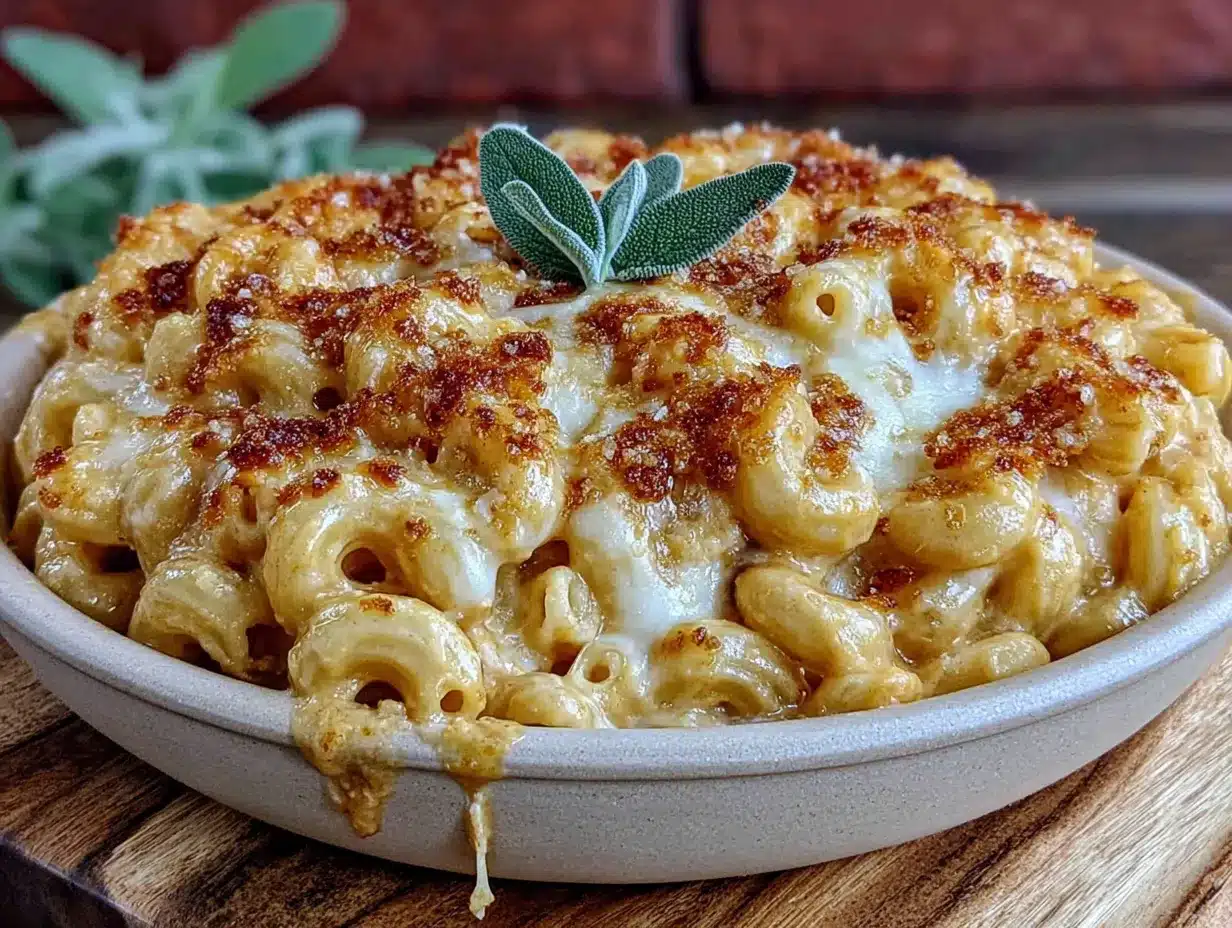
Let’s get cooking. This comes together faster than you think, so have everything prepped and ready to go.
- Cook the Squash (5 minutes): Place the cubed butternut squash in a microwave-safe bowl with 2 tablespoons of water. Cover and microwave on high for 5-7 minutes, until fork-tender. Alternatively, you can steam it on the stovetop in a covered pot with an inch of water for about 10 minutes. Drain any excess water.
- Puree the Squash: Transfer the cooked squash to a blender or use an immersion blender directly in the bowl. Add ½ cup of the vegetable broth and blend until completely smooth. Set aside. You should have about 1 ½ cups of puree.
- Sauté the Aromatics (3 minutes): In your large pot or Dutch oven, melt the butter over medium heat. Add the diced onion and cook, stirring occasionally, until soft and translucent—about 3 minutes. Add the minced garlic and cook for another 30 seconds until fragrant. Don’t let the garlic burn; it turns bitter fast.
- Combine Liquids: Pour in the remaining 1 ½ cups of vegetable broth, the milk, and the squash puree. Whisk in the Dijon mustard, salt, pepper, and nutmeg. Bring the mixture to a gentle simmer over medium-high heat.
- Cook the Pasta (8-10 minutes): Stir in the elbow macaroni. Reduce the heat to medium-low so the liquid is at a steady simmer, not a rolling boil. Cook, stirring frequently to prevent sticking, until the pasta is al dente and most of the liquid has been absorbed. The sauce will look thin at first, but it will thicken as the pasta releases its starch. If the mixture gets too thick before the pasta is done, add a splash of milk or broth.
- Add the Cheese (2 minutes): Remove the pot from the heat. Add the shredded cheddar and parmesan cheese. Stir vigorously until the cheese is completely melted and the sauce is smooth and creamy. Taste and adjust seasoning—you might want an extra pinch of salt or a crack of pepper.
- Optional Crunchy Topping (2 minutes): If using the panko topping, mix the breadcrumbs with melted butter. Sprinkle over the mac and cheese and place under a broiler for 1-2 minutes, watching closely, until golden brown. This step is entirely optional but adds a lovely textural contrast.
- Rest and Serve: Let the mac and cheese sit for 2-3 minutes before serving. It will continue to thicken as it cools. Serve hot, garnished with a sprinkle of fresh parsley or extra black pepper if you like.
Sensory Cues: When the onion is ready, it should smell sweet and look translucent. The sauce, before adding cheese, should be a vibrant orange and lightly coat the back of a spoon. The finished dish should be thick enough to hold its shape on a spoon but still creamy.
Cooking Tips & Techniques
I’ve made this recipe a dozen times, and I’ve learned a few things the hard way. Here’s what I wish I knew from the start.
Don’t Overcook the Pasta: The pasta will continue to cook slightly after you add the cheese and take it off the heat. Cook it just to al dente—firm to the bite. Overcooked pasta turns mushy and the dish loses its structure. I once got distracted by a phone call and ended up with a gluey mess. Learn from my mistake.
Grate Your Own Cheese: I know it’s tempting to buy the pre-shredded bags, but they’re coated in cellulose (wood pulp) to prevent clumping. This also prevents them from melting smoothly. Your sauce will be grainy instead of silky. Take the two extra minutes to grate a block of cheddar—your taste buds will thank you.
The Sauce Will Thicken: When you first add the pasta, the sauce will look thin and watery. Don’t panic. As the pasta cooks and releases starch, and as the liquid reduces, it will naturally thicken. Trust the process. If it gets too thick before the pasta is done, just add a splash of broth or milk.
Season in Layers: Add a pinch of salt when you sauté the onions, another when you add the broth, and then adjust at the end. Seasoning in layers builds deeper flavor. Don’t dump all the salt in at once.
Timing is Everything: This whole dish takes about 30 minutes, but the active cooking time is only about 15 minutes. The rest is just simmering and stirring. Multitask by grating your cheese while the squash cooks, or cleaning up as you go.
Variations & Adaptations
This recipe is wonderfully flexible. Here are some ways to make it your own.
- Make it Gluten-Free: Use gluten-free pasta, like brown rice or chickpea pasta. You may need to adjust the cooking time slightly—check the package directions. The rest of the ingredients are naturally gluten-free.
- Add Protein: Stir in 1 cup of cooked, shredded chicken or crumbled cooked sausage at the end. I’ve done this with leftover rotisserie chicken, and it turns the dish into a complete meal. Cooked bacon bits would also be amazing.
- Veggie Boost: Sauté 1 cup of chopped spinach or kale along with the onions. Or fold in ½ cup of roasted broccoli florets just before serving. The squash already adds a veggie serving, but more never hurts.
- Spice It Up: Add ¼ teaspoon of cayenne pepper or red pepper flakes along with the nutmeg for a little heat. A friend of mine adds a dash of smoked paprika, and it’s fantastic.
- Dairy-Free Version: Use unsweetened oat milk or cashew milk in place of the dairy milk. Use a high-quality vegan cheddar shred that melts well. Miyoko’s is my go-to brand. The texture won’t be quite as creamy, but it’s still delicious.
- Different Cheeses: Swap half the cheddar for gruyere, fontina, or gouda. Each brings a different personality. Gruyere adds a nutty, slightly sweet flavor that pairs beautifully with the squash.
I once tried a version with roasted red peppers blended into the squash puree. It was a little too tangy for my taste, but my sister loved it. Don’t be afraid to experiment—that’s half the fun.
Serving & Storage Suggestions
This mac and cheese is best served hot, straight from the pot. But here’s how to make the most of it.
Serving Temperature: Let it rest for 2-3 minutes after cooking. It will be piping hot, and the sauce will have thickened to the perfect consistency. Serve it in warm bowls to keep it hot longer.
Presentation: Spoon it into a shallow bowl. If you made the panko topping, make sure the golden crust is visible. A sprinkle of fresh parsley or chives adds a pop of color. A little extra cracked black pepper on top looks beautiful and adds a final layer of flavor.
Complementary Dishes: This is a hearty main dish on its own, but it pairs beautifully with a simple green salad dressed with a lemony vinaigrette. The acidity cuts through the richness. A side of roasted Brussels sprouts or steamed green beans also works wonderfully. For a cozy meal, serve it with a bowl of tomato soup or a crusty loaf of bread.
Storage: Store leftovers in an airtight container in the refrigerator for up to 4 days. The pasta will absorb more liquid as it sits, so it will be thicker when reheated.
Reheating: The best way to reheat is on the stovetop. Add a splash of milk or broth and warm over medium-low heat, stirring frequently, until heated through. You can also microwave individual portions in 30-second bursts, stirring in between. Add a little milk to loosen the sauce. I don’t recommend freezing this dish—the creamy sauce can separate and become grainy upon thawing.
Flavor Development: Honestly, this dish tastes even better the next day. The flavors meld together overnight, and the squash and cheese become even more harmonious. It’s the kind of leftover you actually look forward to.
Nutritional Information & Benefits
This recipe is a healthier take on classic mac and cheese, but it’s still indulgent enough to feel like a treat.
Estimated Nutritional Values (per serving, about 1 ½ cups):
- Calories: 480
- Fat: 22g
- Saturated Fat: 13g
- Cholesterol: 65mg
- Sodium: 680mg
- Carbohydrates: 52g
- Fiber: 6g
- Sugar: 8g
- Protein: 22g
Health Benefits: Butternut squash is packed with vitamin A (great for eye health), vitamin C, and fiber. It adds natural sweetness and creaminess, allowing you to use less cheese and butter than a traditional recipe. The dish is also a good source of calcium from the cheese and milk. Using low-sodium broth helps keep the salt in check.
Dietary Considerations: This recipe is vegetarian. It can be made gluten-free and dairy-free with the substitutions listed above. It contains dairy and gluten in its standard form. Nutmeg in small amounts is generally safe, but if you have a nut allergy, it’s best to skip it or use a pinch of mace instead.
From a wellness perspective, I love that this dish lets you enjoy comfort food without the heavy, overly processed feeling. It’s satisfying and nourishing, which is exactly what I want on a cozy night in.
Conclusion
This Cozy One-Pot Butternut Squash Mac and Cheese has become a staple in my kitchen for good reason. It’s quick, it’s comforting, and it feels like a warm hug on a cold day. The best part? It comes together in one pot with simple ingredients, yet tastes like something you spent hours on. I hope you give it a try and make it your own—add your favorite veggies, swap in different cheeses, or keep it exactly as written. It’s hard to go wrong.
I’d love to hear how it turns out for you. Did you add anything special? Did your kids go back for seconds? Drop a comment below and let me know. And if you share a photo on Pinterest, tag me—I love seeing your creations. Until next time, happy cooking!
Frequently Asked Questions
Can I use frozen butternut squash?
Absolutely. Frozen cubed butternut squash works perfectly. Just thaw it first and drain any excess water before pureeing. It might be slightly more watery than fresh, so you may need to cook the pasta a minute or two longer to thicken the sauce.
Why did my sauce turn out grainy?
Grainy sauce is almost always caused by pre-shredded cheese. The anti-caking agents prevent the cheese from melting smoothly. Always grate your cheese from a block for the silkiest results. Overheating the sauce can also cause separation, so always remove the pot from the heat before adding the cheese.
Can I make this ahead of time?
Yes, you can make this up to a day ahead. Prepare the recipe as directed, but stop before adding the optional panko topping. Let it cool completely, then cover and refrigerate. To serve, reheat on the stovetop with a splash of milk, then add the panko topping and broil if desired.
Can I use a different type of pasta?
Definitely. Small to medium pasta shapes work best—shells, cavatappi, rotini, or even penne. Avoid very large shapes like lasagna noodles or very small ones like orzo, as they won’t cook evenly in the amount of liquid. Adjust the cooking time based on the pasta shape.
Is this recipe suitable for kids?
Yes, it’s very kid-friendly. The butternut squash blends into the sauce so smoothly that most kids won’t even notice it’s there. The flavor is mild and cheesy, which is usually a hit. If your kids are sensitive to spices, you can leave out the nutmeg or use just a tiny pinch.
Pin This Recipe!
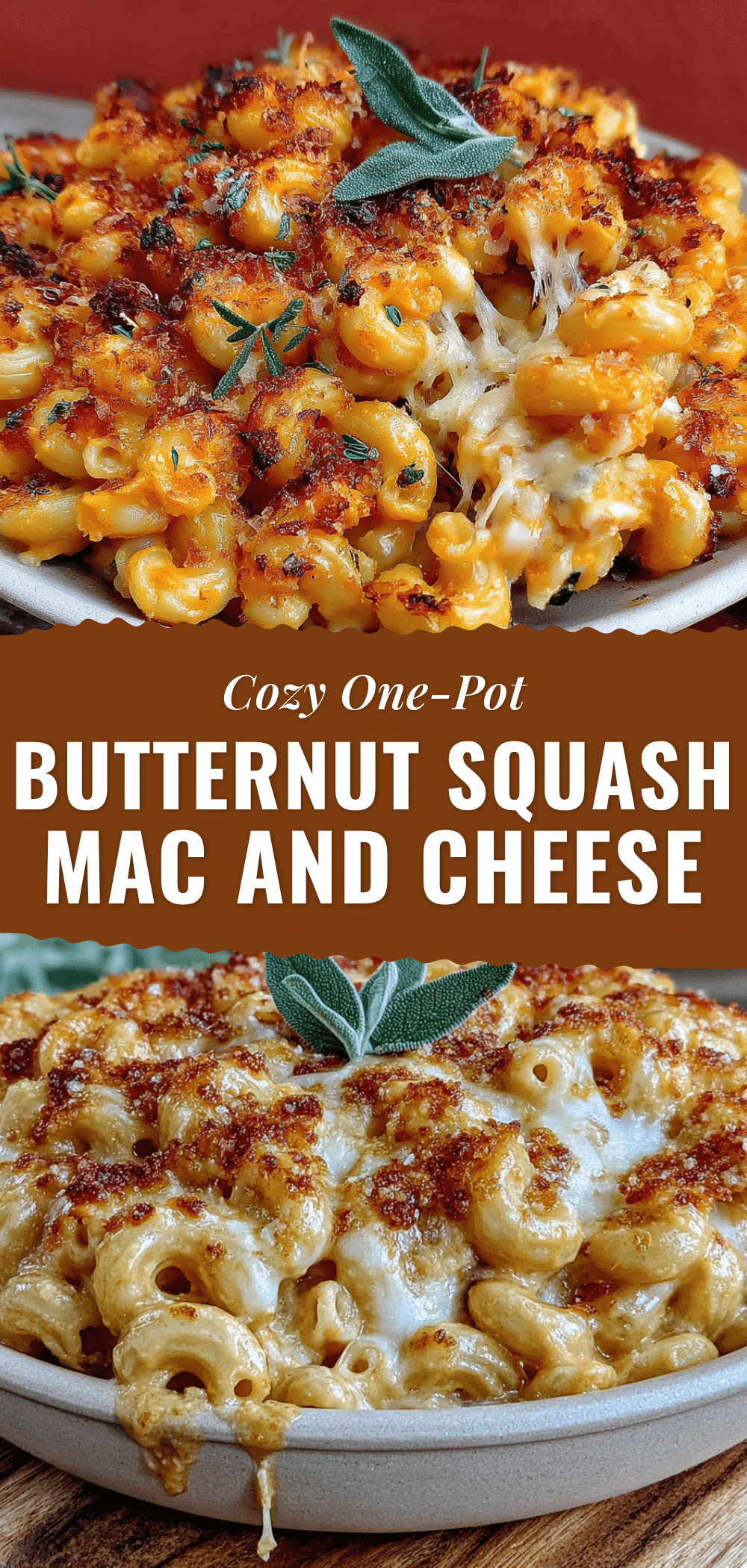
Cozy One-Pot Butternut Squash Mac and Cheese: Easy 30-Minute Meal

This creamy, one-pot butternut squash mac and cheese comes together in under 30 minutes with simple ingredients. It’s the ultimate comfort food for cozy nights, with a naturally thick and silky sauce that’s healthier and faster than traditional recipes.
- Prep Time: 10 minutes
- Cook Time: 20 minutes
- Total Time: 30 minutes
- Yield: 4 servings 1x
- Category: Main Course
- Cuisine: American
Ingredients
- 2 cups butternut squash, peeled and cubed (about 1 medium squash)
- 8 ounces elbow macaroni (about 2 cups)
- 2 cups vegetable broth, low-sodium
- 1 cup milk (whole milk preferred, or 2%)
- 1 ½ cups sharp cheddar cheese, freshly grated
- ½ cup Parmesan cheese, freshly grated
- 2 tablespoons unsalted butter
- ½ medium yellow onion, diced
- 3 cloves garlic, minced
- 1 teaspoon Dijon mustard
- ½ teaspoon salt (fine sea salt), plus more to taste
- ¼ teaspoon black pepper, freshly ground
- ¼ teaspoon nutmeg, freshly grated if possible
- ¼ cup panko breadcrumbs (optional, for topping)
- 1 tablespoon melted butter (optional, for topping)
Instructions
- Cook the Squash (5 minutes): Place the cubed butternut squash in a microwave-safe bowl with 2 tablespoons of water. Cover and microwave on high for 5-7 minutes, until fork-tender. Alternatively, steam on the stovetop in a covered pot with an inch of water for about 10 minutes. Drain any excess water.
- Puree the Squash: Transfer the cooked squash to a blender or use an immersion blender directly in the bowl. Add ½ cup of the vegetable broth and blend until completely smooth. Set aside. You should have about 1 ½ cups of puree.
- Sauté the Aromatics (3 minutes): In your large pot or Dutch oven, melt the butter over medium heat. Add the diced onion and cook, stirring occasionally, until soft and translucent—about 3 minutes. Add the minced garlic and cook for another 30 seconds until fragrant. Don’t let the garlic burn.
- Combine Liquids: Pour in the remaining 1 ½ cups of vegetable broth, the milk, and the squash puree. Whisk in the Dijon mustard, salt, pepper, and nutmeg. Bring the mixture to a gentle simmer over medium-high heat.
- Cook the Pasta (8-10 minutes): Stir in the elbow macaroni. Reduce the heat to medium-low so the liquid is at a steady simmer, not a rolling boil. Cook, stirring frequently to prevent sticking, until the pasta is al dente and most of the liquid has been absorbed. The sauce will look thin at first, but it will thicken as the pasta releases its starch. If the mixture gets too thick before the pasta is done, add a splash of milk or broth.
- Add the Cheese (2 minutes): Remove the pot from the heat. Add the shredded cheddar and Parmesan cheese. Stir vigorously until the cheese is completely melted and the sauce is smooth and creamy. Taste and adjust seasoning—you might want an extra pinch of salt or a crack of pepper.
- Optional Crunchy Topping (2 minutes): If using the panko topping, mix the breadcrumbs with melted butter. Sprinkle over the mac and cheese and place under a broiler for 1-2 minutes, watching closely, until golden brown. This step is entirely optional but adds a lovely textural contrast.
- Rest and Serve: Let the mac and cheese sit for 2-3 minutes before serving. It will continue to thicken as it cools. Serve hot, garnished with a sprinkle of fresh parsley or extra black pepper if you like.
Notes
Grate your own cheese for the smoothest sauce; pre-shredded cheese contains anti-caking agents that prevent smooth melting. The sauce will look thin when you first add the pasta but will thicken as it cooks. For a smoky twist, substitute half the cheddar with smoked gouda. Leftovers can be stored in an airtight container in the refrigerator for up to 4 days; reheat on the stovetop with a splash of milk or broth.
Nutrition
- Serving Size: 1 ½ cups
- Calories: 480
- Sugar: 8
- Sodium: 680
- Fat: 22
- Saturated Fat: 13
- Carbohydrates: 52
- Fiber: 6
- Protein: 22
Keywords: butternut squash mac and cheese, one-pot mac and cheese, easy mac and cheese, 30-minute meal, comfort food, vegetarian mac and cheese, creamy mac and cheese