Love this? Save it for later!
Share the inspiration with your friends
“Mom, why can’t you just dump the squash in with the pasta water?” my nine-year-old asked, peering over my shoulder as I wrestled with a raw butternut squash on a Tuesday evening.
I started to explain why that wouldn’t work—something about cooking times, texture, and the sacred order of kitchen operations. Then I stopped. Honestly, I had no good reason. I’d just never tried it. So I shrugged, cubed the squash a little smaller than usual, and tossed it into the boiling water right alongside the rigatoni. The look on her face—half triumph, half “I told you so”—was worth the risk alone.
And you know what? It worked perfectly. The squash came out tender but not mushy, and the starchy pasta water did something magical, creating a silky base for the brown butter sauce without any extra cream or flour. I stood there, spoon in hand, genuinely delighted at being so wrong. Maybe you’ve been there—that moment when a beginner’s instinct cuts through all your hard-earned kitchen rules and makes you wonder who’s really the cook around here.
That night, my cozy brown butter squash pasta became an instant family favorite. The kids devoured it, my husband asked for seconds, and I finally stopped overcomplicating fall dinners. Let me tell you, there’s something deeply satisfying about a meal that tastes like you spent hours on it but came together in the time it takes to boil pasta. This is that recipe—the one that makes you feel smart, resourceful, and maybe a little humbled by a fourth-grader’s logic.
Why You’ll Love This Recipe
This cozy brown butter squash pasta isn’t just another fall recipe—it’s the one I turn to when I need dinner on the table fast, without sacrificing flavor or breaking the bank. Here’s why it works for my family, and I think it’ll work for yours too.
- Quick & Easy: From start to finish, this dish takes about 30 minutes. The squash cooks right in the pasta water, so there’s no roasting time, no extra pans, and no fuss.
- Simple Ingredients: You probably already have most of these in your pantry. A single butternut squash, some pasta, butter, sage, and a few pantry staples—no fancy grocery trips required.
- Perfect for Busy Weeknights: This is the kind of meal that saves a Tuesday. It feels special enough for a Sunday dinner but comes together fast enough for a school night.
- Crowd-Pleaser: Even my pickiest eater, who usually eyes anything orange with suspicion, asks for seconds. The brown butter and sage do something magical—they make the squash taste nutty and sweet, not vegetal.
- Unbelievably Delicious: The texture is pure comfort—tender squash, al dente pasta, and a glossy, savory sauce that coats every bite. It’s the kind of dish that makes you close your eyes after the first forkful.
What sets this cozy brown butter squash pasta apart from other versions? It’s the technique. By cooking the squash directly in the pasta water, you skip the roasting step and let the starches from the pasta and the natural sugars from the squash work together. The result is a sauce that’s creamy without a drop of cream—just butter, sage, and a little pasta water magic. It’s comfort food reimagined: faster, simpler, but with the same soul-soothing satisfaction.
This isn’t just good—it’s the kind of recipe that makes you feel like you’ve pulled off something brilliant with almost no effort. Perfect for impressing your family without the stress, or turning a simple Wednesday into something memorable.
What Ingredients You Will Need
This recipe uses simple, wholesome ingredients to deliver bold flavor and satisfying texture without the fuss. Most of these are pantry staples or easy to find at any grocery store, which makes this cozy brown butter squash pasta a go-to for busy families.
- 1 medium butternut squash (about 2 pounds), peeled, seeded, and cut into ½-inch cubes — I prefer using a pre-peeled squash from the store when I’m short on time, but fresh is always best. Look for one that feels heavy for its size and has no soft spots.
- 12 ounces dried pasta (rigatoni, penne, or orecchiette work great) — I love De Cecco or Barilla for their texture. The ridges on rigatoni catch the sauce beautifully.
- 4 tablespoons unsalted butter — Use good-quality butter here; it’s the star of the sauce. I recommend Kerrygold or any European-style butter for richer flavor.
- 10-12 fresh sage leaves — Fresh sage is non-negotiable for that earthy, aromatic flavor. Dried sage won’t give you the same result. If you can’t find fresh, you can substitute with a pinch of dried rubbed sage added to the butter, but it’s not quite the same.
- 3 cloves garlic, thinly sliced — Fresh garlic adds a gentle warmth. Pre-minced jarred garlic works in a pinch, but slice it fresh if you can.
- ½ cup grated Parmesan cheese, plus more for serving — Buy a block and grate it yourself; pre-shredded cheese doesn’t melt as smoothly. Pecorino Romano works too if you want a saltier kick.
- ½ teaspoon red pepper flakes (optional) — Adds a tiny bit of heat that cuts through the richness. Leave it out if you’re feeding little ones who are sensitive to spice.
- Salt and black pepper to taste — Use kosher salt for the pasta water and fine sea salt for seasoning the sauce.
- ¼ cup reserved pasta water — This is key for creating the sauce. Don’t skip it!
- Optional: ¼ cup toasted pine nuts or walnuts — Adds a lovely crunch. I toast them in a dry skillet while the pasta cooks.
- Optional: ½ cup heavy cream — If you want an extra-luxurious sauce, stir this in at the end. I usually skip it to keep things lighter, but it’s a nice indulgence.
Ingredient Tip: For the best texture, cut your squash into uniform ½-inch cubes. Smaller pieces cook faster and blend more easily into the sauce. If you’re using a pre-cut squash from the store, just make sure the pieces are roughly the same size.
Substitution Guidance: No butternut squash? Try kabocha or acorn squash instead—they have a similar sweetness and texture. For a gluten-free option, use your favorite gluten-free pasta. Just keep an eye on the cooking time, as gluten-free pasta can go from al dente to mushy quickly.
Equipment Needed
You don’t need a lot of fancy tools to make this cozy brown butter squash pasta, which is part of its charm. Here’s what you’ll need:
- Large pot (6-8 quarts) for boiling pasta and squash — A sturdy stainless steel or enameled cast iron pot works best. I’ve used my old Dutch oven for years, and it holds heat beautifully.
- Large skillet or sauté pan — For browning the butter and finishing the sauce. A 12-inch skillet is ideal. Non-stick works, but stainless steel gives you better control over the browning.
- Sharp chef’s knife — For cubing the squash. A dull knife makes this job dangerous and frustrating. I use a 8-inch Wüsthof, but any sharp knife will do.
- Vegetable peeler — For peeling the squash. A Y-shaped peeler is faster than a standard one.
- Wooden spoon or silicone spatula — For stirring the pasta and sauce. Wooden spoons don’t scratch your pots and are gentle on the squash.
- Measuring cups and spoons — For accuracy, especially with the butter and Parmesan.
- Colander — For draining the pasta. But remember, you’re reserving the pasta water, so have a liquid measuring cup or bowl ready to catch it.
Budget-Friendly Tip: If you don’t have a vegetable peeler, you can microwave the whole squash for 2-3 minutes to soften the skin, then peel it with a paring knife. It’s a little messier, but it works in a pinch.
Preparation Method
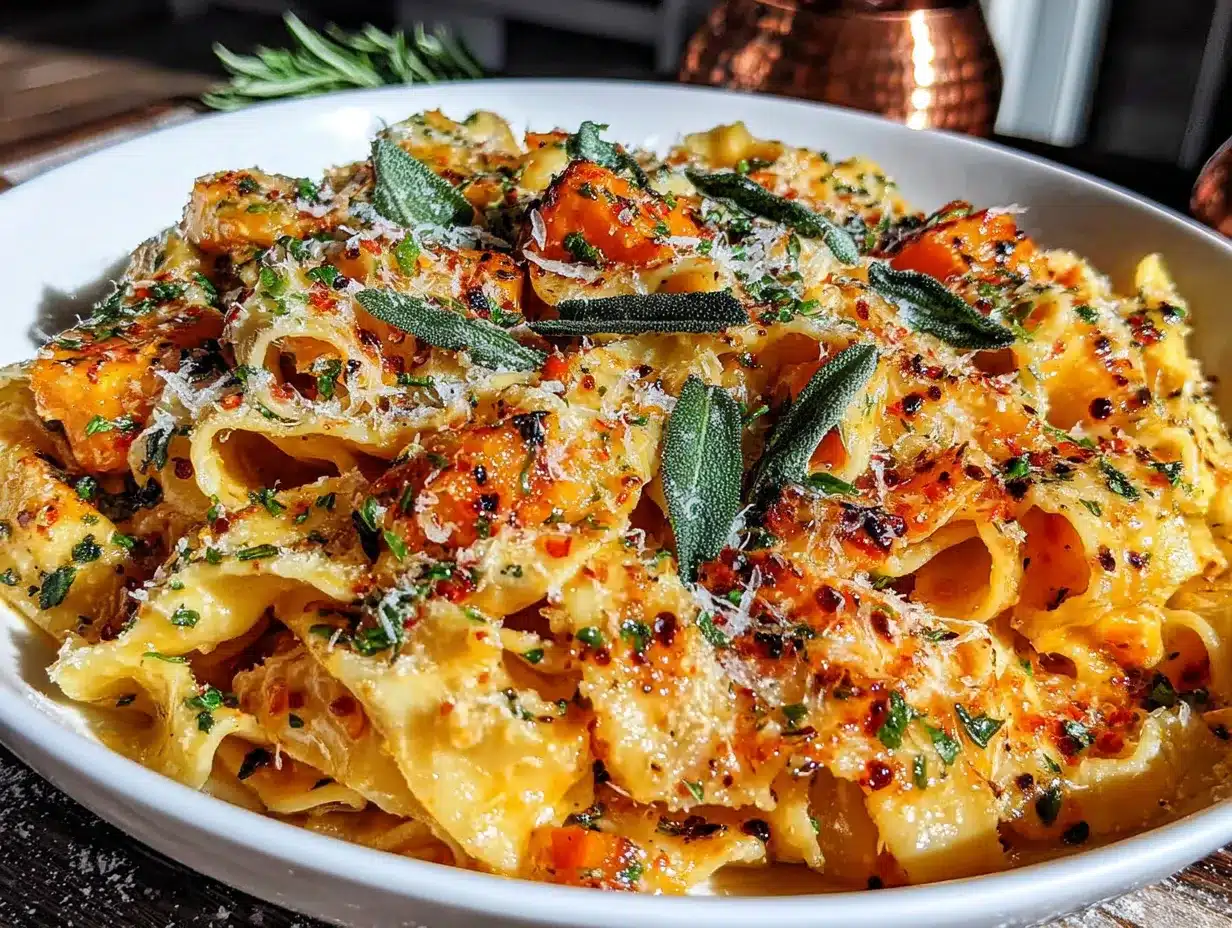
Let’s make this cozy brown butter squash pasta. Trust me, once you see how easy it is, you’ll never go back to roasting squash separately again.
- Bring a large pot of salted water to a rolling boil. Add about 1 tablespoon of salt per 4 quarts of water—it should taste like the sea. This is your only chance to season the pasta and squash from the inside out.
- While the water heats, prepare the squash. Peel the butternut squash with a vegetable peeler, cut off the top and bottom, then slice it in half lengthwise. Scoop out the seeds with a spoon (save them for roasting later if you’re feeling ambitious). Cut the squash into ½-inch cubes. This takes about 5-7 minutes. If you’re short on time, look for pre-cut squash in the produce section.
- Add the pasta to the boiling water and set a timer for 2 minutes less than the package directions. For example, if your pasta says 10 minutes, set the timer for 8 minutes. This is important because the squash and pasta will finish cooking together.
- After 2 minutes, add the cubed squash to the pot with the pasta. Stir gently to make sure the squash isn’t sticking to the bottom. Continue boiling until the pasta is al dente and the squash is fork-tender—about 6-8 more minutes, depending on the size of your cubes.
- Reserve 1 cup of the pasta cooking water before draining. Use a liquid measuring cup or a heatproof bowl to scoop out the starchy water. This is liquid gold for your sauce. Drain the pasta and squash in a colander, but don’t rinse them—you want that starch to help the sauce cling.
- While the pasta cooks, start the brown butter sauce. In a large skillet over medium heat, melt the 4 tablespoons of butter. Swirl the pan occasionally as the butter melts. It will foam up, then the foam will subside, and you’ll see little brown specks forming at the bottom. This takes about 3-4 minutes. Watch carefully—brown butter can go from perfect to burnt in seconds.
- As soon as the butter turns a golden-amber color and smells nutty, add the fresh sage leaves and sliced garlic. They’ll sizzle immediately. Cook for about 30 seconds, just until the garlic is fragrant and the sage is crispy. Don’t let the garlic burn—it turns bitter fast.
- If using red pepper flakes, add them now and stir for 10 seconds to bloom the spice in the warm butter.
- Reduce the heat to low and add the drained pasta and squash to the skillet. Toss gently to coat everything in the brown butter sauce. The squash might break apart a little—that’s perfect. It creates a creamy, almost sauce-like texture.
- Add ¼ cup of the reserved pasta water and the grated Parmesan cheese. Toss vigorously to combine. The starch in the water and the cheese will emulsify with the butter, creating a glossy, cohesive sauce. If the sauce seems too thick, add more pasta water, a tablespoon at a time, until it reaches your desired consistency.
- Taste and season with salt and black pepper. Remember, the Parmesan is salty, so go easy on the salt at first. I usually add about ¼ teaspoon of black pepper for a little warmth.
- Serve immediately in warm bowls, topped with extra Parmesan, a few crispy sage leaves, and toasted pine nuts or walnuts if you’re using them. The pasta waits for no one—this dish is best enjoyed fresh.
Sensory Cue: When the brown butter is ready, it should smell like toasted nuts and caramel. The sage leaves will turn a darker green and become papery-crisp. The finished pasta should look glossy, with the sauce clinging to every ridge of the rigatoni.
Prep Note: If you’re making this for a crowd, you can cube the squash and slice the garlic up to a day ahead. Store them in separate airtight containers in the fridge. The sage leaves should stay fresh wrapped in a damp paper towel in the crisper drawer.
Cooking Tips & Techniques
After making this cozy brown butter squash pasta more times than I can count, I’ve picked up a few tricks that make a real difference. Let me share what I’ve learned—sometimes the hard way.
Don’t rush the brown butter. I know it’s tempting to crank up the heat, but medium heat is your friend. The first time I made this, I got impatient and ended up with burnt butter that tasted bitter and acrid. It ruined the whole dish. Brown butter happens in the last 30 seconds—watch it like a hawk. When the foam subsides and you see golden specks, pull it off the heat immediately.
Cut the squash uniformly. This is the most important prep step. If your cubes are different sizes, some will turn to mush while others stay crunchy. I aim for ½-inch cubes, and I take the extra 30 seconds to even out any stragglers. It makes a noticeable difference in the final texture.
Reserve more pasta water than you think you need. I always save a full cup, even though I usually only use ¼ to ½ cup. The starchy water is your secret weapon for adjusting the sauce consistency. If your pasta sits for a minute while you’re plating, it’ll absorb some sauce, and a splash of reserved water brings it back to life.
Toast the nuts separately. If you’re adding pine nuts or walnuts, toast them in a dry skillet over medium heat for 2-3 minutes, shaking the pan frequently. They can burn in a heartbeat—I’ve lost count of how many batches I’ve scorched while distracted by the pasta.
Timing is everything. Start the brown butter sauce about 2 minutes before the pasta is done. This way, everything comes together at the same time, and the pasta goes straight from the colander to the skillet while it’s still hot. Cold pasta doesn’t absorb sauce as well.
One last thing: If your sauce seems greasy or separated, you probably didn’t add enough pasta water or cheese. The starch and protein act as emulsifiers. Add a splash more water and toss vigorously—it should come back together.
Variations & Adaptations
This cozy brown butter squash pasta is wonderfully adaptable. Here are some ways I’ve tweaked it for different moods, diets, and seasons.
Make it vegetarian or vegan. The recipe is already vegetarian as written. For a vegan version, swap the butter for a high-quality vegan butter (I like Miyoko’s) and use nutritional yeast instead of Parmesan. The sauce won’t be quite as rich, but it’s still delicious. Add a tablespoon of white miso paste to the sauce for an umami boost.
Add protein for a heartier meal. My husband loves this with crispy pancetta or bacon crumbled on top. Cook the pancetta in the skillet before making the brown butter, then set it aside and use the rendered fat in place of some of the butter. You can also add shredded rotisserie chicken or sautéed Italian sausage—just stir it in at the end to warm through.
Switch up the squash. Butternut is my go-to, but this works beautifully with kabocha, acorn, or even sweet potatoes. Each has a slightly different sweetness and texture. Kabocha has a richer, almost chestnut-like flavor that’s amazing with brown butter. Just peel and cube the same way.
Seasonal spin-offs. In the summer, I swap the butternut squash for zucchini and yellow squash (cut into half-moons) and use fresh basil instead of sage. In the spring, asparagus tips and peas make a lovely, bright version. The technique stays the same—add the vegetables to the pasta water in the last few minutes of cooking.
Gluten-free and grain-free options. Use your favorite gluten-free pasta—I’ve had good luck with chickpea or brown rice pasta. Just check the cooking time, as gluten-free pasta often needs a shorter boil. For a low-carb option, serve the sauce over spiralized zucchini noodles or roasted spaghetti squash.
My personal favorite variation: I once added a handful of chopped kale to the skillet along with the pasta and squash. The heat wilted it perfectly, and the slight bitterness of the kale balanced the sweet squash and nutty butter. It’s become my go-to when I want to sneak in extra greens.
Serving & Storage Suggestions
This cozy brown butter squash pasta is best served fresh, but I’ve got plenty of tips for making it work for leftovers too.
Serving Temperature: Serve this pasta piping hot, straight from the skillet. Warm your serving bowls in a low oven (200°F) for a few minutes—cold bowls will suck the heat right out of the pasta. Top each bowl with a generous shower of Parmesan and a few crispy sage leaves for a beautiful presentation.
What to Serve With It: A simple side salad with a lemony vinaigrette cuts through the richness beautifully. I love arugula with shaved Parmesan and a squeeze of lemon. Garlic bread or crusty sourdough is also fantastic for sopping up any leftover sauce. For a complete meal, serve alongside roasted chicken or a simple frittata.
Beverage Pairing: A crisp white wine like Sauvignon Blanc or a light Pinot Grigio works well. For a non-alcoholic option, sparkling water with a twist of lemon cleanses the palate nicely.
Storage Instructions: Store leftovers in an airtight container in the refrigerator for up to 3 days. The pasta will absorb some of the sauce as it sits, so don’t be alarmed if it looks drier the next day.
Reheating Tips: The best way to reheat is in a skillet over medium-low heat with a splash of reserved pasta water or chicken broth. Stir gently until warmed through—about 3-4 minutes. The microwave works in a pinch, but it tends to make the squash mushy and the sauce greasy. If you must microwave, do it in 30-second bursts, stirring between each, and add a splash of water.
Freezer Instructions: I don’t recommend freezing this dish, as the texture of the squash and sauce changes significantly upon thawing. The pasta becomes mushy, and the sauce can separate. If you must freeze, do so before adding the cheese and sauce—freeze the cooked pasta and squash separately, then finish with fresh butter and Parmesan when reheating.
Flavor Development: Honestly, this pasta is at its peak the day you make it. The brown butter flavor is brightest, the sage is crispiest, and the texture is perfect. Leftovers are still good, but they won’t have the same magic. That’s why I try to make just enough for one meal—no regrets.
Nutritional Information & Benefits
This cozy brown butter squash pasta is comfort food that happens to be pretty good for you. Here’s a rough breakdown per serving (based on 4 servings, without optional nuts or cream):
- Calories: Approximately 450-500 per serving
- Protein: 14 grams
- Fat: 18 grams (mostly from butter and Parmesan)
- Carbohydrates: 62 grams
- Fiber: 7 grams
- Sugar: 8 grams (naturally occurring from the squash)
- Sodium: 500-600 mg (varies based on salt and cheese)
Health Benefits: Butternut squash is packed with vitamin A (over 400% of your daily needs per cup), vitamin C, potassium, and fiber. The beta-carotene gives it that vibrant orange color and supports eye health and immune function. Sage is known for its anti-inflammatory properties and adds a lovely depth of flavor without extra salt or fat.
Dietary Considerations: This recipe is vegetarian as written. For a lower-calorie version, reduce the butter to 2 tablespoons and use less Parmesan. To lower the carb count, swap the pasta for zucchini noodles or spaghetti squash—just sauté them briefly instead of boiling.
Potential Allergens: This recipe contains dairy (butter, Parmesan) and gluten (pasta). For dairy-free, use vegan butter and nutritional yeast. For gluten-free, use your favorite gluten-free pasta.
My Personal Take: I love that this dish feels indulgent but isn’t loaded with heavy cream or processed ingredients. It’s the kind of meal that fills you up without weighing you down, and I feel good serving it to my family on a busy weeknight. The squash adds real nutritional value, and the brown butter makes vegetables taste like a treat—what’s not to love?
Conclusion
This cozy brown butter squash pasta has become a staple in my kitchen for good reason. It’s quick, affordable, and uses simple ingredients to create something that feels genuinely special. The brown butter and sage work together to make humble butternut squash taste like a five-star restaurant dish, and the fact that it all comes together in one pot (okay, one pot and one skillet) makes cleanup a breeze.
I love that this recipe taught me to trust the process—and sometimes, to trust a nine-year-old’s instincts. It’s a reminder that the best meals don’t come from rigid rules but from a little curiosity and a willingness to try something different. Maybe you’ll find your own twist on this dish, whether it’s adding kale, swapping the squash, or serving it with a side of crispy pancetta.
I’d love to hear how it turns out for you. Did your family love it? Did you try a variation? Drop a comment below and let me know—your ideas might just inspire someone else’s dinner tonight. And if you’re looking for more easy, family-friendly meals, check out my creamy Tuscan chicken pasta or my one-pot lemon herb risotto for another weeknight winner.
Until next time, happy cooking—and don’t be afraid to let the beginners in your kitchen teach you a thing or two.
Frequently Asked Questions
Can I use frozen butternut squash instead of fresh?
Yes, you can! Frozen butternut squash works in a pinch, but the texture will be softer, and it may break down more in the pasta water. Add it to the pot in the last 3-4 minutes of cooking (instead of the full 6-8 minutes) to prevent it from turning to mush. No need to thaw it first.
Why did my brown butter turn bitter?
Brown butter turns bitter when it’s overheated. The milk solids go from golden to burnt very quickly—usually in less than 30 seconds. Keep the heat on medium, swirl the pan constantly, and pull it off the burner as soon as you see golden-brown specks and smell a nutty aroma. If you see black specks, you’ve gone too far. Start over—it’s worth it.
Can I make this recipe ahead of time for a party?
This dish is best served fresh, but you can prep components ahead. Cube the squash, slice the garlic, and measure the Parmesan up to 2 days in advance. Store them separately in the fridge. When you’re ready to serve, cook the pasta and squash, make the sauce, and toss everything together. It takes about 20 minutes from start to finish.
What’s the best pasta shape for this recipe?
Rigatoni is my top choice because the ridges catch the sauce beautifully. Orecchiette (little ears) are also fantastic—they hold pockets of brown butter and squash. Penne, farfalle, or even spaghetti work well too. Avoid very delicate shapes like angel hair, which can’t hold up to the chunky squash.
Can I skip the sage if I don’t have any?
You can, but the dish will lose a lot of its character. Sage and brown butter are a classic pairing—the herb’s earthiness balances the richness. If you don’t have fresh sage, try fresh thyme or rosemary instead (about 1 teaspoon of leaves). Dried sage won’t give you the same texture or flavor, so it’s better to use a different fresh herb altogether.
Pin This Recipe!
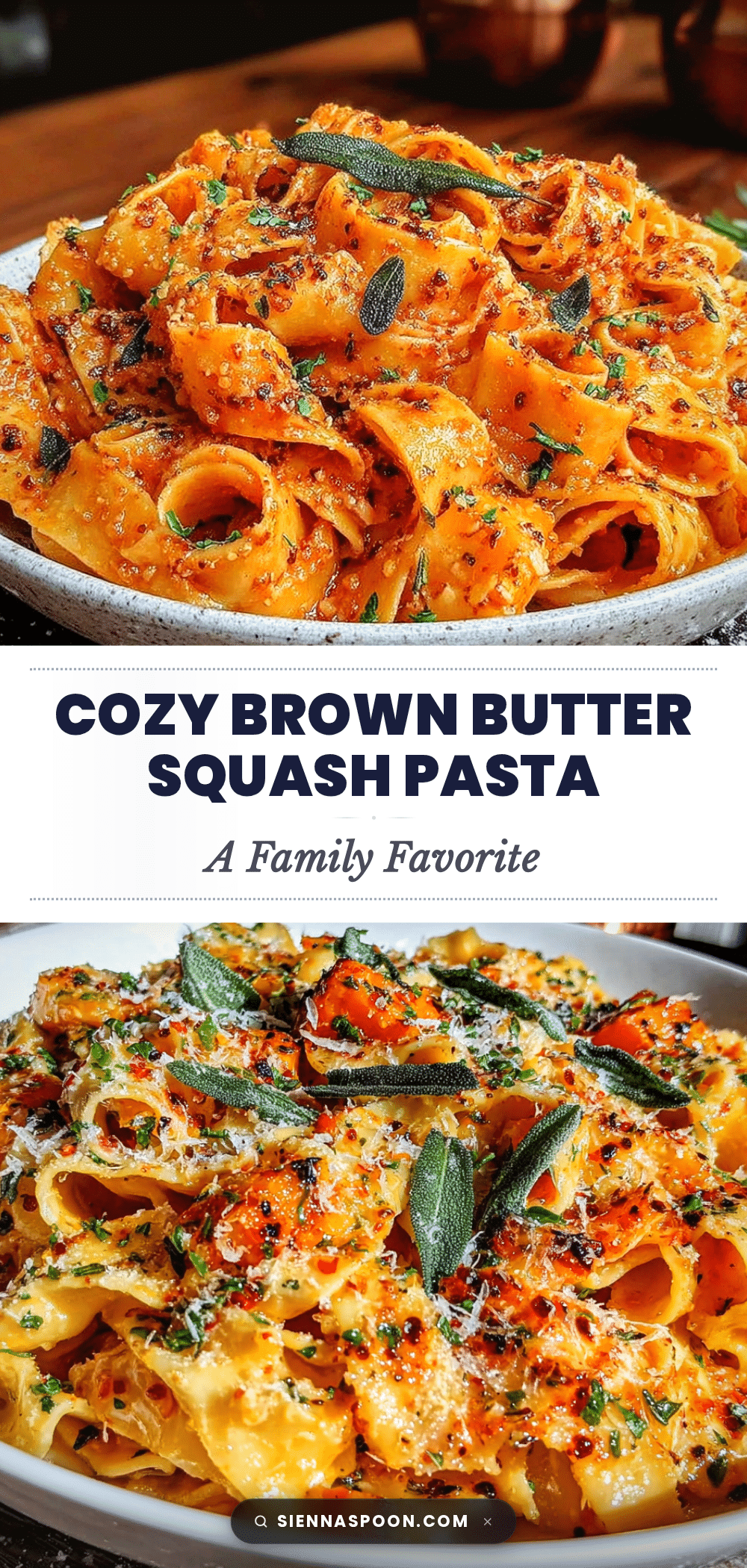
Cozy Brown Butter Squash Pasta – Easy Family Favorite
This quick and easy brown butter squash pasta is a family favorite that comes together in about 30 minutes. The squash cooks right in the pasta water, creating a silky sauce without any cream or flour.
- Prep Time: 15 minutes
- Cook Time: 15 minutes
- Total Time: 30 minutes
- Yield: 4 servings 1x
- Category: Main Course
- Cuisine: American
Ingredients
- 1 medium butternut squash (about 2 pounds), peeled, seeded, and cut into ½-inch cubes
- 12 ounces dried pasta (rigatoni, penne, or orecchiette work great)
- 4 tablespoons unsalted butter
- 10–12 fresh sage leaves
- 3 cloves garlic, thinly sliced
- ½ cup grated Parmesan cheese, plus more for serving
- ½ teaspoon red pepper flakes (optional)
- Salt and black pepper to taste
- ¼ cup reserved pasta water
- Optional: ¼ cup toasted pine nuts or walnuts
- Optional: ½ cup heavy cream
Instructions
- Bring a large pot of salted water to a rolling boil. Add about 1 tablespoon of salt per 4 quarts of water.
- While the water heats, prepare the squash. Peel the butternut squash with a vegetable peeler, cut off the top and bottom, then slice it in half lengthwise. Scoop out the seeds with a spoon. Cut the squash into ½-inch cubes.
- Add the pasta to the boiling water and set a timer for 2 minutes less than the package directions.
- After 2 minutes, add the cubed squash to the pot with the pasta. Stir gently. Continue boiling until the pasta is al dente and the squash is fork-tender—about 6-8 more minutes.
- Reserve 1 cup of the pasta cooking water before draining. Drain the pasta and squash in a colander; do not rinse.
- While the pasta cooks, start the brown butter sauce. In a large skillet over medium heat, melt the 4 tablespoons of butter. Swirl the pan occasionally. Cook until the butter turns a golden-amber color and smells nutty, about 3-4 minutes.
- As soon as the butter is ready, add the fresh sage leaves and sliced garlic. Cook for about 30 seconds, until the garlic is fragrant and the sage is crispy.
- If using red pepper flakes, add them now and stir for 10 seconds.
- Reduce the heat to low and add the drained pasta and squash to the skillet. Toss gently to coat.
- Add ¼ cup of the reserved pasta water and the grated Parmesan cheese. Toss vigorously to combine. If the sauce seems too thick, add more pasta water, a tablespoon at a time.
- Taste and season with salt and black pepper.
- Serve immediately in warm bowls, topped with extra Parmesan, crispy sage leaves, and toasted pine nuts or walnuts if using.
Notes
For the best texture, cut your squash into uniform ½-inch cubes. Brown butter can go from perfect to burnt in seconds—watch it carefully. Reserve more pasta water than you think you need; it’s your secret weapon for adjusting sauce consistency. This dish is best served fresh.
Nutrition
- Serving Size: 1 serving (about 1.5
- Calories: 475
- Sugar: 8
- Sodium: 550
- Fat: 18
- Saturated Fat: 10
- Carbohydrates: 62
- Fiber: 7
- Protein: 14
Keywords: brown butter, squash pasta, butternut squash, easy weeknight dinner, fall recipe, family favorite, quick pasta