Love this? Save it for later!
Share the inspiration with your friends
“It was 1:17 AM on a Wednesday, and honestly, my brain was stuck on the idea of making something fluffy and moist for breakfast the next day. The problem? I didn’t have a single egg in the house—typical, right? So there I was, half-awake, rummaging through the pantry, trying to figure out how to whip up a batch of pancakes without eggs. That’s when I spotted the flax seeds, chia seeds, and a can of chickpeas (well, aquafaba, really), and an idea sparked.
Let me tell you, this easy creamy vegan egg substitute with flax, chia & aquafaba wasn’t planned at all—it was pure kitchen improvisation under sleep-deprived conditions. I honestly thought it might flop, but the texture turned out unbelievably creamy and light. The next morning, as I bit into those pancakes, I closed my eyes and smiled—this was a game changer.
Maybe you’ve been there too: that moment when you’re missing a key ingredient, yet you still want to create something satisfying and wholesome. This recipe stayed with me because it’s practical, uses pantry staples, and feels like a little kitchen magic. It’s creamy, it’s easy, and it works like a charm in baking or cooking whenever you need an egg substitute. Plus, it’s vegan-friendly and adaptable, which makes it my go-to for all kinds of recipes.
Why You’ll Love This Recipe
After testing countless egg substitutes in my kitchen, this easy creamy vegan egg substitute with flax, chia & aquafaba stands out for several reasons. It’s one of those recipes you’ll come back to without hesitation. Here’s why:
- Quick & Easy: Whips up in under 5 minutes—ideal for busy mornings or last-minute baking emergencies.
- Simple Ingredients: Flax seeds, chia seeds, and aquafaba are pantry staples for many, so no extra trips to the store.
- Perfect for Baking & Cooking: Works beautifully in muffins, pancakes, cookies, and even savory dishes.
- Crowd-Pleaser: Whether you’re vegan or just egg-curious, this substitute blends seamlessly without altering flavors.
- Unbelievably Creamy: The combo creates a silky texture that binds ingredients just like eggs—no weird aftertaste!
This isn’t just another flax egg hack. The addition of aquafaba adds that fluffiness and lightness I found missing in many substitutes. The chia brings extra nutrition and a slight gel-like consistency that enhances the creaminess. Honestly, this trifecta hits the sweet spot for both texture and taste.
If you’re the type who’s tried a flax egg and thought, “Meh, close but no cigar,” this recipe will win you over. I mean, it’s comfort food made vegan-friendly, with none of that compromise. It’s also fabulous for impressing guests who might not even realize there’s no egg in their slice of cake or batch of brownies.
What Ingredients You Will Need
This recipe uses simple, wholesome ingredients to deliver a creamy, reliable egg substitute without fuss or specialty shopping. Here’s what you’ll gather:
- Ground Flaxseed – 1 tablespoon (I prefer Bob’s Red Mill for its consistent grind and freshness)
- Chia Seeds – 1 tablespoon (whole seeds work best here; they swell beautifully)
- Aquafaba – 3 tablespoons (the liquid from canned chickpeas; make sure it’s unsalted for neutral taste)
- Warm Water – 3 tablespoons (helps activate the flax and chia gels quickly)
- Optional: A pinch of baking powder – if you want a little extra lift in baked goods
You’ll notice this recipe leans on pantry staples you might already have. The flaxseed and chia are not only egg replacers but also packed with omega-3 fatty acids and fiber, which is a nice bonus. Aquafaba, that mysterious chickpea water, has gained fame in vegan cooking for its amazing ability to mimic egg whites — it’s a natural binder and foamer.
If you don’t have aquafaba on hand, you can substitute with an additional 6 tablespoons of water mixed with the seeds, but the texture will be less creamy and more gelatinous. For gluten-free baking, this substitute fits perfectly, especially when paired with flours like almond or oat.
Seasoning-wise, this mix is neutral, so it works for sweet or savory recipes. I once swapped in coconut water for warm water in a tropical-flavored cake, and it was surprisingly delightful!
Equipment Needed
Here’s what you’ll want to have ready to make this easy creamy vegan egg substitute:
- Small Mixing Bowl: For combining the flax, chia, and aquafaba. A glass or ceramic bowl works well.
- Measuring Spoons: Precision matters here—too much or too little aquafaba can change consistency.
- Whisk or Fork: To mix the ingredients thoroughly until smooth and creamy.
- Fine Mesh Strainer (Optional): If you want to rinse canned chickpeas before using aquafaba.
Honestly, no fancy gadgets needed. I’ve tried making this in a blender, but a simple whisk does the job just fine and saves cleanup time. If you’re counting budget-friendly options, all the tools are basic kitchen staples.
For those who like to be prepared, having a small airtight jar to store any leftover substitute (if made in bulk) can be handy, but keep in mind it’s best fresh.
Preparation Method
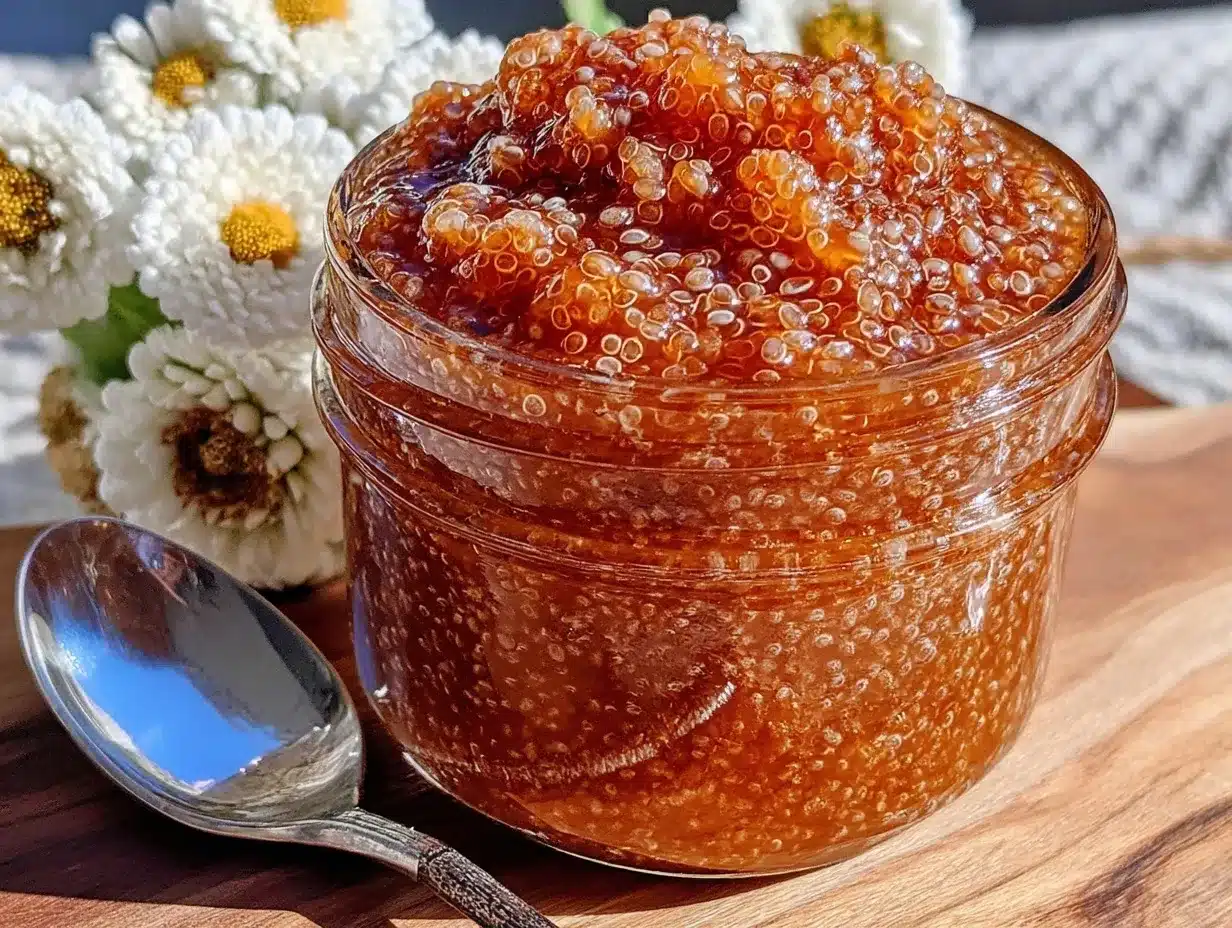
- Measure out 1 tablespoon each of ground flaxseed and whole chia seeds. If you don’t have ground flaxseed, you can grind whole flaxseeds in a coffee grinder or blender. This helps release the oils and thickens the mixture better. (Time: 2 minutes)
- Combine the flax and chia seeds in your mixing bowl. Give them a quick stir to mix evenly before adding liquids.
- Add 3 tablespoons of warm water. Using warm water is key here because it activates the gel-forming properties of the seeds faster. If your water is too hot, it might cook the aquafaba later, so aim for pleasantly warm—not boiling. (Time: 1 minute)
- Pour in 3 tablespoons of aquafaba. This liquid is the star for creaminess and binding. Make sure it’s unsalted and not too thick or watery; a consistency similar to egg whites works best.
- Whisk everything together vigorously. You want a smooth, creamy mixture that’s slightly thick but still pourable. The seeds will swell and gel as they absorb the liquid. (Time: 2 minutes)
- Let the mixture rest for about 5 minutes. This waiting period is crucial. The gel-like texture will develop fully, and the mix will thicken to a creamy consistency perfect for baking or cooking.
- Optional: Stir in a pinch of baking powder. This can add extra lift in baked goods, especially cakes or muffins.
If your mixture looks too thick, add a teaspoon of warm water at a time until you get the right consistency. Too runny? Add a bit more ground flax or chia. The end goal is a creamy, thickened substitute that holds ingredients together without clumping or separating.
When I first made this, I accidentally grabbed cold water and got impatient, so the gel didn’t form properly—I learned to trust the resting step since then. Also, be careful with the aquafaba amount; too much and the batter gets runny; too little and it’s crumbly.
Cooking Tips & Techniques
Making a vegan egg substitute that actually works can be tricky, but here are some tips I’ve picked up:
- Use Fresh Seeds: Flax and chia seeds lose their gel power if they’re old. Keep them in the fridge to extend shelf life.
- Don’t Skip the Rest Time: The magic happens while the seeds soak up the liquid. Patience here means better texture.
- Aquafaba Quality Matters: Store-bought canned chickpea liquid varies by brand. I find brands like Eden Foods offer more consistent results.
- Adjust Consistency Based on Recipe: For denser baked goods like brownies, a thicker substitute works better. For lighter cakes, a more fluid mix is ideal.
- Mix Well, But Don’t Overdo: Whisk enough to combine, but overly vigorous whisking can break down the seed structure.
One time, I tried doubling the recipe without adjusting the water and ended up with a gluey mess—lesson learned! Also, if you’re multitasking, prepare the substitute first so it has time to thicken while you gather other ingredients.
Variations & Adaptations
This easy creamy vegan egg substitute is quite flexible. Here are some ways to tweak it:
- Nutty Boost: Add 1 teaspoon of nut butter (almond or peanut) to the mix for richness and flavor, great in cookies.
- Seed Switch-Up: Use all flax or all chia if you’re out of one, but keep in mind chia tends to be more gelatinous.
- Flavored Aquafaba: Try infusing aquafaba with a pinch of vanilla or cinnamon for sweet recipes.
- Allergen-Friendly: For nut allergies, stick strictly to flax, chia, and aquafaba without added nuts.
- Seasonal Spin: In fall, adding a pinch of pumpkin spice to the substitute can complement autumnal baked goods beautifully.
Personally, I once experimented by blending the aquafaba with a splash of oat milk for pancakes and got an even fluffier texture. It’s fun to play around without risking a total flop.
Serving & Storage Suggestions
This vegan egg substitute is best used fresh to get that creamy texture and binding power. When added to your batter or recipe, it melds invisibly, so presentation stays spot on.
Serve baked goods made with this substitute at room temperature or slightly warm to enjoy the full flavor and moistness. It pairs nicely with fresh fruit, maple syrup, or a dusting of powdered sugar.
If you want to prepare the substitute ahead, store it in an airtight container in the fridge for up to 24 hours. Before using, give it a good stir. Avoid freezing as the gel structure can break down.
Leftover baked goods made with this substitute keep well in an airtight container for 2-3 days and can be reheated gently in a toaster oven or microwave to regain softness.
Flavors often deepen after a day, especially in muffins or quick breads. So, if you’re prepping ahead for a brunch, this recipe works great to make your life easier.
Nutritional Information & Benefits
This easy creamy vegan egg substitute offers a nutritious alternative to traditional eggs, especially for those avoiding animal products or managing allergies.
- Low in Calories: Contains roughly 40-50 kcal per tablespoon serving of the mix.
- Rich in Omega-3 Fatty Acids: Thanks to the flax and chia seeds, which support heart and brain health.
- High in Fiber: Seeds provide digestive benefits and help keep you full longer.
- Cholesterol-Free: Perfect for vegan diets and those monitoring cholesterol intake.
- Gluten-Free: Naturally free from gluten, suitable for many dietary preferences.
From a wellness perspective, this substitute feels like a wholesome choice without sacrificing texture or taste. I’ve found it especially helpful when cooking for friends with egg allergies or when I want to lighten up my baking.
Conclusion
To wrap it up, this easy creamy vegan egg substitute with flax, chia & aquafaba is a reliable, tasty, and nutritious option for all your baking and cooking needs. It’s simple to make, uses ingredients you probably already have, and really pulls through when eggs aren’t an option.
Honestly, I love how versatile it is—you can tweak it for sweet or savory dishes without a hitch. Whether you’re vegan, allergic, or just curious, this recipe deserves a spot in your kitchen arsenal.
Give it a try, experiment with flavors or ingredient swaps, and let me know how it goes! Your feedback and adaptations always inspire me to keep sharing recipes that make life easier and more delicious.
Happy cooking!
FAQs About Easy Creamy Vegan Egg Substitute with Flax, Chia & Aquafaba
Can I use this vegan egg substitute for all baking recipes?
Yes, it works well in most baked goods like muffins, pancakes, cookies, and quick breads. For recipes requiring egg whites for fluffiness, aquafaba helps replicate that texture perfectly.
How much of this substitute equals one egg?
Typically, 3 tablespoons of this mixture replace one large egg in recipes.
Can I prepare this substitute in advance?
You can store it in the fridge for up to 24 hours, but it’s best used fresh for optimal creaminess and binding.
What if I don’t have aquafaba on hand?
You can double the water and seed amounts, but the texture might be less creamy and more gelatinous. Aquafaba adds a unique fluffiness.
Is this substitute suitable for savory dishes?
Absolutely! Its neutral flavor allows it to blend into savory recipes like veggie burgers or batters without affecting taste.
Pin This Recipe!
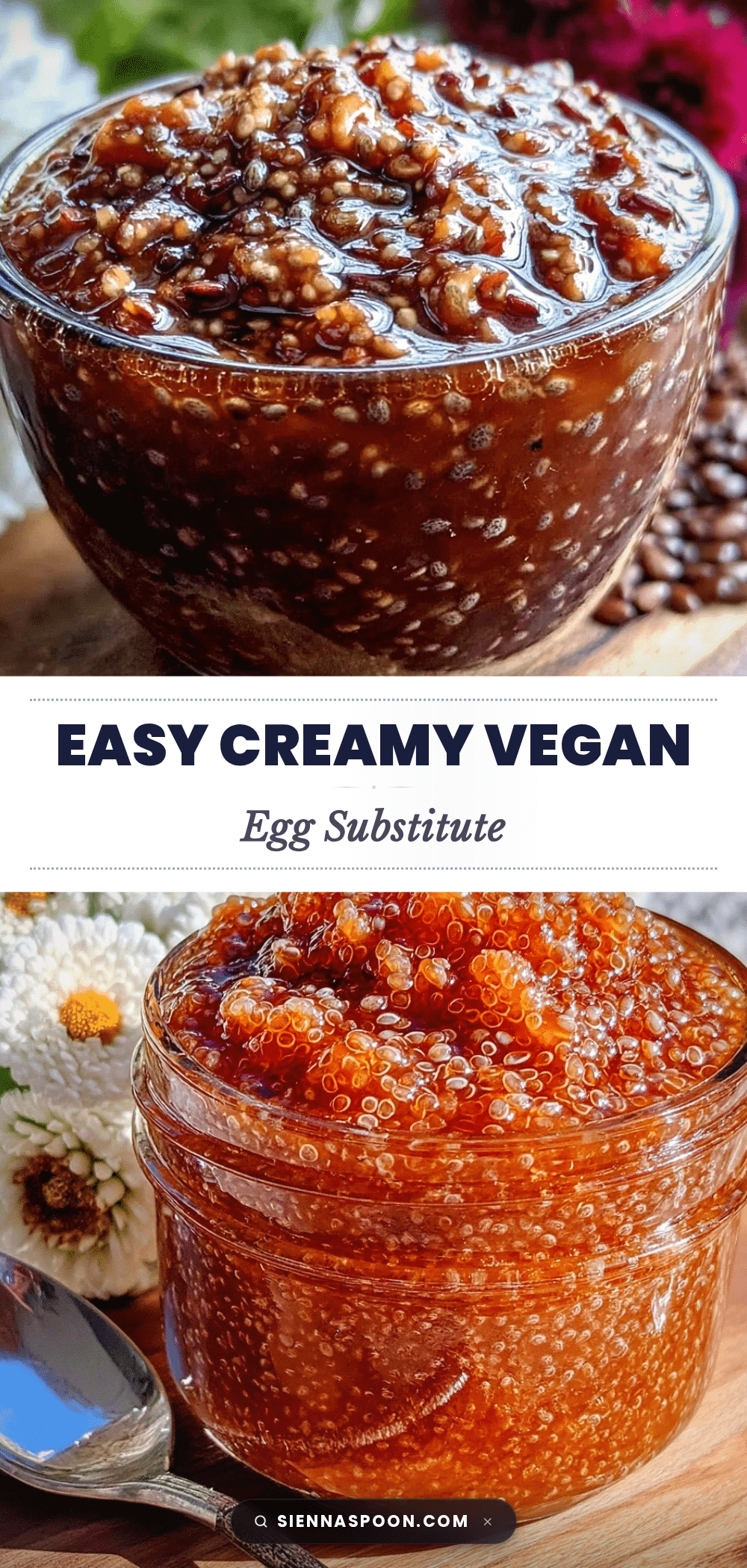
Easy Creamy Vegan Egg Substitute with Flax Chia Aquafaba Recipe
A quick and easy vegan egg substitute made from flax seeds, chia seeds, and aquafaba that creates a creamy, light texture perfect for baking and cooking.
- Prep Time: 5 minutes
- Cook Time: 0 minutes
- Total Time: 5 minutes
- Yield: 3 tablespoons (equivalent to 1 large egg) 1x
- Category: Ingredient Substitute
- Cuisine: Vegan
Ingredients
- 1 tablespoon ground flaxseed
- 1 tablespoon whole chia seeds
- 3 tablespoons aquafaba (liquid from canned chickpeas, unsalted)
- 3 tablespoons warm water
- Optional: a pinch of baking powder
Instructions
- Measure out 1 tablespoon each of ground flaxseed and whole chia seeds.
- Combine the flax and chia seeds in a small mixing bowl and stir to mix evenly.
- Add 3 tablespoons of warm water to activate the gel-forming properties of the seeds.
- Pour in 3 tablespoons of aquafaba, ensuring it is unsalted and has a consistency similar to egg whites.
- Whisk everything together vigorously until smooth and creamy, slightly thick but still pourable.
- Let the mixture rest for about 5 minutes to allow the gel-like texture to develop fully.
- Optional: Stir in a pinch of baking powder for extra lift in baked goods.
Notes
Use warm water (not boiling) to activate the seeds properly. Let the mixture rest for 5 minutes to develop the gel-like texture. Adjust consistency by adding warm water or more ground seeds as needed. Store in an airtight container in the fridge for up to 24 hours; avoid freezing. Fresh seeds yield better gel power. Optional baking powder adds lift in baked goods.
Nutrition
- Serving Size: 3 tablespoons (equiv
- Calories: 45
- Fat: 3
- Saturated Fat: 0.3
- Carbohydrates: 4
- Fiber: 3
- Protein: 2
Keywords: vegan egg substitute, flax egg, chia egg, aquafaba, egg replacement, vegan baking, gluten-free egg substitute