Love this? Save it for later!
Share the inspiration with your friends
My neighbor Sarah asked me why I couldn’t just roast the squash with the maple syrup already on it, instead of adding it halfway through. I started to explain how the sugars would burn, how the timing mattered, how you had to be careful with delicate squash. Then I stopped. Honestly? I had never actually tried it her way.
So I did. I tossed those half-moons of delicata squash in maple syrup and olive oil, threw in some pecans, and put the whole thing in the oven without my usual fussing. I was sure I’d be scraping burnt sugar off the pan twenty minutes later. But what came out was something I still think about — each piece caramelized at the edges, tender in the middle, with pecans that had toasted to a deep, nutty crunch. The skin, which I’d always warned people to eat, was the best part: crispy, almost candied, with a little chew.
I stood there holding the hot baking sheet, feeling a little sheepish. All those times I’d made roasted squash with my carefully staged process, and Sarah had just… stumbled onto something better. She shrugged when I told her. “I just figured it would taste good,” she said. And that’s the thing, right? Sometimes the most straightforward approach is the one that works best.
This Crispy Maple Pecan Roasted Delicata Squash has become my go-to fall side dish. It’s the kind of recipe that makes you look like you tried really hard, when really you just let the oven do its thing. Maybe you’ve had that moment — where someone suggests something so simple you almost dismiss it, and then it turns out to be exactly right. That’s this recipe. I keep making it because it reminds me that good cooking doesn’t always need a plan. Sometimes it just needs a neighbor who doesn’t overthink things.
Why You’ll Love This Recipe
Let me tell you why this dish has earned a permanent spot in my fall rotation. I’ve tested it at least a dozen times — for weeknight dinners, holiday gatherings, and even a few times just for myself when I wanted something that felt special without the work.
- Quick & Easy: This comes together in about 35 minutes, and most of that is hands-off oven time. Perfect for those evenings when you want something that tastes like autumn but don’t have an hour to spend in the kitchen.
- Simple Ingredients: You need exactly six main ingredients, and I bet you already have most of them. No trips to a specialty grocery store. No hunting down obscure spices.
- Perfect for Fall Gatherings: This squash is gorgeous on a Thanksgiving table, but it’s also casual enough for a Tuesday night dinner with roasted chicken. It just works.
- Crowd-Pleaser: I’ve served this to people who swore they didn’t like squash. They changed their minds. The crispy edges and sweet maple coating win over just about everyone.
- Unbelievably Delicious: The texture here is what gets me every time. The squash gets tender in the middle while the edges crisp up like candy. The pecans toast alongside, adding crunch and that warm, buttery flavor that pairs so perfectly with maple.
What makes this different from other roasted squash recipes? It’s the method. Most recipes have you roast the squash first, then add the sweetener later to prevent burning. But roasting everything together from the start — maple syrup, pecans, and all — creates this incredible caramelization that you just can’t get otherwise. The sugars do get dark, but in the best way possible. They create a sticky, crispy coating that clings to every piece of squash.
This is comfort food that feels good to eat. It’s sweet but not cloying, rich but not heavy. And honestly? It makes your kitchen smell like a fall candle, but better.
What Ingredients You Will Need
This recipe relies on a handful of simple ingredients that work together to create something truly special. Each one plays an important role in the final dish.
- Delicata Squash (2 medium, about 2 pounds total): Look for squash that feels heavy for its size with firm, unblemished skin. Delicata is my favorite for roasting because the skin is thin and completely edible — no peeling required. The flesh is creamy and sweet, with a texture similar to sweet potatoes. I’ve found that smaller squash tend to be sweeter and less watery.
- Pure Maple Syrup (3 tablespoons): Please use the real stuff here, not pancake syrup. Grade A dark amber works beautifully, giving you that rich, woodsy sweetness that stands up to roasting. I prefer syrup from Vermont or New York, but any pure maple syrup will do. The syrup reduces and concentrates as it roasts, creating that signature sticky glaze.
- Pecan Halves (1 cup): Whole pecan halves work better than pieces here — they toast more evenly and look prettier on the plate. I like to buy raw pecans and toast them myself during the roasting process. If you can find them, Georgia pecans have a particularly rich, buttery flavor that I love.
- Extra Virgin Olive Oil (2 tablespoons): A good-quality olive oil helps the squash roast evenly and keeps the maple syrup from burning too quickly. You don’t need anything fancy here — just a reliable everyday olive oil. Avocado oil works well too if you prefer a more neutral flavor.
- Kosher Salt (1 teaspoon): Salt is crucial here. It balances the sweetness of the maple syrup and brings out the natural flavor of the squash. I use Diamond Crystal kosher salt — if you’re using a different brand, you might need to adjust the amount slightly.
- Ground Cinnamon (1/2 teaspoon): A little warmth from cinnamon complements the maple and pecan flavors beautifully. Fresh cinnamon makes a difference here if you have it. You could also use pumpkin pie spice in a pinch.
- Ground Black Pepper (1/4 teaspoon): Don’t skip this. A tiny bit of heat cuts through the sweetness and adds a savory note that keeps this dish from being one-dimensional. Freshly cracked pepper is best.
- Flaky Sea Salt (for finishing, optional but recommended): A sprinkle of Maldon or another flaky salt right before serving adds little bursts of saltiness that make the sweet squash pop even more. It’s a small touch that makes a big difference.
Equipment Needed
You don’t need much for this recipe, which is part of what makes it so approachable. Here’s what you’ll need:
- Baking Sheet (half-sheet pan, 18×13 inches): A rimmed baking sheet is essential here — it catches any sticky syrup that might bubble over. I use my favorite Nordic Ware sheet pan for this recipe. If you don’t have a half-sheet pan, any large rimmed baking sheet will work. Just make sure it’s not too crowded, or the squash will steam instead of roast.
- Parchment Paper or Silicone Baking Mat: Trust me on this one. Line your baking sheet. The maple syrup gets very sticky as it caramelizes, and you’ll be scrubbing for ages without a liner. Parchment paper is cheap and makes cleanup effortless. A silicone mat works too, though you might get slightly less browning.
- Chef’s Knife: A sharp chef’s knife makes cutting through the squash much easier. Delicata is actually quite easy to cut compared to butternut squash, but a dull knife still makes the job harder than it needs to be.
- Cutting Board: Any sturdy cutting board will do. I prefer wood, but plastic works fine too.
- Large Mixing Bowl: You’ll toss the squash with the maple mixture here before spreading it on the baking sheet.
- Measuring Spoons: For measuring the maple syrup, oil, and spices.
- Spatula or Wooden Spoon: For stirring the squash halfway through roasting.
If you don’t have parchment paper, you can grease the baking sheet well with oil. Just be prepared for a bit more cleanup. And if you’re using a smaller baking sheet, consider using two sheets or roasting in batches to avoid overcrowding.
Preparation Method
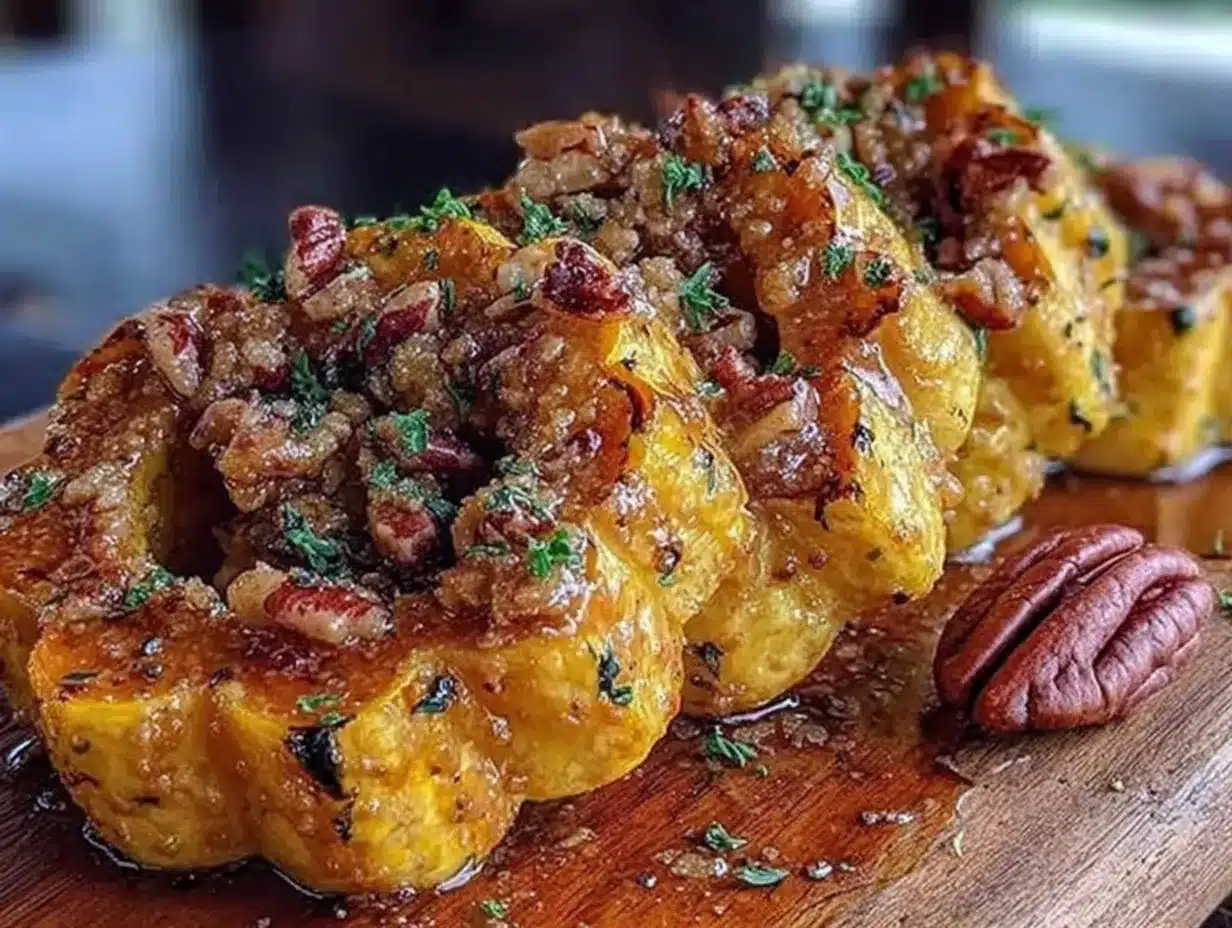
Let me walk you through this step by step. I’ve made this enough times to know where things can go wrong, so I’ll share those little details along the way.
- Preheat your oven to 400°F (200°C). Getting the oven hot before you start is important — you want that immediate blast of heat to start caramelizing the squash right away. Position a rack in the middle of the oven.
- Prepare the squash. Wash the delicata squash well — remember, you’re eating the skin. Cut off the stem end and the tip, then slice the squash in half lengthwise. Use a spoon to scoop out the seeds and stringy pulp. I like to save the seeds and roast them separately, but that’s entirely optional. Cut each half into half-moon shapes, about 1/2-inch thick. Try to keep them uniform in size so they roast evenly. You should get about 4 cups of sliced squash from two medium squash.
- Mix the coating. In a large mixing bowl, whisk together the maple syrup, olive oil, kosher salt, cinnamon, and black pepper. The mixture will look thin and separate a bit — that’s fine. Add the sliced squash and pecan halves to the bowl. Use your hands or a spatula to toss everything together until every piece of squash is well coated. Don’t rush this step. The syrup needs to get into all those nooks and crannies.
- Spread on the baking sheet. Line your baking sheet with parchment paper. Spread the squash and pecans in a single layer. Make sure you leave a little space between each piece — if they’re touching too much, they’ll steam instead of caramelize. I like to arrange the squash pieces cut-side down for maximum browning. Pour any remaining maple mixture from the bowl over the top.
- Roast for 15 minutes. Place the baking sheet in the preheated oven. Set a timer. At this point, the squash should be starting to soften and the edges should be getting golden. The kitchen will start smelling incredible about now.
- Flip and rotate. After 15 minutes, remove the baking sheet from the oven. Use a spatula to carefully flip each piece of squash and stir the pecans around. The squash should be tender enough to flip easily but still hold its shape. If it’s sticking to the parchment, give it another minute or two. Rotate the baking sheet front to back for even browning.
- Roast for another 10-15 minutes. Return the baking sheet to the oven. Keep an eye on it during this last stretch. The squash is done when it’s tender all the way through (a fork should slide in easily) and the edges are deeply caramelized and crispy. The pecans should be toasted and fragrant. The total roasting time is usually 25-30 minutes, but ovens vary, so start checking at the 25-minute mark.
- Finish with flaky salt. Remove the baking sheet from the oven. Let the squash cool on the pan for 2-3 minutes — this lets the caramelized coating set up a bit. Transfer to a serving platter and sprinkle with flaky sea salt if you’re using it. Serve warm or at room temperature.
A few things I’ve learned the hard way: Don’t skip the flipping step, even if you’re tempted. The side that’s been sitting in the maple syrup needs to get exposed to the heat to crisp up. And if your squash is browning too quickly but isn’t tender yet, lower the oven temperature to 375°F and let it go a little longer. Every squash is a little different.
Cooking Tips & Techniques
After making this recipe more times than I can count, I’ve picked up a few tricks that make a real difference. Let me share them with you.
Don’t overcrowd the pan. This is the number one mistake I see people make with roasted vegetables. If the squash pieces are piled on top of each other, they’ll steam in their own moisture instead of roasting and caramelizing. Give them room to breathe. If you need to, use two baking sheets. The extra few minutes of cleanup are worth it for that crispy texture.
Cut the squash uniformly. I learned this one after a batch where some pieces were perfectly caramelized and others were still raw in the middle. Aim for 1/2-inch thick slices, and try to keep them consistent. The thinner pieces will cook faster and get crispier, while thicker pieces stay more tender. If you like a mix of textures, vary the thickness on purpose — just know that some pieces will be done before others.
Watch the pecans. Pecans can go from perfectly toasted to burnt in about 30 seconds. If you notice them browning faster than the squash, you can remove them from the pan and set them aside, then add them back at the end. I’ve definitely had to pick out a few over-toasted pecans in my time.
Let it rest. That 2-3 minute rest after roasting isn’t just for show. The maple syrup is incredibly hot and sticky right out of the oven. Letting it cool slightly allows the coating to set up so it clings to the squash instead of sliding off. I know it’s tempting to dig in right away, but patience pays off here.
Use room temperature ingredients. This might seem fussy, but letting your maple syrup and olive oil come to room temperature before mixing helps them combine more smoothly. Cold syrup is thick and doesn’t coat the squash as evenly. Just take them out of the pantry and fridge about 15 minutes before you start.
Line your pan, always. I cannot stress this enough. That caramelized maple syrup is delicious on the squash but miserable to scrub off a baking sheet. Parchment paper makes cleanup a breeze. If you’re out of parchment, a silicone mat works, or you can grease the pan generously. Just know you’ll be doing some elbow grease later.
Variations & Adaptations
One of the things I love about this recipe is how flexible it is. Here are some variations I’ve tried and loved.
Spicy Maple Squash: Add 1/4 teaspoon of cayenne pepper or red pepper flakes to the maple mixture before tossing. The heat balances the sweetness beautifully and adds a whole new dimension. I made this version for a friend who loves spicy food, and she ate half the pan standing at the counter.
Herb-Roasted Version: Skip the cinnamon and add 1 teaspoon of fresh thyme leaves or 1/2 teaspoon of dried rosemary to the mixture. The earthy herbs contrast with the sweet maple in a way that feels very sophisticated. This version is excellent alongside roasted pork or chicken.
Nut-Free Option: If you can’t have pecans, substitute pumpkin seeds or sunflower seeds. They toast up nicely and add a similar crunch. You could also skip the nuts entirely and add them as a garnish for individual servings — that way, everyone can customize their own plate.
Vegan and Gluten-Free: This recipe is naturally both vegan and gluten-free, as long as you use pure maple syrup. No substitutions needed. It’s one of those rare dishes that accommodates multiple dietary needs without sacrificing flavor.
Different Squash: While delicata is my favorite for this recipe because of the edible skin, you can use acorn squash or butternut squash instead. Just peel butternut squash before slicing, and note that acorn squash has a slightly tougher skin that some people prefer to remove. The cooking time might increase by 5-10 minutes for denser squash varieties.
Maple Bourbon Version: Replace 1 tablespoon of the maple syrup with bourbon. The alcohol cooks off, leaving behind a subtle warmth that pairs beautifully with the pecans. I tried this on a whim one evening and it was a happy accident.
Serving & Storage Suggestions
This squash is versatile enough to fit into almost any meal. Here’s how I like to serve and store it.
Serving Temperature: This dish is best served warm, right after the rest period. The edges are at their crispiest, and the maple coating is still slightly sticky and glossy. That said, it’s also delicious at room temperature — I’ve been known to pick at the leftovers straight from the pan.
Presentation: Arrange the squash on a platter in a single layer if possible, with the pecans scattered over the top. A sprinkle of fresh thyme or parsley adds a nice pop of green. For a holiday table, I like to serve it alongside roasted Brussels sprouts and a simple grain like farro or wild rice.
Complementary Dishes: This squash pairs beautifully with roasted chicken, pork tenderloin, or a simple seared salmon. It’s also wonderful alongside a cozy fall salad with apple slices and goat cheese. For a vegetarian meal, serve it over quinoa or lentils with a drizzle of tahini dressing.
Storage: Store leftovers in an airtight container in the refrigerator for up to 4 days. The squash will lose some of its crispness as it sits, but the flavor actually deepens and gets even better. I often make a double batch just for leftovers throughout the week.
Reheating: The best way to reheat this is in the oven at 350°F for about 5-7 minutes. Spread the squash on a baking sheet in a single layer and warm it until the edges crisp up again. You can use a microwave in a pinch, but the squash will be softer and less caramelized. I don’t recommend reheating in the microwave if you’re serving it to guests.
Freezing: I don’t recommend freezing this dish. The squash becomes watery when thawed, and the maple coating loses its texture. It’s best enjoyed fresh or within a few days of making it.
Nutritional Information & Benefits
This dish feels indulgent, but it’s actually quite good for you. Here’s a rough breakdown per serving (about 1 cup of squash with pecans).
- Calories: Approximately 220-250
- Fat: 14g (mostly from healthy pecans and olive oil)
- Carbohydrates: 26g
- Fiber: 4g
- Sugar: 16g (naturally occurring from squash and maple syrup)
- Protein: 4g
- Vitamin A: 120% of daily value
- Vitamin C: 25% of daily value
- Potassium: 600mg
Health Benefits: Delicata squash is packed with vitamin A for eye health and immune function, plus fiber that supports digestion. Pecans are rich in healthy fats and antioxidants, particularly ellagic acid, which has anti-inflammatory properties. Maple syrup contains zinc and manganese, along with antioxidant compounds called polyphenols. Olive oil provides heart-healthy monounsaturated fats.
Dietary Considerations: This recipe is naturally gluten-free, dairy-free, vegan, and vegetarian. It’s also relatively low in sodium if you go easy on the finishing salt. If you’re watching your sugar intake, you can reduce the maple syrup to 2 tablespoons — the squash is sweet enough on its own that you’ll still get good caramelization.
Allergens: This recipe contains tree nuts (pecans). For a nut-free version, see the variations section above.
Conclusion
This Crispy Maple Pecan Roasted Delicata Squash has become my fall secret weapon. It’s the dish I bring to gatherings when I want to impress without stress. It’s what I make on a quiet Tuesday when I want dinner to feel a little more special. And it’s the recipe that taught me to trust a simple suggestion from a neighbor who just thought it would taste good.
I hope you’ll try it your way — maybe with extra cinnamon, or a pinch of cayenne, or whatever feels right. That’s the beauty of a recipe like this. It’s forgiving. It’s flexible. And it’s genuinely, deeply delicious.
If you make this, I’d love to hear how it goes. Drop a comment below or tag me in your photos. Did you try a variation I haven’t thought of? Did your family fight over the last piece? Tell me about it. That’s my favorite part of sharing recipes — hearing how they come to life in other people’s kitchens.
Go ahead, preheat that oven. Your squash is waiting.
Frequently Asked Questions
Can I use butternut squash instead of delicata?
Absolutely. Butternut squash works well, though you’ll need to peel it first since the skin isn’t edible like delicata skin. Cut it into similar 1/2-inch cubes or half-moons. You may need to add 5-10 minutes to the roasting time since butternut is denser.
Why is my squash not getting crispy?
This usually happens for one of three reasons: your oven isn’t hot enough (make sure it’s fully preheated to 400°F), your pan is overcrowded (use two pans if needed), or you’re not flipping the squash halfway through. Give those edges time to caramelize directly on the hot pan surface.
Can I make this recipe ahead of time?
You can prep the squash up to a day ahead — just slice it and store it in an airtight container in the fridge. Toss it with the maple mixture right before roasting. The cooked squash is best fresh, but leftovers reheat well in the oven for about 5 minutes at 350°F.
Is delicata squash skin really edible?
Yes, and it’s one of the best things about delicata! The skin is thin and tender, with no tough or bitter texture. When roasted, it gets slightly chewy and caramelized — honestly, it’s my favorite part. Just make sure to wash the squash well before slicing.
Can I double this recipe?
Yes, but don’t crowd the pan. Use two baking sheets and rotate them halfway through cooking. You might need to add a few extra minutes to the roasting time since the oven will have more to heat. The recipe scales beautifully for holiday gatherings.
Pin This Recipe!
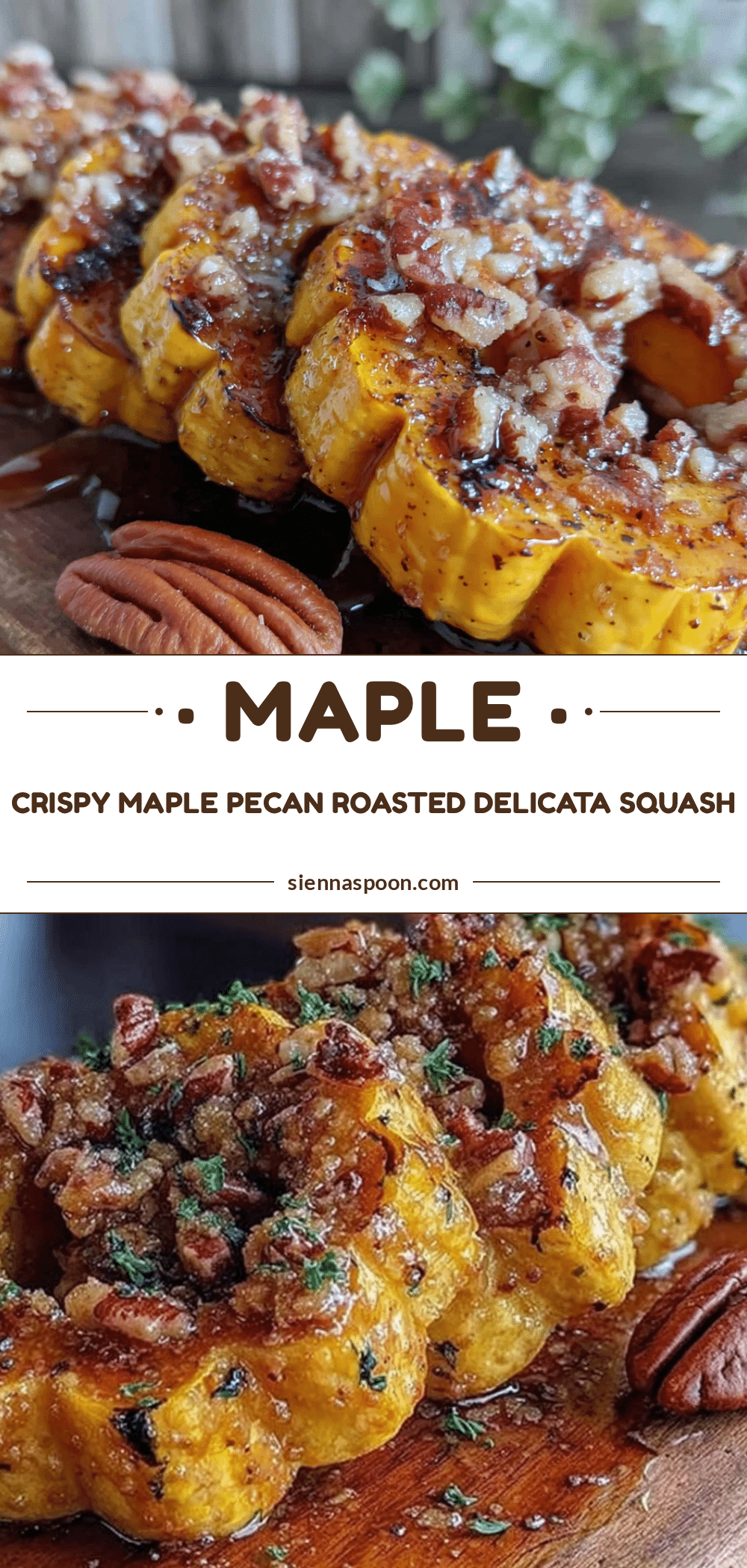
Crispy Maple Pecan Roasted Delicata Squash (Easy Side Dish)
This easy side dish features tender delicata squash and toasted pecans coated in a sweet maple glaze, roasted to crispy perfection. It’s a simple, crowd-pleasing recipe that’s perfect for fall gatherings or weeknight dinners.
- Prep Time: 10 minutes
- Cook Time: 25-30 minutes
- Total Time: 35-40 minutes
- Yield: 4 servings 1x
- Category: Side Dish
- Cuisine: American
Ingredients
- 2 medium delicata squash (about 2 pounds total)
- 3 tablespoons pure maple syrup
- 1 cup pecan halves
- 2 tablespoons extra virgin olive oil
- 1 teaspoon kosher salt
- 1/2 teaspoon ground cinnamon
- 1/4 teaspoon ground black pepper
- Flaky sea salt (for finishing, optional)
Instructions
- Preheat your oven to 400°F (200°C). Position a rack in the middle of the oven.
- Prepare the squash: Wash well, cut off stem and tip, slice in half lengthwise, scoop out seeds and pulp, then cut into 1/2-inch thick half-moons.
- In a large mixing bowl, whisk together maple syrup, olive oil, kosher salt, cinnamon, and black pepper. Add sliced squash and pecan halves, tossing until well coated.
- Line a baking sheet with parchment paper. Spread squash and pecans in a single layer, cut-side down if possible. Pour any remaining maple mixture over the top.
- Roast for 15 minutes.
- Remove from oven, flip each piece of squash and stir pecans. Rotate the baking sheet front to back.
- Roast for another 10-15 minutes, until squash is tender and edges are deeply caramelized and crispy. Pecans should be toasted and fragrant.
- Remove from oven, let cool on pan for 2-3 minutes. Transfer to a serving platter and sprinkle with flaky sea salt if desired. Serve warm or at room temperature.
Notes
Don’t overcrowd the pan to ensure caramelization. Cut squash uniformly for even cooking. Watch pecans closely as they can burn quickly. Let squash rest after roasting to set the coating. Line the pan with parchment for easy cleanup.
Nutrition
- Serving Size: 1 cup
- Calories: 235
- Sugar: 16
- Sodium: 240
- Fat: 14
- Saturated Fat: 1.5
- Carbohydrates: 26
- Fiber: 4
- Protein: 4
Keywords: delicata squash, maple pecan, roasted squash, fall side dish, easy side dish, vegetarian, gluten-free, vegan