Love this? Save it for later!
Share the inspiration with your friends
“You know that moment when a recipe just sneaks up on you and refuses to leave your mind?” That’s exactly what happened one rainy Saturday afternoon at my favorite little café tucked away on a quiet street corner. I overheard a lively conversation between two bakers chatting about their secret ingredients for the perfect springtime cake. One of them mentioned elderflower syrup — something I’d never really cooked with before. Intrigued, I scribbled down the idea on a napkin, completely forgetting about it until weeks later when I found myself craving something bright, floral, and just a little bit fancy.
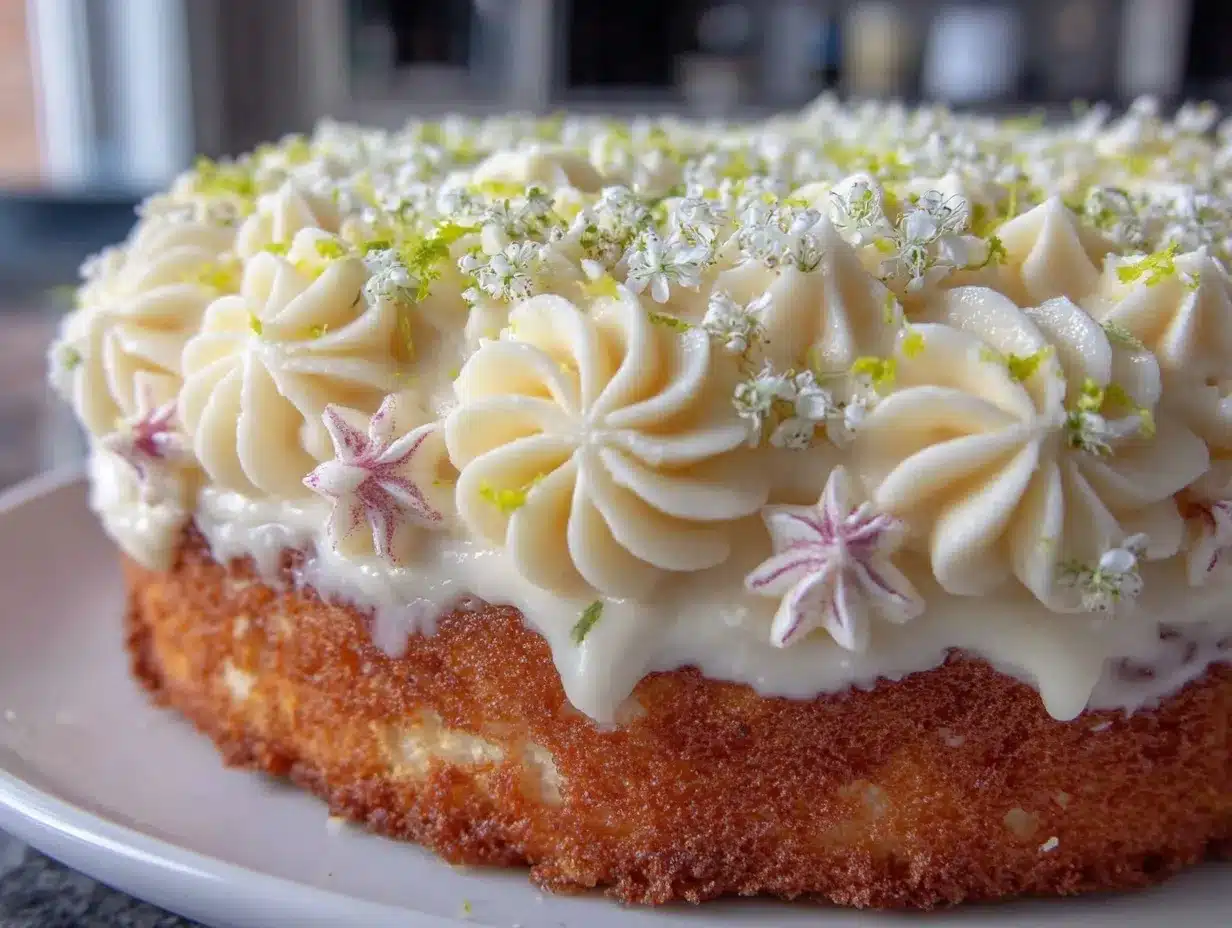
So, I gave it a shot and ended up with this Perfect Lemon Elderflower Cake that honestly surprised me at every step. The light lemon zest paired with that delicate elderflower flavor created a refreshing, almost nostalgic vibe—like spring wrapped up in cake form. And the Swiss Meringue Buttercream Flowers? Well, they started as a bit of a stress test (because frosting can be tricky), but now they’re my signature flourish. Let me tell you, the way those soft, glossy blossoms sit atop the cake makes it feel like a celebration, even on an ordinary Tuesday.
Maybe you’ve been there—wanting a dessert that’s both elegant and approachable, something that’s not just about sweet but also about subtle layers of flavor and texture. This recipe stuck with me because it’s exactly that. It’s perfect for anyone who loves a little baking adventure without the fuss, and it’s just the kind of cake you’ll want to bring out for special moments or to impress your friends (and yourself!). Honestly, once you try this lemon elderflower cake with Swiss meringue buttercream flowers, I bet you’ll find yourself making it over and over, too.
Why You’ll Love This Recipe
After several rounds of tweaking and taste-testing, I can say this lemon elderflower cake is one of the most rewarding bakes I’ve tackled—and here’s why you’ll want it in your repertoire:
- Quick & Easy: This cake comes together in under 90 minutes, so it’s great for last-minute celebrations or when you just need a pick-me-up.
- Simple Ingredients: With everyday pantry staples plus a splash of elderflower syrup, you won’t need a special grocery run. I usually grab mine from the local farmers market or a trusted online store.
- Perfect for Spring & Summer: The fresh lemon and floral notes make it ideal for brunches, garden parties, or even a light dessert after a sunny lunch.
- Crowd-Pleaser: Kids to grandparents, this cake gets rave reviews for its bright yet balanced flavor and the delicate sweetness of the frosting.
- Unbelievably Delicious: The moist crumb with a hint of elderflower and the airy Swiss meringue buttercream flowers create a texture and flavor pairing that’s honestly next-level comfort food.
What sets this recipe apart is the Swiss meringue buttercream. It’s smoother, less sweet, and holds its shape beautifully for those delicate flower decorations. The elderflower adds a subtle, fragrant twist that makes the cake feel special without overpowering the classic lemon zing. This isn’t just another lemon cake—it’s a little slice of sunshine with a floral kiss that makes you close your eyes after the first bite. It’s comfort food with a hint of magic, perfect for impressing guests or just treating yourself.
What Ingredients You Will Need
This lemon elderflower cake relies on simple, wholesome ingredients that come together beautifully without fuss. Most are pantry staples, and I’ll include some handy swap options so you can tailor it to your kitchen.
- For the Cake Batter:
- All-purpose flour (2 ½ cups / 315 g) – I prefer King Arthur for consistent texture
- Baking powder (2 ½ tsp) – makes the cake light and fluffy
- Salt (½ tsp)
- Unsalted butter (1 cup / 225 g), softened – room temperature for easy mixing
- Granulated sugar (1 ¾ cups / 350 g)
- Large eggs (4), room temperature – helps the batter emulsify nicely
- Whole milk (1 cup / 240 ml), room temperature – adds moisture and richness
- Lemon zest (from 2 medium lemons) – the star citrus flavor
- Fresh lemon juice (¼ cup / 60 ml) – for that tangy brightness
- Elderflower syrup (3 tbsp) – use a good-quality brand like St. Germain or homemade if you can
- For the Swiss Meringue Buttercream:
- Large egg whites (4), room temperature – key for that silky texture
- Granulated sugar (1 cup / 200 g)
- Unsalted butter (1 ½ cups / 340 g), softened and cut into cubes
- Vanilla extract (1 tsp) – adds a subtle warmth
- Yellow gel food coloring (optional) – for sunny buttercream flowers
- For Decoration:
- Edible flowers or additional piped Swiss meringue buttercream flowers
Substitution tips: Use almond flour for a gluten-free option, but expect a denser crumb. Swap whole milk for almond or oat milk to keep it dairy-free (though the buttercream will still contain dairy). If elderflower syrup isn’t available, a teaspoon of elderflower cordial can work, but reduce sugar slightly to balance sweetness.
Equipment Needed
- Two 8-inch (20 cm) round cake pans – non-stick or lined with parchment paper
- Electric mixer (stand or hand) – necessary for creaming butter and making Swiss meringue buttercream
- Heatproof mixing bowl and saucepan – for gently warming egg whites and sugar (double boiler method)
- Rubber spatula – for folding batter and buttercream
- Piping bags and petal or round piping tips – to create the Swiss meringue buttercream flowers
- Cooling racks – to cool cakes evenly
- Digital kitchen thermometer (optional) – helps ensure meringue reaches the right temperature
If you don’t have two cake pans, you can bake in batches or use a single pan and slice the cake horizontally once cooled. For piping, a simple zip-top bag with a small snip in the corner works in a pinch. I’ve found that a sturdy silicone spatula lasts forever and makes mixing less messy.
Preparation Method
- Prep your pans and ingredients: Preheat the oven to 350°F (175°C). Grease two 8-inch cake pans and line the bottoms with parchment paper. Bring eggs and milk to room temperature to help the batter combine better.
- Mix dry ingredients: In a medium bowl, sift together 2 ½ cups (315 g) all-purpose flour, 2 ½ tsp baking powder, and ½ tsp salt. Set aside.
- Cream butter and sugar: Using an electric mixer, beat 1 cup (225 g) softened unsalted butter and 1 ¾ cups (350 g) sugar on medium-high speed until pale and fluffy, about 4-5 minutes. This step traps air and helps the cake rise.
- Add eggs: Beat in 4 large eggs one at a time, mixing well after each addition. If the batter looks like it’s curdling, add a tablespoon of the dry ingredients to bring it back together.
- Incorporate zest and liquids: Stir in the zest of 2 lemons and 3 tbsp elderflower syrup. Then alternate adding the flour mixture and 1 cup (240 ml) milk, starting and ending with flour. Mix gently after each addition, just until combined.
- Add lemon juice: Fold in ¼ cup (60 ml) fresh lemon juice carefully, so the batter stays light.
- Divide and bake: Pour batter evenly into the two pans. Smooth the tops with a spatula. Bake for 30-35 minutes or until a toothpick inserted into the center comes out clean. Rotate pans halfway for even baking.
- Cool cakes: Let cakes cool in pans for 10 minutes, then turn out onto cooling racks to cool completely before frosting.
- Make Swiss meringue buttercream: Combine 4 egg whites and 1 cup (200 g) sugar in a heatproof bowl over simmering water. Whisk constantly until sugar dissolves and mixture reaches 160°F (71°C) or feels warm and smooth to the touch.
- Whip meringue: Transfer to a stand mixer bowl and whip on high speed until stiff peaks form and the bowl feels cool to the touch, about 8-10 minutes.
- Add butter: With mixer on medium, add 1 ½ cups (340 g) softened butter a few cubes at a time. Beat until smooth and creamy. Add 1 tsp vanilla extract and a drop of yellow gel food coloring if desired, mixing until blended.
- Assemble the cake: Place one cake layer on a serving plate. Spread a generous layer of buttercream. Top with second layer and cover the entire cake with a thin crumb coat of buttercream. Chill 20 minutes, then pipe decorative Swiss meringue buttercream flowers with your preferred tips.
Pro tip: If your buttercream looks curdled, keep beating—it will come together. Also, don’t skip the crumb coat; it traps loose crumbs and makes decorating easier.
Cooking Tips & Techniques
Swiss meringue buttercream can seem intimidating, but here are some nuggets I learned the hard way:
- Don’t rush warming the egg whites: Stir constantly over simmering water to avoid scrambling. The sugar needs to dissolve completely for silky smoothness.
- Beat until cool: This can take 8-10 minutes. The meringue’s temperature is critical before adding butter, or your frosting may separate.
- Add butter slowly: Adding it too fast can cause curdling. Patience is key.
- Room temperature ingredients: Cold eggs or milk can cause the batter to seize or not mix properly. Give yourself time to prep ingredients.
- Clean equipment: Any fat or grease on bowls or beaters can prevent egg whites from whipping properly.
- Rotating pans mid-bake: This little trick helps avoid uneven browning.
- Use fresh lemons: Fresh zest and juice make a huge difference compared to bottled lemon juice.
Honestly, some of my first batches had uneven crumb or frosting that refused to pipe nicely. But with practice, you’ll get the rhythm—and this cake turns into a total showstopper with minimal fuss.
Variations & Adaptations
Want to switch things up? Here are a few ways you can adapt this recipe:
- Fruit variations: Swap lemon zest and juice for orange or lime for a different citrus twist. Add fresh raspberries or blueberries between layers for bursts of color and flavor.
- Dairy-Free Option: Use coconut oil in place of butter in the cake and try a vegan Swiss meringue buttercream using aquafaba (chickpea water) instead of egg whites.
- Herbal twist: Add a teaspoon of finely chopped fresh thyme or basil to the batter for a subtle earthy note that pairs beautifully with elderflower.
- Gluten-Free: Use a gluten-free all-purpose flour blend. Expect a slightly denser texture but still delicious.
- Alternative decoration: Instead of buttercream flowers, top with candied lemon slices and fresh edible flowers for a rustic look.
I once tried adding a splash of lavender syrup alongside elderflower for a floral bouquet effect—delicious but definitely more grown-up. Feel free to experiment; this cake is forgiving and welcomes creativity.
Serving & Storage Suggestions
This cake shines best served at room temperature, which lets the flavors bloom and the buttercream soften just enough. For presentation, I like pairing it with a light cup of Earl Grey tea or a sparkling elderflower lemonade to echo the floral notes.
Store leftovers covered tightly in the refrigerator for up to 3 days. Bring the cake to room temperature before serving so the buttercream isn’t too firm. You can freeze the unfrosted layers wrapped well for up to 2 months; thaw overnight in the fridge and frost fresh.
Reheating isn’t really needed here, but if you want to warm a slice, a few seconds in the microwave (10-15 seconds) does the trick without melting the buttercream completely.
Fun fact: the cake’s flavor actually gets a little better after a day as the elderflower and lemon meld together more deeply. So, if you’re planning ahead, it’s worth making a day early.
Nutritional Information & Benefits
Per serving (based on 12 slices): approximately 350 calories, 18g fat, 45g carbohydrates, 3g protein.
This cake offers a good dose of vitamin C from fresh lemon juice and zest, plus elderflower syrup adds antioxidants and a unique floral aroma with minimal calories. The Swiss meringue buttercream is lighter than traditional buttercream since it uses whipped egg whites, though it still contains butter, so enjoy in moderation.
For gluten-free adaptations, using almond flour can add healthy fats and protein, making it a bit more nutrient-dense. This cake fits nicely into a balanced diet when shared as an occasional treat.
Conclusion
So there it is—the Perfect Lemon Elderflower Cake with Swiss Meringue Buttercream Flowers, a recipe that’s as charming as it is approachable. Whether you’re new to elderflower or a longtime fan, this cake offers a lovely balance of bright citrus and delicate floral flavor wrapped in a tender crumb and topped with elegant frosting flowers.
Feel free to make it your own with the variations suggested or by tweaking the decoration style. I love this cake because it’s both a little fancy and completely doable—something to make you smile whether it’s a special occasion or just a quiet afternoon bite.
If you give it a try, I’d love to hear how it turns out for you. Share your photos, adaptations, or any little tips you discover along the way. Baking is always better when it’s a shared adventure, right? Happy baking!
FAQs
Can I make the cake ahead of time?
Yes! You can bake the layers up to 2 days ahead and keep them wrapped tightly at room temperature or in the fridge. Frost just before serving for the freshest look and taste.
What if I don’t have elderflower syrup?
If elderflower syrup isn’t available, you can substitute elderflower cordial or omit it entirely—just increase the lemon zest slightly to keep the flavor bright.
How do I fix buttercream that’s too soft?
If your Swiss meringue buttercream is too soft, pop it in the fridge for 10-15 minutes, then whip again briefly before using. Avoid overheating the meringue when warming egg whites.
Can I use a different frosting instead of Swiss meringue buttercream?
Absolutely! Cream cheese frosting or classic buttercream can work, but keep in mind they won’t pipe as smoothly or hold the delicate flower shapes as well.
Is this cake suitable for a gluten-free diet?
With gluten-free flour substitution, yes. Use a quality gluten-free all-purpose blend to keep the texture light and moist.
For a similar bright and flavorful dessert, you might also enjoy my Orange Honey Cake Recipe or the fluffy Vanilla Bean Cupcakes that pair wonderfully with buttercream frostings.
Pin This Recipe!
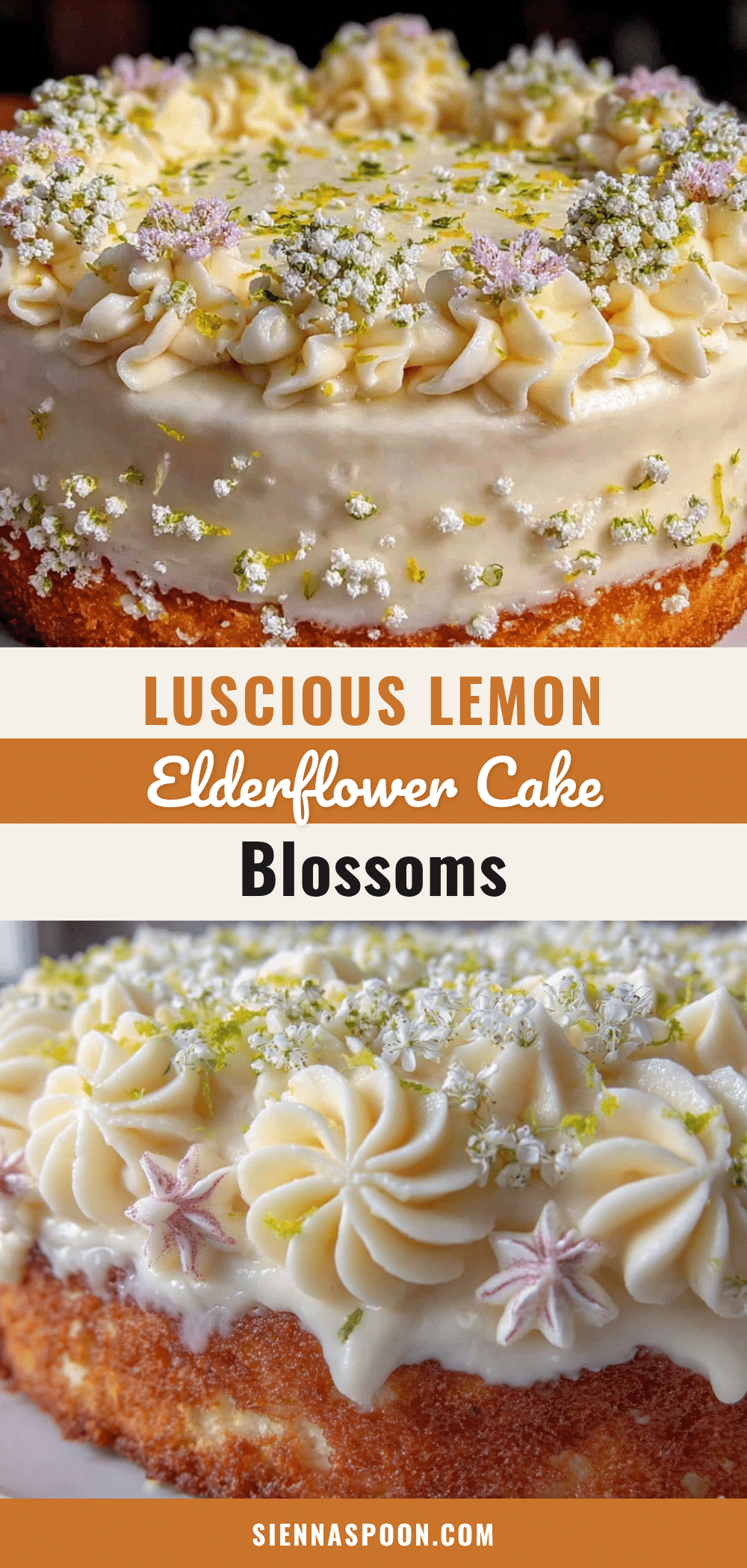
Perfect Lemon Elderflower Cake with Swiss Meringue Buttercream Flowers
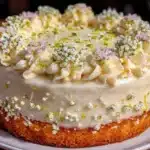
A light and refreshing lemon elderflower cake topped with delicate Swiss meringue buttercream flowers, perfect for spring and summer celebrations.
- Prep Time: 20 minutes
- Cook Time: 35 minutes
- Total Time: 1 hour 15 minutes
- Yield: 12 servings 1x
- Category: Dessert
- Cuisine: American
Ingredients
- 2 ½ cups (315 g) all-purpose flour
- 2 ½ tsp baking powder
- ½ tsp salt
- 1 cup (225 g) unsalted butter, softened
- 1 ¾ cups (350 g) granulated sugar
- 4 large eggs, room temperature
- 1 cup (240 ml) whole milk, room temperature
- Zest of 2 medium lemons
- ¼ cup (60 ml) fresh lemon juice
- 3 tbsp elderflower syrup
- 4 large egg whites, room temperature (for buttercream)
- 1 cup (200 g) granulated sugar (for buttercream)
- 1 ½ cups (340 g) unsalted butter, softened and cut into cubes (for buttercream)
- 1 tsp vanilla extract
- Yellow gel food coloring (optional)
- Edible flowers or additional piped Swiss meringue buttercream flowers for decoration
Instructions
- Preheat oven to 350°F (175°C). Grease two 8-inch cake pans and line bottoms with parchment paper. Bring eggs and milk to room temperature.
- Sift together flour, baking powder, and salt in a medium bowl. Set aside.
- Using an electric mixer, beat softened butter and sugar on medium-high speed until pale and fluffy, about 4-5 minutes.
- Beat in eggs one at a time, mixing well after each addition. If batter curdles, add a tablespoon of dry ingredients to bring it back together.
- Stir in lemon zest and elderflower syrup. Alternate adding flour mixture and milk, starting and ending with flour. Mix gently until combined.
- Fold in fresh lemon juice carefully to keep batter light.
- Divide batter evenly between pans, smooth tops, and bake 30-35 minutes or until toothpick inserted comes out clean. Rotate pans halfway through baking.
- Cool cakes in pans for 10 minutes, then turn out onto cooling racks to cool completely.
- For buttercream: Combine egg whites and sugar in heatproof bowl over simmering water. Whisk constantly until sugar dissolves and mixture reaches 160°F (71°C).
- Transfer to stand mixer and whip on high until stiff peaks form and bowl is cool, about 8-10 minutes.
- With mixer on medium, add softened butter cubes gradually. Beat until smooth and creamy. Mix in vanilla extract and optional yellow gel food coloring.
- Assemble cake by placing one layer on plate, spreading buttercream generously, topping with second layer, and applying a thin crumb coat. Chill 20 minutes.
- Pipe decorative Swiss meringue buttercream flowers on top using piping bags and preferred tips.
Notes
If buttercream looks curdled, keep beating until smooth. Use fresh lemons for best flavor. Rotate pans halfway through baking for even browning. For gluten-free option, substitute almond flour but expect denser texture. Store leftovers covered in refrigerator up to 3 days; bring to room temperature before serving.
Nutrition
- Serving Size: 1 slice (1/12 of cak
- Calories: 350
- Fat: 18
- Carbohydrates: 45
- Protein: 3
Keywords: lemon cake, elderflower cake, Swiss meringue buttercream, spring cake, floral cake, lemon elderflower dessert, buttercream flowers