Love this? Save it for later!
Share the inspiration with your friends
I was standing in the middle of a hardware store last Tuesday when the smell hit me. Not paint thinner or sawdust, but something warm and slightly sour—like fermented cabbage and smoked pork drifting from a distant kitchen. I stopped dead in my cart aisle, and suddenly I was twelve years old, standing in Frau Mueller’s tiny apartment above the bakery in Munich. She was hunched over her stove, wearing that flowered apron with the grease stain that never washed out, stirring a cast iron skillet full of bratwurst and sauerkraut that smelled like heaven and earth all at once. My family had rented the apartment below hers for a summer, and every Tuesday evening that smell would drift down through the floorboards like a promise. I never learned her recipe—she spoke almost no English, and my German was limited to asking for directions to the train station. But I watched her once through the crack in her door, and I remember the way she let the sausages sit undisturbed until they got that deep brown crust. That memory has been sitting in my brain for twenty years, and honestly, I’ve been chasing it ever since.
This Bavarian bratwurst skillet is my best attempt at recreating that Tuesday night magic. I mean, I’ve made a lot of versions over the years—some too dry, some too sour, one that I accidentally burned so badly I had to open all the windows in January. But this one? This one finally feels right. It’s the kind of meal that fills your whole house with that same warm, slightly tangy aroma, the kind that makes your neighbors text you asking what you’re cooking. Maybe you’ve had that moment where a recipe just clicks—where the flavors line up and you close your eyes for a second because it tastes like something you didn’t know you were missing. That’s this skillet for me. And honestly, it’s so simple that I almost feel guilty calling it a recipe. But Frau Mueller taught me that simple doesn’t mean easy, and that patience in front of a hot pan is its own kind of love.
So here it is: my easy Bavarian bratwurst skillet with sauerkraut, the one that finally stopped me from chasing a ghost and let me just enjoy dinner.
Why You’ll Love This Recipe
Let me tell you, I’ve tested this Bavarian bratwurst skillet more times than I care to admit. There was the batch where I didn’t drain the sauerkraut enough and ended up with soup. Another where I rushed the browning and got pale, sad sausages. But through all that trial and error, I landed on something special. This recipe isn’t just another weeknight dinner—it’s the one that makes you look forward to Tuesday.
- Quick & Easy: From fridge to table in about 30 minutes, which is honestly faster than ordering takeout in my neighborhood. Perfect for those nights when you walk in the door starving and need something substantial fast.
- Simple Ingredients: You probably already have half of these in your kitchen right now. No trips to specialty stores, no hunting down obscure spices. Just good, honest food.
- Perfect for Oktoberfest or Cozy Nights: Whether you’re throwing a fall gathering or just want something warm and satisfying on a rainy Tuesday, this skillet delivers. It’s casual enough for a solo dinner but impressive enough for company.
- Crowd-Pleaser: I’ve served this to picky eaters, vegetarians who made an exception, and my uncle who “doesn’t like German food.” Everyone goes back for seconds. I mean everyone.
- Unbelievably Delicious: The magic is in the contrast—crispy, caramelized bratwurst against tangy, slightly sweet sauerkraut, with tender potatoes soaking up all those juices. It’s comfort food that actually comforts.
What makes this different from other bratwurst recipes? Two things. First, I don’t boil the sausages first like some people do. That just leaches out the flavor. Instead, I sear them hard and slow, letting that fat render and create a crust that’s pure gold. Second, I add a splash of apple cider vinegar and a pinch of brown sugar to the sauerkraut—it balances the tang without making it sweet. Trust me, this is the version you’ll come back to.
This recipe isn’t just good—it’s the kind that makes you close your eyes after the first bite. It’s comfort food reimagined, hearty and satisfying, but with the same soul-soothing quality that Frau Mueller’s kitchen had. Perfect for impressing guests without stress, or turning a simple Tuesday into something memorable.
What Ingredients You Will Need
This recipe uses simple, honest ingredients that work together to create something greater than the sum of their parts. Most of these are pantry staples or easy to find at any grocery store. Here’s what you’ll need and why each one matters.
For the Skillet
- 4-5 fresh bratwurst sausages (about 1.5 pounds / 680 grams) – I prefer Johnsonville or a local butcher’s fresh brats. Avoid pre-cooked sausages here; fresh ones have better texture and flavor. Look for links that feel firm but give slightly when pressed.
- 1 tablespoon olive oil or avocado oil – You need a neutral oil with a high smoke point for searing. Olive oil works fine, just don’t let it smoke.
- 1 medium yellow onion, thinly sliced – About 1 cup once sliced. The onion caramelizes and adds sweetness that balances the tangy sauerkraut. Yellow onions are best here—they’re sweet without being overpowering.
- 3 cloves garlic, minced – Fresh garlic is non-negotiable here. The jarred stuff won’t give you the same aromatic depth. Trust me on this one.
- 1 pound (450 grams) baby potatoes, halved or quartered – Yukon Gold or red potatoes work beautifully. They hold their shape during cooking and soak up all those delicious pan juices. No need to peel them—the skins add texture and nutrients.
- 1 ½ cups (about 375 ml) low-sodium chicken broth – This deglazes the pan and creates a light, savory sauce. Low-sodium is important so you can control the salt level. Homemade broth is amazing here, but store-bought works perfectly.
- 1 ½ cups (about 350 grams) sauerkraut, drained but not rinsed – This is the star of the show. Look for refrigerated sauerkraut in the deli section, not the canned stuff. The refrigerated kind has better texture and more complex flavor. Bubbies and Cleveland Kraut are my go-to brands. Drain it well, but don’t rinse it—you want that tangy flavor.
- 1 tablespoon apple cider vinegar – This brightens the sauerkraut and balances the richness of the sausages. Don’t skip it—it’s a small addition that makes a big difference.
- 1 teaspoon brown sugar – Just a touch to round out the acidity. Not enough to make it sweet, just enough to make the flavors sing.
- 1 teaspoon caraway seeds – This is optional but traditional. Caraway adds that unmistakable German flavor that ties everything together. If you don’t have it, the dish will still be delicious, but it won’t have that authentic Bavarian note.
- ½ teaspoon black pepper – Freshly ground is best. Don’t add salt yet—the bratwurst and sauerkraut are already salty enough.
- 2 tablespoons fresh parsley, chopped – For garnish. It adds a pop of color and freshness that cuts through the richness.
Optional Add-Ins

- ½ cup apple, diced – A Granny Smith or Honeycrisp adds a sweet-tart crunch that’s lovely in the fall. Toss it in with the sauerkraut if you want a fruity twist.
- ½ teaspoon smoked paprika – For a deeper, smokier flavor. I add this when I’m feeling like the dish needs a little extra oomph.
- 1 tablespoon whole-grain mustard – Serve this on the side for dipping. It’s a classic pairing that cuts through the richness beautifully.
Equipment Needed
You don’t need a fancy kitchen to make this Bavarian bratwurst skillet. Just a few basic tools that you probably already own. Here’s what you’ll need:
- Large cast iron skillet or heavy-bottomed pan (12-inch / 30 cm) – This is your best friend for this recipe. Cast iron holds heat evenly and gives you that beautiful sear on the bratwurst. If you don’t have cast iron, a stainless steel skillet works well too. Just avoid non-stick for the best browning.
- Sharp chef’s knife and cutting board – For slicing onions, mincing garlic, and halving potatoes. A dull knife makes everything harder and more dangerous, honestly.
- Wooden spoon or silicone spatula – For stirring and scraping up those flavorful browned bits from the pan. Wooden spoons are gentle on your cookware and won’t scratch cast iron.
- Measuring cups and spoons – For the broth, vinegar, and spices. I use my adjustable measuring cup for the broth—it’s a game changer for liquids.
- Tongs – For flipping the bratwurst without piercing them. Piercing the sausages lets the juices escape, and we want those juices to stay inside.
- Lid for your skillet – You’ll need this for the simmering stage. If your skillet doesn’t have a lid, use a baking sheet or aluminum foil to cover it tightly.
- Serving platter or shallow bowls – This is a one-pan meal, so you can serve it straight from the skillet if you want. But a nice platter makes it feel special.
I’ve made this recipe using a $20 cast iron skillet from a discount store, and it turned out just as good as the fancy one. Don’t let equipment hold you back. The only thing I’d recommend splurging on is a good pair of tongs—they make flipping sausages so much easier.
Preparation Method
Alright, let’s get cooking. This Bavarian bratwurst skillet comes together in about 30 minutes, and most of that is hands-off simmering time. Here’s exactly how to do it.
- Prep your ingredients first. I learned this the hard way after burning garlic while scrambling for an onion. Slice the onion into thin half-moons. Mince the garlic. Halve or quarter the baby potatoes so they’re all roughly the same size—about 1-inch pieces. Drain the sauerkraut in a colander and press gently to remove excess liquid, but don’t rinse it. Pat the bratwurst dry with paper towels. Getting everything ready before you start makes the actual cooking so much smoother.
- Heat your skillet over medium heat. Add 1 tablespoon of oil and let it get hot—about 2 minutes. You want it shimmering but not smoking. Swirl the pan to coat the bottom evenly. If you’re using cast iron, give it a little extra time to heat up. Cast iron takes longer to get hot but holds the heat much better.
- Sear the bratwurst. Place the bratwurst in the hot skillet, making sure they’re not touching each other. Let them cook undisturbed for 4-5 minutes per side. I know it’s tempting to poke at them, but resist! You want a deep golden-brown crust. Use tongs to flip them gently. The total searing time is about 8-10 minutes. The sausages should be browned on all sides but not cooked through yet—that’s fine, they’ll finish cooking later.
- Remove the bratwurst and set them aside. Transfer the browned sausages to a plate. Don’t worry if they’re not fully cooked—they’ll go back in the pan later. Leave the fat and browned bits in the skillet. That’s pure flavor right there.
- Sauté the onions. Reduce the heat to medium-low. Add the sliced onions to the skillet with the rendered fat. Cook them slowly, stirring occasionally, for about 5-6 minutes, until they’re soft and starting to turn golden. If they start to stick, add a splash of chicken broth to deglaze the pan. The onions should be sweet and tender, not crispy.
- Add the garlic and caraway seeds. Stir in the minced garlic and caraway seeds (if using). Cook for about 30 seconds, until the garlic is fragrant. Don’t let it burn—burnt garlic tastes bitter and will ruin the whole dish. If the pan seems dry, add another drizzle of oil.
- Add the potatoes and broth. Toss in the halved baby potatoes and pour in the chicken broth. Use your wooden spoon to scrape up all those browned bits from the bottom of the pan—that’s called deglazing, and it’s where so much flavor lives. Bring the broth to a gentle simmer. The potatoes should be mostly submerged. Let them cook for about 8-10 minutes, until they’re just starting to become tender when pierced with a fork.
- Add the sauerkraut. Nestle the drained sauerkraut into the skillet around the potatoes. Sprinkle the apple cider vinegar and brown sugar over the top, then give everything a gentle stir to combine. Don’t overmix—you want distinct pockets of sauerkraut and potatoes.
- Return the bratwurst to the skillet. Place the browned bratwurst on top of the sauerkraut and potatoes. Nestle them in so they’re partially submerged. Sprinkle with black pepper. Cover the skillet with a lid and reduce the heat to low. Let everything simmer together for 10-12 minutes. The bratwurst will finish cooking through, the potatoes will become tender, and the flavors will meld together beautifully.
- Check for doneness. The bratwurst should be cooked through (internal temperature of 160°F / 71°C) and the potatoes should be fork-tender. If the potatoes need more time, replace the lid and cook for another 5 minutes. If the skillet looks dry, add a splash more broth or water.
- Garnish and serve. Sprinkle fresh parsley over the top. Let the skillet rest for 2-3 minutes off the heat before serving. This lets the juices redistribute. Serve directly from the skillet or transfer to a platter. I like to serve it with whole-grain mustard on the side for dipping.
Sensory cues to watch for: When you’re searing the bratwurst, listen for a steady sizzle—not a frantic crackle. That means the heat is right. The onions should smell sweet, not sharp. The sauerkraut should release a tangy aroma that makes your mouth water. When everything’s done, the skillet should look rustic and gorgeous, with golden sausages peeking out from a bed of tender potatoes and kraut.
Cooking Tips & Techniques
After making this Bavarian bratwurst skillet more times than I can count, I’ve picked up a few tricks that make a real difference. Here are the ones I wish someone had told me sooner.
Don’t pierce the bratwurst. I know it’s tempting to poke them with a fork to see if they’re done, but don’t do it. Every time you pierce the casing, those precious juices escape into the pan. Use tongs to handle them, and check doneness with an instant-read thermometer instead. Trust me, the difference between a juicy brat and a dry one is night and day.
Low and slow for the onions. Onions need time to develop sweetness. If you rush them over high heat, they’ll burn before they caramelize. Cook them on medium-low heat and be patient. Those 5-6 minutes of gentle cooking make a huge difference in the final flavor of the dish.
Toast the caraway seeds. If you’re using caraway seeds, toss them into the pan with the onions for about 30 seconds before adding anything else. Toasting brings out their nutty, aromatic qualities. You’ll smell them become fragrant almost immediately. Just don’t let them burn—they turn bitter fast.
Adjust the sauerkraut to your taste. Some people love sauerkraut that’s aggressively tangy, others prefer it milder. If you’re in the latter camp, rinse the sauerkraut briefly under cold water before draining. This removes some of the brine and mellows the flavor. If you love it tangy, don’t rinse at all—just drain it well.
My biggest failure: I once tried to make this in a non-stick skillet, and the bratwurst just wouldn’t brown properly. The surface wasn’t hot enough, and the sausages ended up steaming instead of searing. They were pale and sad, and the whole dish lacked that deep, caramelized flavor. Now I only use cast iron or stainless steel for this recipe. Lesson learned.
Multitasking tip: While the bratwurst are simmering with the potatoes and sauerkraut, use that time to clean up your cutting board and prep area. The dish only needs about 10 minutes of covered simmering, and you’ll be grateful for a clean kitchen when you sit down to eat. I also like to set the table and pour myself a drink during this time—makes the whole experience feel more intentional.
Variations & Adaptations
This Bavarian bratwurst skillet is wonderfully adaptable. Here are some variations I’ve tried and loved.
Dietary Variations
- Gluten-Free: This recipe is naturally gluten-free as written, as long as you use gluten-free bratwurst. Most traditional bratwurst is made with gluten-free ingredients, but always check the label. Some brands use breadcrumbs as fillers. Johnsonville brats are gluten-free, by the way.
- Low-Carb / Keto: Skip the potatoes and double the sauerkraut instead. Add some sliced mushrooms or cauliflower florets for bulk. The dish will still be incredibly satisfying, just with fewer carbs. I’ve made it this way for friends on keto diets, and they loved it.
- Dairy-Free: This recipe is already dairy-free, so no changes needed. Just make sure your bratwurst doesn’t contain any dairy-based fillers.
Flavor Variations
- Spicy Version: Add ½ teaspoon of red pepper flakes along with the garlic, or use spicy bratwurst if you can find them. A drizzle of hot honey over the finished dish is also amazing—the sweet heat pairs beautifully with the tangy sauerkraut.
- Beer-Braised: Replace half the chicken broth with a dark German beer like a Dunkel or a Märzen. The beer adds depth and a subtle malty sweetness. Just let it simmer for an extra 5 minutes to cook off the alcohol. I tried this with an Oktoberfest beer last fall, and it was incredible.
- Apple-Sauerkraut: Add one diced apple (Granny Smith or Honeycrisp) along with the sauerkraut. The apple adds sweetness and a slight crunch that contrasts beautifully with the tangy kraut. This is my go-to fall variation.
Cooking Method Variations
- Slow Cooker: Brown the bratwurst and onions in a skillet first, then transfer everything to a slow cooker. Add the remaining ingredients and cook on low for 4-6 hours or high for 2-3 hours. The potatoes will be very tender, almost melting. This is great for busy days.
- Instant Pot: Use the sauté function to brown the bratwurst and cook the onions. Add the remaining ingredients, pressure cook on high for 8 minutes, then do a quick release. The potatoes will be perfectly tender. Just note that the bratwurst won’t have the same caramelized crust as the skillet version.
Serving & Storage Suggestions
This Bavarian bratwurst skillet is a complete meal on its own, but here’s how to serve it and store the leftovers.
Serving Suggestions
Serve this dish hot, straight from the skillet. I like to set the pan right on a trivet in the middle of the table and let everyone help themselves. It feels rustic and communal, which is exactly the vibe this food deserves.
For sides, a simple green salad with a tangy vinaigrette cuts through the richness beautifully. I also love serving it with crusty rye bread or pretzel rolls for sopping up the juices. If you’re feeling indulgent, a spoonful of sour cream on top adds a cool, creamy element that balances the tangy kraut.
For drinks, a cold German beer is the classic pairing—think Oktoberfest Märzen, a Hefeweizen, or a Pilsner. If you prefer wine, a dry Riesling or a Grüner Veltliner works beautifully. For non-alcoholic options, sparkling apple cider or a ginger beer with a squeeze of lime is refreshing and festive.
Storage Instructions
Leftovers keep well in an airtight container in the refrigerator for up to 4 days. The flavors actually meld and deepen overnight, so this is one of those dishes that tastes even better the next day. I’ve been known to make a double batch just for the leftovers.
To reheat, I recommend using a skillet over medium-low heat with a splash of broth or water to loosen things up. Cover the pan and let it steam for about 5-7 minutes, stirring occasionally. The microwave works in a pinch, but it can make the bratwurst rubbery. If you’re reheating in the microwave, do it in 30-second bursts at 50% power.
You can freeze this dish for up to 3 months. Let it cool completely, then transfer to a freezer-safe container. Thaw overnight in the refrigerator before reheating. The potatoes will be softer after freezing, but the flavor will still be excellent. I’ve frozen individual portions for quick lunches, and they’re a lifesaver on busy days.
Nutritional Information & Benefits
Here’s the estimated nutritional breakdown for one serving of this Bavarian bratwurst skillet (based on 4 servings). Keep in mind that these are estimates and can vary based on the specific ingredients you use.
| Nutrient | Amount Per Serving |
|---|---|
| Calories | 485 |
| Total Fat | 32g |
| Saturated Fat | 11g |
| Cholesterol | 85mg |
| Sodium | 1180mg |
| Total Carbohydrates | 28g |
| Dietary Fiber | 4g |
| Sugars | 5g |
| Protein | 22g |
| Vitamin C | 25% DV |
| Iron | 15% DV |
| Potassium | 720mg |
This dish has some surprising health benefits. Sauerkraut is a fermented food, which means it’s packed with probiotics that support gut health. It’s also a good source of vitamin C and vitamin K. The potatoes provide resistant starch, especially when they’re cooked and cooled, which feeds beneficial gut bacteria. And the bratwurst, while higher in fat, provides protein and B vitamins like B12, which is essential for energy production.
If you’re watching your sodium intake, use low-sodium broth and look for bratwurst with lower sodium content. You can also rinse the sauerkraut briefly to remove some of the brine. This dish is naturally gluten-free and dairy-free, making it suitable for many dietary needs. Just check your bratwurst labels to be sure.
Conclusion
This Bavarian bratwurst skillet is more than just a recipe—it’s a little piece of my Tuesday nights in Munich, captured in a single pan. It’s the kind of meal that fills your home with that warm, inviting aroma that makes everyone gravitate toward the kitchen. And honestly, it’s so simple that you’ll wonder why you haven’t been making it for years.
I hope you give this recipe a try and make it your own. Maybe you’ll add a splash of beer, or throw in some apples, or serve it with a big dollop of mustard on the side. That’s the beauty of a dish like this—it’s forgiving, adaptable, and always delicious. Don’t be afraid to experiment and find your perfect version.
I’d love to hear how it turns out for you. Drop a comment below and let me know if you tried any variations, or tag me in your photos on social media. There’s something special about knowing that a recipe I love is being made in kitchens around the world. Until next time, happy cooking—and may your bratwurst always be perfectly browned.
Frequently Asked Questions
Can I use pre-cooked bratwurst for this recipe?
You can, but I don’t recommend it. Pre-cooked bratwurst won’t develop the same deep, caramelized crust during searing, and they tend to be drier. Fresh bratwurst gives you that juicy, snappy texture that makes this dish special. If pre-cooked is all you have, reduce the simmering time to about 5 minutes so they don’t overcook.
How do I keep the potatoes from getting mushy?
The key is cutting them into uniform pieces—about 1-inch chunks—and not overcooking them. Add them to the skillet when the broth is already simmering, and check for doneness after 8 minutes. They should be tender but still hold their shape when pierced with a fork. If you’re using waxy potatoes like Yukon Gold or red potatoes, they’ll hold up better than starchy russets.
Can I make this in advance for a party?
Absolutely! This dish actually tastes better the next day, so making it ahead is a great idea. Cook it completely, let it cool, and store it in the refrigerator. Reheat it in a covered skillet over medium-low heat with a splash of broth until everything is warmed through. I’ve done this for Oktoberfest parties, and it saves so much stress on the day of the event.
What’s the best way to reheat leftovers without drying them out?
Skillet reheating is your best bet. Add a tablespoon of broth or water to the pan, cover it, and warm over medium-low heat for about 5-7 minutes. The steam will rehydrate the potatoes and sausages without making them soggy. If you’re in a hurry, the microwave works, but use 50% power and heat in 30-second bursts, stirring between each. This prevents the bratwurst from becoming rubbery.
Is this recipe kid-friendly?
My picky nephew devours this dish, so I’d say yes! The sauerkraut might be a concern for some kids, but you can mellow it out by rinsing it briefly before adding it to the skillet. The bratwurst and potatoes are universally appealing, and the whole dish has a comforting, familiar flavor profile. For extra kid appeal, serve it with a side of applesauce or some soft pretzel bites.
Pin This Recipe!
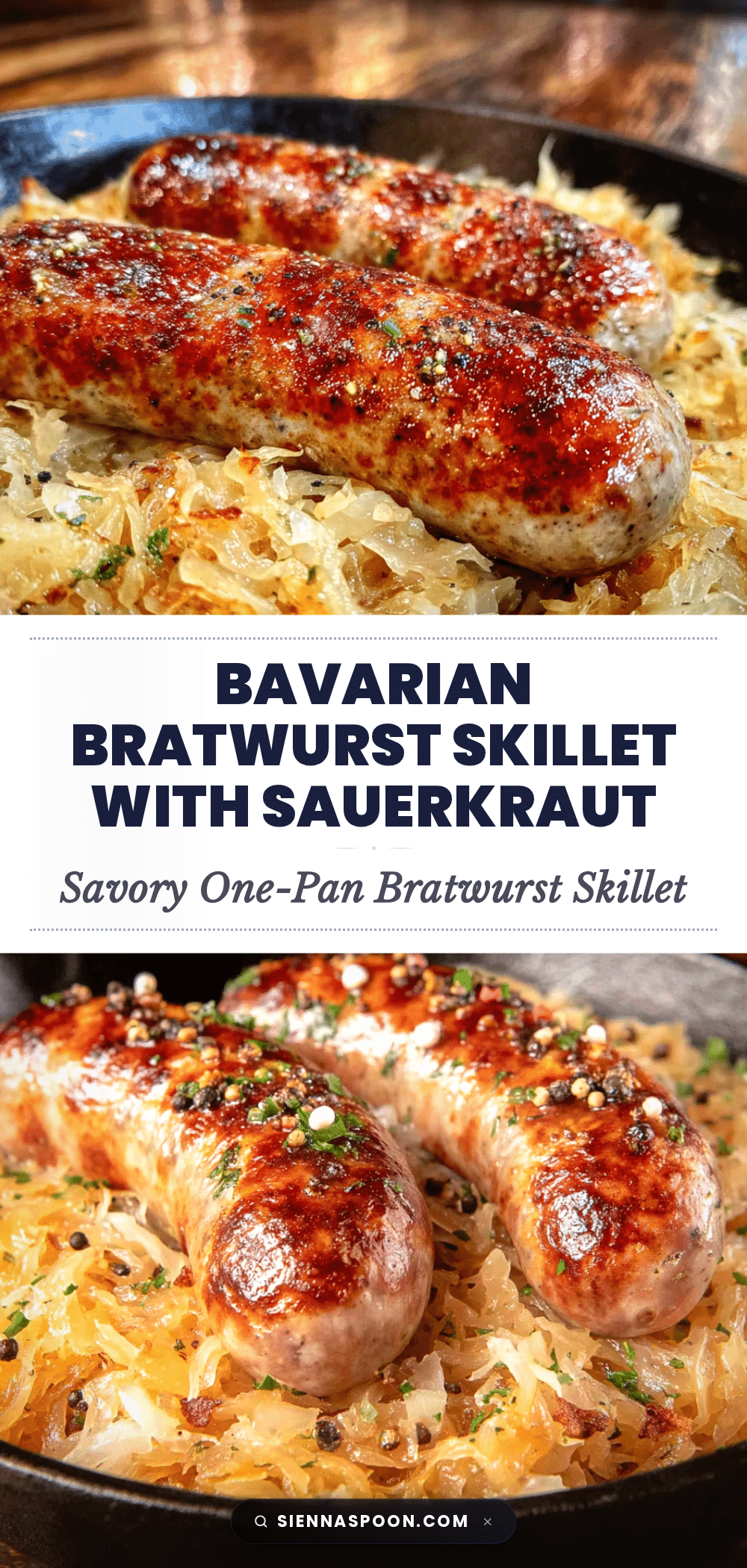
Easy Bavarian Bratwurst Skillet with Sauerkraut Recipe

A quick and easy one-pan meal featuring crispy, caramelized bratwurst, tangy sauerkraut, and tender potatoes. This comforting Bavarian-inspired dish comes together in about 30 minutes and is perfect for weeknight dinners or Oktoberfest gatherings.
- Prep Time: 10 minutes
- Cook Time: 20 minutes
- Total Time: 30 minutes
- Yield: 4 servings 1x
- Category: Main Course
- Cuisine: German, Bavarian
Ingredients
- 4–5 fresh bratwurst sausages (about 1.5 pounds / 680 grams)
- 1 tablespoon olive oil or avocado oil
- 1 medium yellow onion, thinly sliced (about 1 cup)
- 3 cloves garlic, minced
- 1 pound (450 grams) baby potatoes, halved or quartered (Yukon Gold or red potatoes)
- 1 ½ cups (about 375 ml) low-sodium chicken broth
- 1 ½ cups (about 350 grams) sauerkraut, drained but not rinsed
- 1 tablespoon apple cider vinegar
- 1 teaspoon brown sugar
- 1 teaspoon caraway seeds (optional)
- ½ teaspoon black pepper, freshly ground
- 2 tablespoons fresh parsley, chopped (for garnish)
- ½ cup apple, diced (optional, Granny Smith or Honeycrisp)
- ½ teaspoon smoked paprika (optional)
- 1 tablespoon whole-grain mustard (optional, for serving)
Instructions
- Prep your ingredients first: Slice the onion into thin half-moons. Mince the garlic. Halve or quarter the baby potatoes into roughly 1-inch pieces. Drain the sauerkraut in a colander and press gently to remove excess liquid, but don’t rinse it. Pat the bratwurst dry with paper towels.
- Heat your skillet over medium heat. Add 1 tablespoon of oil and let it get hot, about 2 minutes, until shimmering but not smoking. Swirl the pan to coat the bottom evenly.
- Sear the bratwurst: Place the bratwurst in the hot skillet, making sure they’re not touching each other. Let them cook undisturbed for 4-5 minutes per side, until deep golden-brown. Use tongs to flip them gently. Total searing time is about 8-10 minutes. The sausages should be browned on all sides but not cooked through yet.
- Remove the bratwurst and set them aside on a plate. Leave the fat and browned bits in the skillet.
- Reduce the heat to medium-low. Add the sliced onions to the skillet with the rendered fat. Cook slowly, stirring occasionally, for about 5-6 minutes, until soft and starting to turn golden. If they start to stick, add a splash of chicken broth to deglaze the pan.
- Add the garlic and caraway seeds (if using). Stir and cook for about 30 seconds, until fragrant. Do not let the garlic burn.
- Add the potatoes and broth: Toss in the halved baby potatoes and pour in the chicken broth. Use a wooden spoon to scrape up all the browned bits from the bottom of the pan (deglazing). Bring the broth to a gentle simmer. Let the potatoes cook for about 8-10 minutes, until just starting to become tender when pierced with a fork.
- Add the sauerkraut: Nestle the drained sauerkraut into the skillet around the potatoes. Sprinkle the apple cider vinegar and brown sugar over the top, then gently stir to combine. Do not overmix.
- Return the bratwurst to the skillet: Place the browned bratwurst on top of the sauerkraut and potatoes, nestling them in so they’re partially submerged. Sprinkle with black pepper. Cover the skillet with a lid and reduce the heat to low. Let everything simmer together for 10-12 minutes.
- Check for doneness: The bratwurst should be cooked through (internal temperature of 160°F / 71°C) and the potatoes should be fork-tender. If the potatoes need more time, replace the lid and cook for another 5 minutes. If the skillet looks dry, add a splash more broth or water.
- Garnish and serve: Sprinkle fresh parsley over the top. Let the skillet rest for 2-3 minutes off the heat before serving. Serve directly from the skillet or transfer to a platter. Serve with whole-grain mustard on the side if desired.
Notes
Don’t pierce the bratwurst while cooking to keep them juicy. For a milder sauerkraut flavor, rinse briefly before draining. To toast caraway seeds, add them to the pan with the onions for 30 seconds. For a beer-braised version, replace half the chicken broth with dark German beer. Leftovers keep in the refrigerator for up to 4 days and can be frozen for up to 3 months.
Nutrition
- Serving Size: 1 serving (about 1 b
- Calories: 485
- Sugar: 5
- Sodium: 1180
- Fat: 32
- Saturated Fat: 11
- Carbohydrates: 28
- Fiber: 4
- Protein: 22
Keywords: bratwurst, sauerkraut, German recipe, one-pan meal, Oktoberfest, quick dinner, comfort food, Bavarian skillet