Love this? Save it for later!
Share the inspiration with your friends
I was standing in my kitchen last Tuesday, staring at a pint of cherry tomatoes that had definitely seen better days. You know that moment when you buy produce with big plans, and then life gets in the way? Yeah, that was me. They were soft, a little wrinkled, and honestly, I was about to toss them in the compost bin. But then I remembered something my old neighbor, Mrs. Giordano, used to do. She never wasted a tomato. Ever. She’d throw them in a pan with some garlic and olive oil and just let them do their thing. The smell that would drift through our apartment walls was something else—sweet, savory, and deeply comforting.
So instead of giving up, I grabbed a baking dish, sliced a head of garlic in half, and poured a generous amount of olive oil over those sorry-looking tomatoes. I didn’t have high hopes, honestly. But an hour later, my entire apartment smelled like Mrs. Giordano’s kitchen. The tomatoes had transformed into these little bursts of concentrated sweetness, and the garlic had turned into a soft, spreadable jam. I boiled some pasta, tossed it all together with a bit of parmesan and fresh basil, and let me tell you—I almost cried. It was that good.
This roasted cherry tomato and garlic confit pasta is now my go-to when I need a reminder that simple ingredients can create something extraordinary. It’s the kind of meal that feels fancy but takes almost no real effort, and it’s saved me from takeout temptation more times than I can count. Maybe you’ve been there too, staring at overripe tomatoes, wondering what to do. Trust me, this is the answer.
Why You’ll Love This Recipe
I’ve made this roasted cherry tomato and garlic confit pasta at least a dozen times now, tweaking it each time until it felt just right. It’s one of those recipes that proves you don’t need a long ingredient list or complicated techniques to make something unforgettable. Here’s why it’s become a staple in my kitchen:
- Quick & Easy: This comes together in under an hour, and most of that time is hands-off while the oven does the work. Perfect for those nights when you want something satisfying without spending forever in the kitchen.
- Simple Ingredients: You probably already have most of what you need. Cherry tomatoes, garlic, olive oil, pasta, and a few pantry staples. No fancy grocery trips required.
- Perfect for Busy Weeknights or Cozy Dinners: It’s elegant enough to serve guests but easy enough to make on a random Tuesday when you’re exhausted.
- Crowd-Pleaser: I’ve served this to picky eaters, vegetarians, and even my uncle who swears he doesn’t like tomatoes. Everyone goes back for seconds.
- Unbelievably Delicious: The slow-roasted tomatoes become intensely sweet and jammy, while the garlic confit turns into a buttery, mellow spread. Tossed with pasta and a little pasta water, it creates a sauce that’s silky, rich, and absolutely addictive.
What makes this recipe different from the rest? It’s the technique. Roasting the tomatoes and garlic together in olive oil at a low temperature allows their natural sugars to caramelize slowly, creating layers of flavor you just can’t get from a quick sauté. The garlic becomes sweet and nutty instead of sharp and pungent. It’s not just another pasta recipe—it’s your new favorite way to turn humble ingredients into something magical.
Honestly, this is the kind of meal that makes you close your eyes after the first bite. It’s comfort food at its finest—simple, soul-soothing, and completely satisfying.
What Ingredients You Will Need
This recipe relies on a handful of quality ingredients to deliver big flavor. Here’s what you’ll need and why each one matters.
For the Roasted Tomatoes and Garlic Confit
- 2 pints cherry tomatoes (about 600g) — Look for firm, ripe tomatoes. If they’re a little soft or wrinkled, that’s actually perfect for roasting because they’re sweeter. I prefer Campari or vine-ripened cherry tomatoes for their balanced sweetness.
- 1 whole head of garlic — Not cloves, a whole head. You’ll slice it in half crosswise so the cloves are exposed. As it roasts in the olive oil, it becomes soft, spreadable, and incredibly mellow. I recommend using fresh garlic, not pre-peeled, for the best flavor.
- ⅓ cup extra virgin olive oil (about 80ml) — Use a good quality olive oil here since it’s a key flavor component. I like California Olive Ranch or Lucini for everyday cooking. The oil will become infused with tomato and garlic flavor as it roasts.
- ½ teaspoon salt — I use kosher salt, but sea salt works too. Don’t skip this—it draws out the tomatoes’ moisture and helps them caramelize.
- ¼ teaspoon black pepper — Freshly ground is best.
- 2 sprigs fresh thyme (optional) — Adds an earthy, herbal note that pairs beautifully with the roasted tomatoes. You can also use rosemary or oregano.
- 1 pinch red pepper flakes (optional) — For a little heat. I add this about half the time, depending on my mood.
For the Pasta
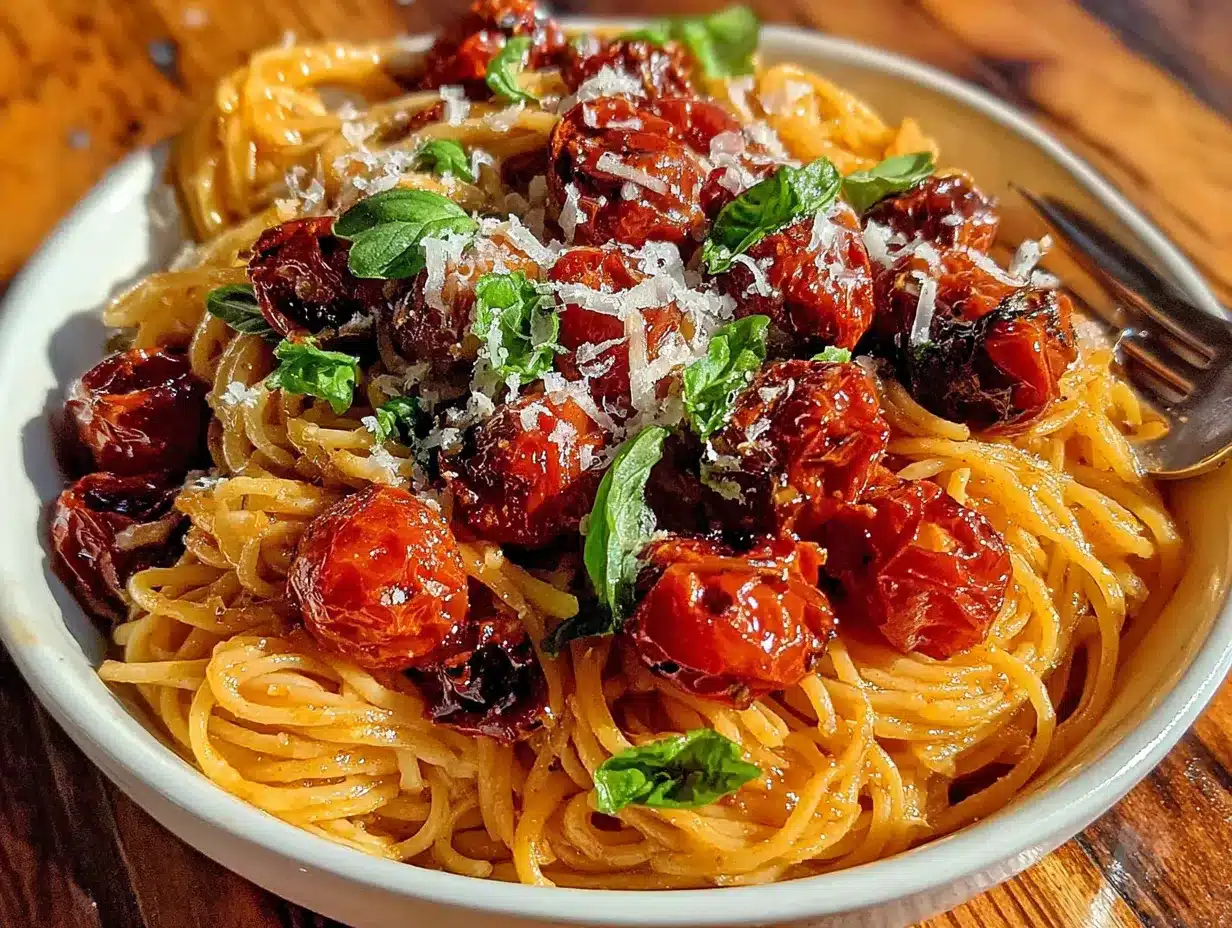
- 12 ounces pasta (340g) — I recommend a short pasta shape like penne, rigatoni, or fusilli. The ridges and hollows catch the sauce beautifully. My personal favorite is casarecce or orecchiette. If you’re gluten-free, use your favorite GF pasta—just cook it al dente.
- ½ cup reserved pasta water (about 120ml) — This is crucial. The starchy water helps emulsify the olive oil and tomato juices into a silky sauce that clings to every strand or shape.
- ¼ cup fresh basil leaves, torn — Adds brightness and a pop of color. Don’t substitute dried basil here; fresh makes a big difference.
- ¼ cup grated Parmesan cheese (about 25g) — For salty, nutty richness. Use a microplane to grate it fresh from a block. If you’re dairy-free, you can skip this or use a vegan Parmesan alternative.
- Optional: 2 tablespoons butter — Adding a knob of butter at the end makes the sauce even more luxurious. I do this when I’m feeling extra indulgent.
Equipment Needed
You don’t need much for this recipe, which is part of its charm. Here’s what I use:
- Baking dish or oven-safe skillet (9×13 inch or similar) — I use a ceramic baking dish because it distributes heat evenly. A cast iron skillet works great too. Avoid using a rimless baking sheet, as the oil might spill.
- Large pot for pasta — At least 5 quarts. You need plenty of water for the pasta to cook properly.
- Colander — For draining the pasta. Don’t forget to reserve that pasta water first!
- Chef’s knife and cutting board — For slicing the garlic head and prepping basil.
- Wooden spoon or tongs — For tossing the pasta with the sauce.
- Microplane or grater — For fresh Parmesan. A box grater works too, but a microplane gives you that fluffy, melt-in-your-mouth texture.
If you don’t have a baking dish, a small sheet pan with raised edges will work. Just make sure the tomatoes and garlic are nestled together in the oil, not spread too thin. I’ve also made this in a cast iron skillet, and it worked beautifully—the even heat helped the tomatoes caramelize perfectly.
Preparation Method
Let’s get cooking! This recipe is straightforward, but I’ll walk you through each step with tips I’ve learned from making it over and over.
- Preheat your oven to 375°F (190°C). While it’s heating, grab your baking dish. Add the cherry tomatoes and slice the head of garlic in half crosswise (through the equator, not the top). Place both halves cut-side down in the dish among the tomatoes. Drizzle everything with the olive oil, then sprinkle with salt, pepper, and red pepper flakes if using. Tuck the thyme sprigs in between the tomatoes. Give it all a gentle toss to coat. The tomatoes should be nestled in a single layer with the oil pooling around them.
- Roast for 40-50 minutes. The tomatoes should be soft, wrinkled, and starting to caramelize. The garlic should be golden and tender when you poke it with a knife. Halfway through, give the dish a gentle shake to redistribute the oil. Your kitchen is going to smell incredible right about now.
- While the tomatoes roast, cook your pasta. Bring a large pot of salted water to a boil (I use about 1 tablespoon of salt per 4 quarts of water). Add the pasta and cook according to package directions until al dente. Before draining, scoop out about 1 cup of the starchy pasta water and set it aside. Then drain the pasta. Don’t rinse it—you want that starch to help the sauce stick.
- Squeeze the roasted garlic. Once the tomatoes are done, let the dish cool for a minute or two. The garlic will be soft and buttery. Use a fork or your fingers (careful, it’s hot!) to squeeze the cloves out of their skins directly into the dish. Discard the skins and the thyme sprigs. Mash the garlic lightly with a fork into the oil and tomato juices.
- Combine everything. Add the drained pasta to the baking dish with the tomatoes and garlic. Add about ½ cup of the reserved pasta water, the torn basil, and the grated Parmesan. Toss everything together with tongs or a wooden spoon until the pasta is well coated. The sauce should be silky and cling to the pasta. If it seems dry, add more pasta water a tablespoon at a time. If you’re using butter, add it now and toss until melted.
- Taste and adjust. Give it a taste. Add more salt, pepper, or red pepper flakes if needed. I usually add a pinch more salt at this stage because pasta can be thirsty.
- Serve immediately. Divide the pasta into bowls. Top with extra Parmesan, a drizzle of olive oil, and a few fresh basil leaves. Eat it while it’s hot—this dish doesn’t improve with sitting.
Cooking Tips & Techniques
I’ve made my share of mistakes with this recipe, and I’m here to save you from them. Here are my best tips:
- Don’t rush the roasting. I once tried to speed things up by roasting at 425°F. The tomatoes burst and burned on the edges before the garlic was even close to tender. Low and slow is the way to go. 375°F is the sweet spot.
- Use enough oil. The tomatoes and garlic need to be swimming in olive oil to confit properly. If you skimp, they’ll dry out instead of becoming jammy. Trust me, you want that oil—it becomes the base of your sauce.
- Reserve more pasta water than you think you need. I usually save a full cup even though I only use about half. Different pasta shapes and brands absorb water differently, and it’s better to have extra than to end up with dry pasta.
- Don’t skip the pasta water. This is non-negotiable. The starch in the water helps the olive oil and tomato juices emulsify into a creamy sauce. Without it, you’ll just have oily pasta with tomatoes on top.
- Taste as you go. I learned this the hard way after undersalting an entire batch. Tomatoes and pasta both need generous salt to taste their best. Adjust at the end if needed.
- Let the garlic cool slightly before squeezing. I burned my fingers the first time because I was too eager. Let it sit for 2-3 minutes, then use a fork to help squeeze the cloves out.
One more thing—if your pasta seems dry after tossing, don’t panic. Add a splash more pasta water and toss vigorously. The sauce will come together as you mix.
Variations & Adaptations
This recipe is endlessly adaptable. Here are some ways I’ve changed it up:
- Add protein: Toss in some cooked shrimp, grilled chicken, or crispy chickpeas for a heartier meal. I’ve added leftover roasted chicken before, and it was fantastic.
- Make it vegan: Skip the Parmesan and use a generous sprinkle of nutritional yeast or vegan Parmesan. The sauce is already rich from the olive oil, so you won’t miss the cheese.
- Go gluten-free: Use your favorite gluten-free pasta. Just be careful not to overcook it—GF pasta can turn mushy quickly.
- Switch up the herbs: Basil is classic, but I’ve used fresh oregano, parsley, or even a handful of arugula stirred in at the end for a peppery kick.
- Add vegetables: Roast some zucchini slices or bell pepper strips alongside the tomatoes. I did this once when I had extra veggies, and it turned the dish into a one-pan meal.
- Try different pasta shapes: Long pasta like spaghetti or linguine works too, but I prefer short shapes because they catch the chunky tomato bits better.
- Spice it up: Add more red pepper flakes or a drizzle of chili oil at the end for heat lovers.
My personal favorite variation? I add a handful of toasted pine nuts and a squeeze of lemon juice at the end. The crunch and acidity take it to another level.
Serving & Storage Suggestions
This pasta is best served immediately, straight from the pan, while it’s hot and the sauce is silky. But here’s how to handle leftovers if you have any (which is rare in my house).
Serving: Plate the pasta in warm bowls and top with extra Parmesan and fresh basil. It pairs beautifully with a simple green salad dressed with lemon vinaigrette and a glass of crisp white wine like Pinot Grigio or Sauvignon Blanc. For a heartier meal, serve it alongside some roasted chicken or garlic bread to soak up every last drop of the tomato oil.
Storage: Store leftovers in an airtight container in the refrigerator for up to 3 days. The pasta will absorb some of the sauce as it sits, so it won’t be quite as saucy the next day, but the flavor will be even more developed.
Reheating: The best way to reheat is in a skillet over medium-low heat with a splash of water or olive oil. Toss until warmed through. You can also microwave it, but the texture won’t be as nice. I don’t recommend freezing this dish—the pasta can become mushy when thawed, and the sauce may separate.
Flavor development: Honestly, leftovers the next day are still delicious. The flavors meld together overnight, and the garlic confit becomes even more pronounced. Just add a little extra olive oil or pasta water when reheating to bring back some moisture.
Nutritional Information & Benefits
Here’s an approximate nutritional breakdown per serving (based on 4 servings, without optional butter):
- Calories: 520
- Protein: 14g
- Carbohydrates: 68g
- Fat: 22g
- Fiber: 5g
- Sugar: 8g
- Sodium: 480mg
This dish offers some solid nutritional perks. Cherry tomatoes are packed with lycopene, a powerful antioxidant that’s been linked to heart health and reduced inflammation. Cooking them actually increases the bioavailability of lycopene, so roasting is a smart choice. Garlic is known for its immune-boosting properties and contains allicin, which has antibacterial effects. The olive oil provides heart-healthy monounsaturated fats, which help your body absorb the fat-soluble vitamins from the tomatoes.
Dietary considerations: This recipe is naturally vegetarian and can be made vegan and gluten-free with simple swaps. It contains dairy (Parmesan) if you use it. For a lower-carb option, serve the tomato-garlic mixture over zucchini noodles or roasted vegetables instead of pasta.
Allergens: Dairy (if using Parmesan), gluten (if using wheat pasta).
My wellness perspective: I love that this recipe feels indulgent but is made with whole, nourishing ingredients. It’s the kind of meal that fills you up without weighing you down, and it’s a great way to use up produce that might otherwise go to waste.
Conclusion
This roasted cherry tomato and garlic confit pasta has earned a permanent spot in my recipe rotation. It’s proof that you don’t need a dozen ingredients or hours of active cooking to create something truly special. The tomatoes transform into little flavor bombs, the garlic becomes sweet and spreadable, and the whole thing comes together in a way that feels both effortless and impressive.
I hope you’ll give it a try and make it your own. Maybe you’ll add extra herbs, a squeeze of lemon, or a handful of pine nuts. Maybe you’ll serve it with a glass of wine and call it dinner. However you make it, I think you’ll love it as much as I do.
If you make this recipe, I’d love to hear about it! Leave a comment below and let me know how it turned out. Did you try any variations? What did you serve it with? Share your photos and tag me on social media—I can’t wait to see your creations. Happy cooking!
Frequently Asked Questions
Can I use regular tomatoes instead of cherry tomatoes?
You can, but the roasting time will vary. Cherry tomatoes are ideal because they’re small and sweet, so they cook quickly and caramelize nicely. If you use larger tomatoes, chop them into smaller pieces and expect a longer roasting time—likely 60-70 minutes.
Can I make the roasted tomatoes and garlic ahead of time?
Absolutely. You can roast the tomatoes and garlic up to 3 days in advance. Store them in an airtight container in the refrigerator with the olive oil. When you’re ready to eat, reheat them gently in a skillet or in the oven, then toss with freshly cooked pasta and pasta water.
What if I don’t have fresh thyme?
No problem. You can skip it entirely or use dried thyme (about ½ teaspoon). Other herbs like rosemary or oregano work well too. The recipe is forgiving.
Can I use this tomato-garlic confit for other dishes?
Yes! The roasted tomatoes and garlic are incredibly versatile. Spread the garlic on crusty bread, toss the tomatoes into salads, use them as a topping for bruschetta, or blend them into a sauce for chicken or fish. The infused olive oil is also amazing for dipping bread.
How do I prevent the pasta from becoming dry when reheating leftovers?
Add a splash of water or olive oil when reheating in a skillet. The pasta will absorb the moisture and the sauce will loosen up. If you’re microwaving, cover the bowl with a damp paper towel to trap steam.
Pin This Recipe!
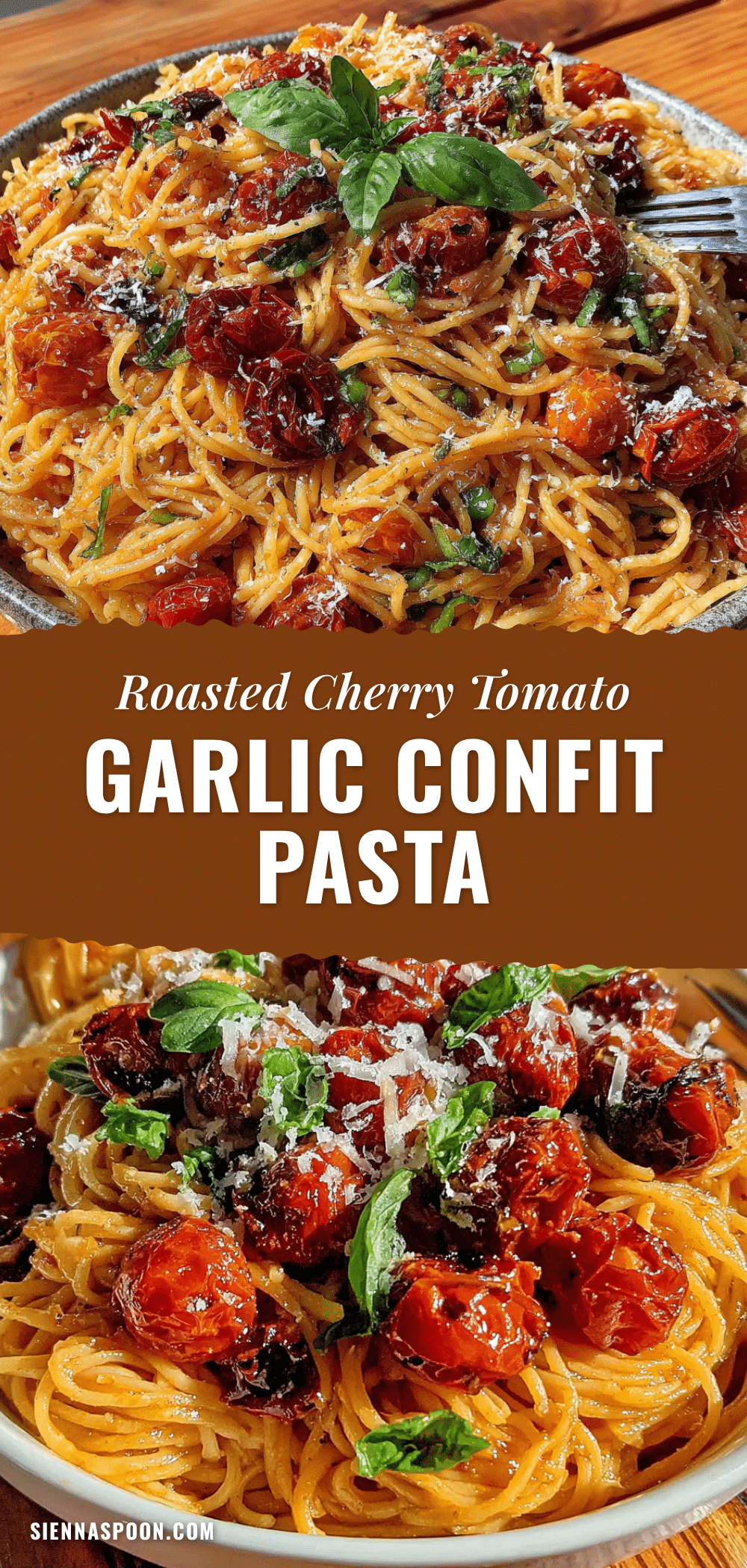
Easy Roasted Cherry Tomato & Garlic Confit Pasta
This roasted cherry tomato and garlic confit pasta transforms simple ingredients into a silky, rich sauce with sweet, jammy tomatoes and mellow garlic. It’s an easy, hands-off weeknight dinner that feels elegant and comforting.
- Prep Time: 10 minutes
- Cook Time: 45 minutes
- Total Time: 55 minutes
- Yield: 4 servings 1x
- Category: Main Course
- Cuisine: Italian
Ingredients
- 2 pints cherry tomatoes (about 600g)
- 1 whole head of garlic
- ⅓ cup extra virgin olive oil (about 80ml)
- ½ teaspoon salt
- ¼ teaspoon black pepper
- 2 sprigs fresh thyme (optional)
- 1 pinch red pepper flakes (optional)
- 12 ounces pasta (340g), such as penne, rigatoni, or fusilli
- ½ cup reserved pasta water (about 120ml)
- ¼ cup fresh basil leaves, torn
- ¼ cup grated Parmesan cheese (about 25g)
- Optional: 2 tablespoons butter
Instructions
- Preheat your oven to 375°F (190°C). Add the cherry tomatoes to a baking dish. Slice the head of garlic in half crosswise and place both halves cut-side down among the tomatoes. Drizzle with olive oil, then sprinkle with salt, pepper, and red pepper flakes if using. Tuck the thyme sprigs in between the tomatoes. Toss gently to coat.
- Roast for 40-50 minutes until the tomatoes are soft, wrinkled, and starting to caramelize, and the garlic is golden and tender. Halfway through, give the dish a gentle shake.
- While the tomatoes roast, bring a large pot of salted water to a boil. Cook the pasta according to package directions until al dente. Before draining, reserve about 1 cup of pasta water. Drain the pasta (do not rinse).
- Let the roasted dish cool for a minute or two. Squeeze the soft garlic cloves out of their skins into the dish. Discard the skins and thyme sprigs. Mash the garlic lightly with a fork into the oil and tomato juices.
- Add the drained pasta to the baking dish along with ½ cup reserved pasta water, torn basil, and grated Parmesan. Toss everything together until the pasta is well coated. If using butter, add it now and toss until melted. If the sauce seems dry, add more pasta water a tablespoon at a time.
- Taste and adjust seasoning with more salt, pepper, or red pepper flakes if needed.
- Serve immediately in bowls, topped with extra Parmesan, a drizzle of olive oil, and fresh basil leaves.
Notes
Don’t rush the roasting—low and slow at 375°F is key. Use enough olive oil so the tomatoes and garlic are swimming in it. Reserve more pasta water than you think you need; the starch helps emulsify the sauce. Let the garlic cool slightly before squeezing to avoid burns. If the pasta seems dry after tossing, add a splash more pasta water and toss vigorously.
Nutrition
- Serving Size: 1 serving (about 1/4
- Calories: 520
- Sugar: 8
- Sodium: 480
- Fat: 22
- Saturated Fat: 4
- Carbohydrates: 68
- Fiber: 5
- Protein: 14
Keywords: roasted cherry tomato pasta, garlic confit pasta, easy pasta recipe, vegetarian pasta, weeknight dinner, cherry tomato recipe