Love this? Save it for later!
Share the inspiration with your friends
“You won’t believe this doesn’t have tofu,” my friend Lisa said last Thursday as she took a big bite of what I’d thrown together in a hurry. Honestly, I wasn’t planning anything fancy—just a quick meal after a long day at the community garden. I’d been craving something vibrant and filling, but soy was off the table thanks to a recent allergy scare. So I rummaged through my fridge, grabbed some fresh veggies, and improvised what turned out to be a delicious soy-free vegan Buddha bowl without tofu.
It’s funny how sometimes the best recipes come from those ‘I-just-have-to-eat’ moments. Maybe you’ve been there—you’re tired, the clock’s ticking, and you’re staring at a fridge full of odds and ends. That’s exactly how this recipe came to be. Rather than reach for the usual soy-based protein, I leaned on hearty grains, creamy avocado, and a zingy tahini dressing to bring everything together.
What surprised me most was how balanced and satisfying this bowl felt—no tofu needed! The colors were bright, the textures varied, and the flavors popped in just the right way. Plus, it was easy to make, perfect for anyone who wants a wholesome plant-based meal without fussing over complicated ingredients. Honestly, it’s become my go-to when I want something nourishing but soy-free. And I have a feeling you’re going to love it just as much.
Why You’ll Love This Recipe
- Quick & Easy: Ready in about 30 minutes, making it perfect for busy weeknights or spontaneous lunches.
- Simple Ingredients: Uses pantry staples and fresh produce you likely have on hand—no hunting for exotic items.
- Perfect for Any Occasion: Whether it’s a casual lunch, a light dinner, or a post-workout meal, this bowl fits the bill.
- Crowd-Pleaser: Even my non-vegan friends have asked for seconds—flavor-packed and satisfying for all tastes.
- Unbelievably Delicious: The creamy tahini dressing paired with roasted veggies and quinoa makes every bite a treat.
This isn’t just another Buddha bowl—what sets it apart is the focus on soy-free, whole-food ingredients that don’t skimp on protein or flavor. Instead of tofu, I use roasted chickpeas and quinoa for that hearty texture. The dressing is a simple blend of tahini and lemon juice that brings it all together without overpowering the fresh ingredients. I tested this recipe multiple times, tweaking the seasoning until it hit that perfect balance—trust me, it’s worth the little extra effort.
Plus, it’s the kind of meal that you can feel good about eating. I mean, who wouldn’t want a bowl that’s nourishing, colorful, and free from common allergens? It’s comfort food reinvented for today’s health-conscious, soy-sensitive eaters.
What Ingredients You Will Need
This delicious soy-free vegan Buddha bowl uses simple, wholesome ingredients to deliver bold flavor and satisfying texture without the fuss. Most are pantry staples or easy to find at your local market.
- Quinoa – 1 cup (170g), rinsed (base grain, packed with protein)
- Canned chickpeas – 1 can (15 oz/425g), drained and rinsed (roasted for crunch and protein)
- Sweet potato – 1 medium, peeled and cubed (adds natural sweetness and creaminess)
- Broccoli florets – 1 cup (90g), fresh or frozen (for a green, nutrient-rich punch)
- Carrot – 1 large, shredded or thinly sliced (adds crunch and color)
- Avocado – 1 ripe, sliced (for creaminess and healthy fats)
- Baby spinach or kale – 2 cups (60g), chopped (leafy greens for freshness)
- Tahini – 3 tablespoons (rich, nutty base for dressing)
- Lemon juice – 2 tablespoons (freshly squeezed, brightens flavors)
- Garlic – 1 clove, minced (adds subtle depth)
- Maple syrup – 1 teaspoon (optional, balances dressing)
- Olive oil – 2 tablespoons (for roasting and dressing)
- Ground cumin – 1 teaspoon (warm spice for chickpeas)
- Smoked paprika – 1 teaspoon (adds smoky depth)
- Salt and black pepper – to taste (essential seasonings)
I usually grab organic canned chickpeas from brands like Goya or 365 Everyday Value for consistency. For quinoa, I prefer the tri-color kind for extra visual appeal, but plain white quinoa works just fine. Seasonal swaps? In summer, I toss in fresh cherry tomatoes or roasted zucchini instead of sweet potato. And if you want to keep it nut-free, swap tahini for sunflower seed butter—it’s a personal favorite alternative!
Equipment Needed
- Baking sheet: For roasting sweet potatoes and chickpeas. A rimmed sheet works best to keep ingredients from sliding off.
- Medium saucepan: To cook quinoa perfectly without burning or sticking.
- Mixing bowls: For tossing veggies and making the dressing.
- Whisk or fork: To blend the tahini dressing smoothly.
- Sharp knife and cutting board: For prepping vegetables safely and efficiently.
- Measuring cups and spoons: To ensure accurate ingredient quantities.
If you don’t have a whisk, a sturdy fork works just as well to combine the dressing ingredients. I’ve also made this recipe using a small blender for the dressing—it’s quicker and makes it extra creamy, but definitely not necessary. For budget-friendly options, a basic baking sheet lined with parchment paper makes cleanup a breeze without breaking the bank.
Preparation Method
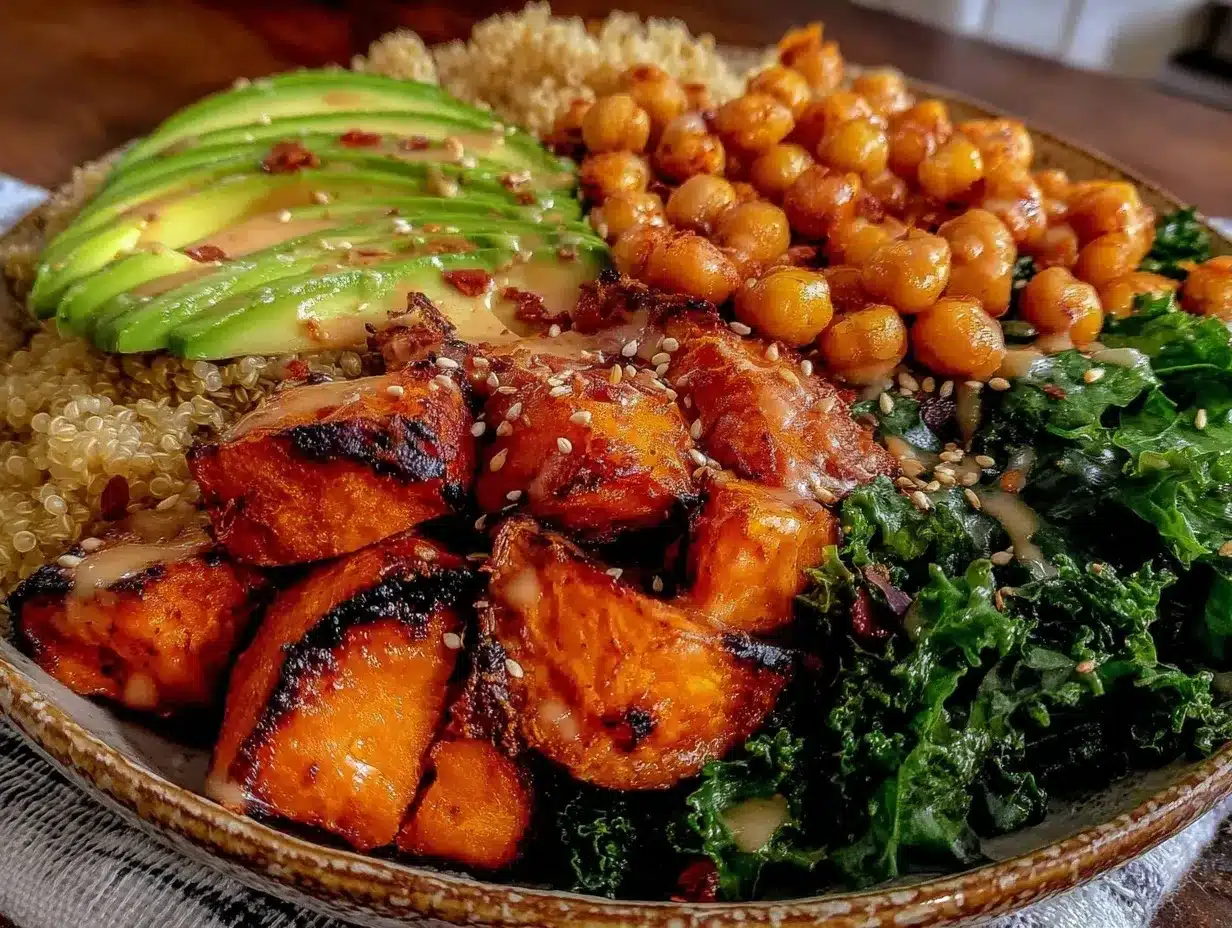
- Preheat your oven to 400°F (200°C). Line a baking sheet with parchment paper or lightly grease it.
- Prepare the sweet potatoes: Peel and cube 1 medium sweet potato into roughly 1-inch pieces. Toss them in 1 tablespoon olive oil, a pinch of salt, and pepper. Spread evenly on the baking sheet.
- Roast chickpeas: Drain and rinse 1 can (15 oz/425g) of chickpeas. Pat dry with a towel, then toss with 1 tablespoon olive oil, 1 teaspoon ground cumin, 1 teaspoon smoked paprika, salt, and pepper. Spread on the same baking sheet with sweet potatoes but keep them separate if you can (or roast in batches). Roast everything for 25-30 minutes, shaking the pan halfway through for even cooking. Chickpeas should be crispy, and sweet potatoes tender and caramelized.
- Cook quinoa: While the veggies roast, rinse 1 cup (170g) quinoa under cold water to remove bitterness. Combine quinoa with 2 cups (480ml) water in a medium saucepan. Bring to a boil, then reduce heat to low, cover, and simmer for 15 minutes or until water is absorbed. Remove from heat and let it sit covered for 5 minutes. Fluff with a fork.
- Prepare the dressing: In a small bowl, whisk together 3 tablespoons tahini, 2 tablespoons fresh lemon juice, 1 minced garlic clove, 1 teaspoon maple syrup (optional), and 2 tablespoons water. Add more water little by little until you reach a creamy, pourable consistency. Season with salt and pepper to taste.
- Prep fresh veggies: While everything cooks, shred or thinly slice 1 large carrot, chop 2 cups (60g) baby spinach or kale, and slice 1 ripe avocado.
- Assemble the bowl: In your serving bowl, layer a base of quinoa, then add roasted sweet potatoes and chickpeas, fresh greens, shredded carrot, and avocado slices. Drizzle generously with tahini dressing.
- Final touch: Sprinkle with extra black pepper or a squeeze of lemon if desired. Serve immediately for best texture and freshness.
Pro tip: If you’re short on time, you can roast chickpeas and sweet potatoes separately in two batches to prevent overcrowding and get that perfect crispiness. Also, I once forgot to fluff the quinoa before serving, which made the texture a bit clumpy—definitely don’t skip that step!
Cooking Tips & Techniques
Roasting chickpeas is where this bowl really shines. You want them crunchy, not soggy, so make sure to pat them dry thoroughly before tossing with oil and spices. Overcrowding the pan can steam them instead of crisping, so give them some breathing room. I learned this the hard way after one sad batch of mushy chickpeas.
Quinoa can be tricky if you don’t rinse it first. That natural coating called saponin tastes bitter if not washed off. Running it under cold water until the water runs clear saves the day every time.
Mixing the tahini dressing can sometimes feel like a workout because tahini is thick and sticky. Adding water slowly and whisking patiently helps get a smooth texture. If your dressing splits, a quick whisk or a splash more lemon juice usually brings it back.
Don’t skip resting the quinoa after cooking—it lets the grains steam in their own moisture and fluff up beautifully. I like to multitask here, prepping veggies or dressing while quinoa rests.
Lastly, balance is key. Don’t overload your bowl with just roasted veggies; fresh greens and raw carrots add freshness and crunch, making every bite interesting.
Variations & Adaptations
- Protein Swap: If you want more variety, add roasted pumpkin seeds or hemp seeds for extra crunch and nutrients instead of chickpeas.
- Seasonal Veggies: Swap sweet potatoes for roasted butternut squash in autumn or grilled asparagus in spring for a fresh twist.
- Different Dressings: Try a creamy avocado-lime dressing or a simple balsamic vinaigrette if you’re not a fan of tahini.
- Low-Carb Version: Replace quinoa with cauliflower rice to reduce carbs while keeping that grainy texture.
- Allergen-Friendly: For a nut-free option, swap tahini with sunflower seed butter or a creamy plant-based yogurt dressing.
I personally love adding a sprinkle of nutritional yeast sometimes for a cheesy, umami kick. Once, I even tossed in some roasted beets for an unexpected earthy sweetness that paired beautifully with the lemony dressing. Honestly, this bowl is a blank canvas—make it your own!
Serving & Storage Suggestions
This soy-free vegan Buddha bowl is best served fresh and slightly warm, right after roasting and assembly. The contrast between the warm roasted chickpeas and sweet potatoes with the cool fresh greens and creamy avocado is delightful.
Pair it with a crisp sparkling water with lemon or a chilled herbal iced tea for a refreshing combo. For a heartier meal, a side of warm crusty bread or a simple lentil soup complements the flavors well.
Leftovers keep well in an airtight container in the fridge for up to 3 days. Keep the dressing separate if you plan to store it, then drizzle just before serving to avoid sogginess. To reheat, warm the roasted veggies and chickpeas gently in the oven or microwave, then add fresh ingredients and dressing afterward.
Flavors develop nicely after a day, especially the roasted chickpeas absorbing some dressing. Just be sure the avocado is fresh when serving to avoid browning.
Nutritional Information & Benefits
This vegan Buddha bowl is a powerhouse of nutrients. One serving provides approximately 450 calories, with 15 grams of protein mostly from quinoa and chickpeas—great for plant-based muscle support. It’s rich in fiber, promoting digestive health, and packed with vitamins A and C from the sweet potatoes, carrots, and greens.
The healthy fats from avocado and olive oil support heart health, while tahini adds calcium and iron, essential for bone strength and energy. Plus, it’s soy-free and gluten-free, making it suitable for a range of dietary needs.
From a wellness perspective, I appreciate how this bowl balances macronutrients without relying on processed ingredients. It’s a meal that feels good in your body and keeps energy steady.
Conclusion
This delicious soy-free vegan Buddha bowl without tofu is proof that plant-based meals can be simple, satisfying, and free from common allergens. It’s flexible enough to suit your pantry and preferences, yet consistent in delivering flavor and texture that make you want to come back for more. I love how it turns what could be a rushed meal into a colorful, nourishing experience.
Give it a try and feel free to tweak the ingredients to fit your taste. Maybe you’ll discover your own favorite twist—just like I did one busy Thursday evening. If you make it, let me know how it goes or share your adaptations—I’m always excited to hear from fellow food lovers!
Here’s to easy, healthy, and delicious meals that make life a little brighter!
FAQs
Can I make this Buddha bowl ahead of time?
Yes! You can prep the quinoa and roast the veggies a day in advance. Store them separately from fresh ingredients and dressing to keep everything fresh.
What can I use instead of tahini in the dressing?
Sunflower seed butter or almond butter works well. You can also try plain plant-based yogurt for a milder flavor.
Is this recipe high in protein?
It provides a moderate amount of plant-based protein from quinoa and chickpeas, making it a filling and balanced meal.
Can I use other grains besides quinoa?
Absolutely! Brown rice, millet, or bulgur are great alternatives depending on your preference.
How do I keep the avocado from browning if I’m making this ahead?
Squeeze a little lemon juice over the avocado slices and store them in an airtight container. Adding avocado just before serving is best for freshness.
For those who appreciate a great grain bowl, you might find the crispy garlic chicken recipe interesting for a non-vegan option or enjoy the wholesome flavors in our roasted vegetable quinoa salad as a side!
Pin This Recipe!
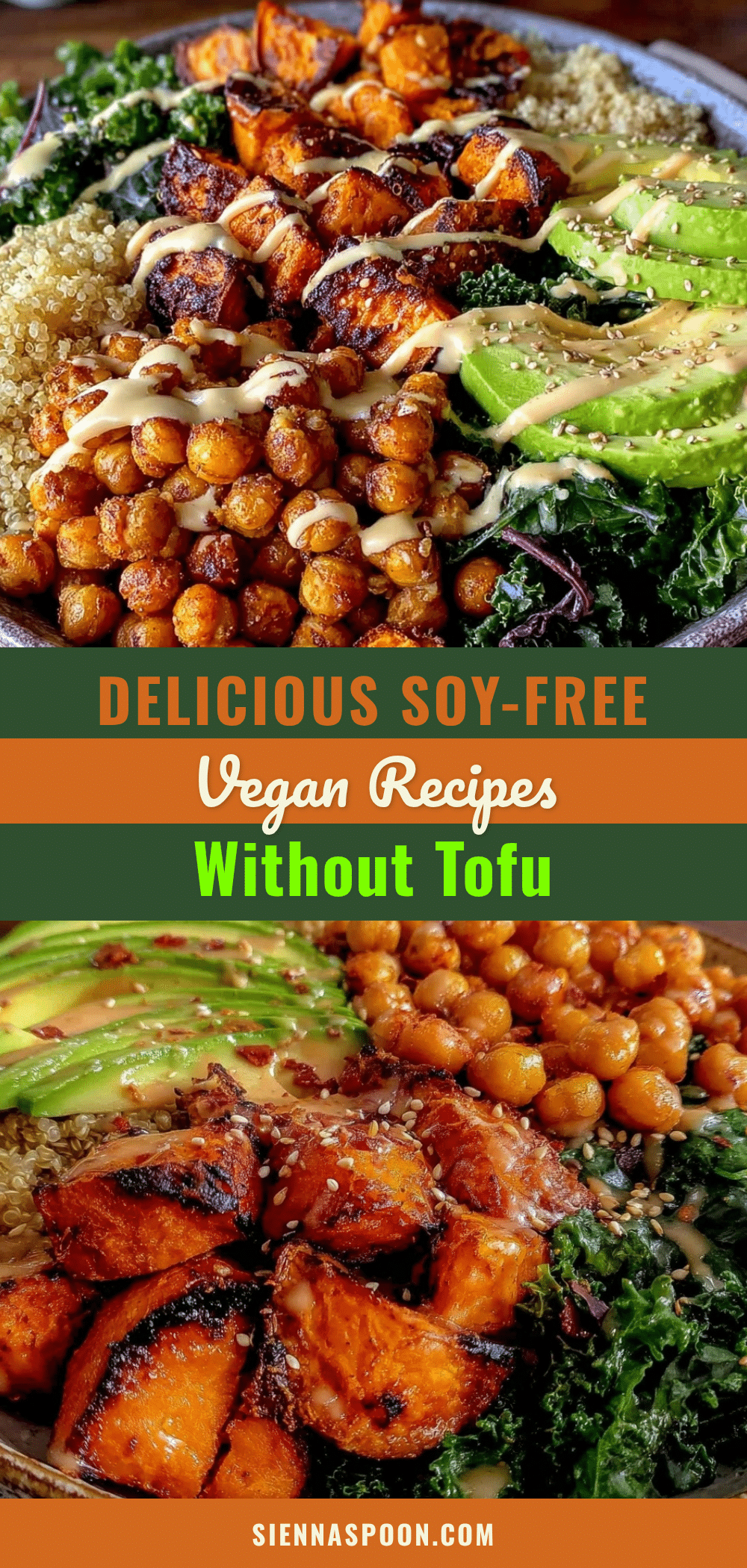
Delicious Soy-Free Vegan Buddha Bowl Recipe Without Tofu Easy and Healthy
A vibrant and filling soy-free vegan Buddha bowl featuring roasted chickpeas, quinoa, fresh veggies, and a creamy tahini dressing. Perfect for a quick, wholesome plant-based meal without tofu.
- Prep Time: 15 minutes
- Cook Time: 30 minutes
- Total Time: 45 minutes
- Yield: 4 servings 1x
- Category: Main Course
- Cuisine: Vegan
Ingredients
- 1 cup (170g) quinoa, rinsed
- 1 can (15 oz/425g) canned chickpeas, drained and rinsed
- 1 medium sweet potato, peeled and cubed
- 1 cup (90g) broccoli florets, fresh or frozen
- 1 large carrot, shredded or thinly sliced
- 1 ripe avocado, sliced
- 2 cups (60g) baby spinach or kale, chopped
- 3 tablespoons tahini
- 2 tablespoons fresh lemon juice
- 1 clove garlic, minced
- 1 teaspoon maple syrup (optional)
- 2 tablespoons olive oil
- 1 teaspoon ground cumin
- 1 teaspoon smoked paprika
- Salt and black pepper to taste
Instructions
- Preheat your oven to 400°F (200°C). Line a baking sheet with parchment paper or lightly grease it.
- Peel and cube 1 medium sweet potato into roughly 1-inch pieces. Toss them in 1 tablespoon olive oil, a pinch of salt, and pepper. Spread evenly on the baking sheet.
- Drain and rinse 1 can (15 oz/425g) of chickpeas. Pat dry with a towel, then toss with 1 tablespoon olive oil, 1 teaspoon ground cumin, 1 teaspoon smoked paprika, salt, and pepper. Spread on the same baking sheet with sweet potatoes but keep them separate if possible. Roast everything for 25-30 minutes, shaking the pan halfway through for even cooking. Chickpeas should be crispy, and sweet potatoes tender and caramelized.
- While the veggies roast, rinse 1 cup (170g) quinoa under cold water to remove bitterness. Combine quinoa with 2 cups (480ml) water in a medium saucepan. Bring to a boil, then reduce heat to low, cover, and simmer for 15 minutes or until water is absorbed. Remove from heat and let it sit covered for 5 minutes. Fluff with a fork.
- In a small bowl, whisk together 3 tablespoons tahini, 2 tablespoons fresh lemon juice, 1 minced garlic clove, 1 teaspoon maple syrup (optional), and 2 tablespoons water. Add more water little by little until you reach a creamy, pourable consistency. Season with salt and pepper to taste.
- While everything cooks, shred or thinly slice 1 large carrot, chop 2 cups (60g) baby spinach or kale, and slice 1 ripe avocado.
- In your serving bowl, layer a base of quinoa, then add roasted sweet potatoes and chickpeas, fresh greens, shredded carrot, and avocado slices. Drizzle generously with tahini dressing.
- Sprinkle with extra black pepper or a squeeze of lemon if desired. Serve immediately for best texture and freshness.
Notes
Pat chickpeas dry thoroughly before roasting to ensure crispiness. Avoid overcrowding the baking sheet to prevent steaming. Rinse quinoa well to remove bitterness. Add water slowly when whisking tahini dressing to achieve smooth texture. Rest quinoa after cooking to fluff properly. Serve fresh and slightly warm for best flavor and texture. Store leftovers separately and add avocado just before serving to avoid browning.
Nutrition
- Serving Size: 1 bowl (approximatel
- Calories: 450
- Sugar: 7
- Sodium: 350
- Fat: 18
- Saturated Fat: 2.5
- Carbohydrates: 55
- Fiber: 12
- Protein: 15
Keywords: soy-free, vegan, Buddha bowl, tofu-free, healthy, plant-based, quinoa, chickpeas, tahini dressing, roasted vegetables