Love this? Save it for later!
Share the inspiration with your friends
My neighbor, Mrs. Gable, wasn’t trying to impress anyone. I had stopped by to return her measuring cup—the one I’d borrowed three weeks prior and honestly kept forgetting to give back—and the smell hit me before I even reached her screen door. It was buttery, yes, but also something else. Something earthy and warm, like the kitchen itself was giving out a slow, steady hug. She was just making mashed potatoes. For herself. On a random Tuesday afternoon.
“Oh, it’s nothing,” she said when I peeked over her shoulder. “Just a little something for my lunch.” But I watched her hands move with a kind of practiced nonchalance—a splash of cream here, a pinch of salt there, a little knob of butter melting into the steam. She wasn’t following a recipe. She wasn’t even measuring. She was just… making them. And that, honestly, is the whole point of this recipe. You know that feeling when you want something cozy but you don’t want a whole production? Maybe you’ve been there on a quiet evening when it’s just you and one other person, and you want a side dish that feels like a warm blanket without the leftovers taking over your fridge for a week.
This is that recipe. It’s for two people, maybe three if you’re feeling generous, and it’s designed to be made without a lot of fuss. I’ve tweaked Mrs. Gable’s casual method into something you can actually follow, but the soul of it is the same: a small batch of mashed potatoes that tastes like you spent hours on it, when really, you just paid attention. Let me tell you, it’s the kind of thing you’ll find yourself making on a cold, rainy Tuesday, just because.
Why You’ll Love This Recipe
Let’s be honest—most mashed potato recipes are written for a crowd. They call for five pounds of potatoes and a stick of butter, and before you know it, you’re eating the same leftovers for three days. This one is different. It’s scaled down, perfected, and tested so you get that dreamy, creamy texture without the mountain of leftovers.
- Quick & Easy: From start to finish, you’re looking at about 30 minutes. Perfect for a weeknight dinner when you just want something comforting without the long wait.
- Simple Ingredients: You probably have everything in your kitchen right now. Potatoes, butter, milk or cream, salt—that’s it. No fancy trips to the store required.
- Perfect for a Cozy Evening: Whether it’s a date night at home, a quiet dinner for one (hey, no judgment), or a small holiday gathering, this recipe is sized just right.
- Crowd-Pleaser: Even though it’s small-batch, the flavor is huge. It’s the kind of side dish that gets the “oh, these are really good” comment from even the pickiest eaters.
- Unbelievably Delicious: The texture is what gets me every time. It’s creamy without being gluey, rich without being heavy. It’s comfort food at its most honest.
What makes this recipe different from all the others? It’s the method. I use a trick I picked up from a chef friend—warming the milk and butter together before adding them to the potatoes. It sounds like a small thing, but it makes a world of difference. The potatoes absorb the fat more evenly, resulting in a silkier mash that doesn’t need a ton of extra butter to taste indulgent. It’s comfort food, reimagined for two, with the same soul-soothing satisfaction you’d get from a giant holiday batch. Perfect for impressing your dinner companion without any of the stress.
What Ingredients You Will Need
This recipe uses simple, honest ingredients to deliver big flavor. No weird stuff, no long list of things you’ll use once and forget about. Here’s what you’ll need and why each one matters.
For the Potatoes
- 1 pound (450g) Yukon Gold potatoes – This is the sweet spot for two servings. Yukon Golds are my go-to because they have a naturally buttery flavor and a creamy texture that doesn’t get waterlogged. You can use Russets in a pinch, but the texture will be a bit fluffier and less rich.
- 4 cups (960ml) cold water – For boiling. Always start with cold water—it helps the potatoes cook evenly from the inside out.
- 1 tablespoon (15g) kosher salt – For the cooking water. Yes, you salt the water generously. This is how you season the potatoes from the inside, not just the outside.
For the Creamy Finish
- 4 tablespoons (56g) unsalted butter – I recommend using a good-quality butter like Kerrygold or Plugrà. It makes a noticeable difference in flavor. Cut it into small cubes so it melts quickly into the hot potatoes.
- 1/4 cup (60ml) whole milk or heavy cream – Whole milk gives a lighter, more classic mash. Heavy cream makes it decadent and almost pudding-like. I usually go with whole milk for everyday and heavy cream for special occasions. Both work beautifully.
- 1/2 teaspoon (2g) kosher salt, plus more to taste – For final seasoning. You might need a little less if you’re using salted butter, so taste as you go.
- 1/4 teaspoon (1g) freshly ground black pepper – Freshly ground is non-negotiable here. It adds a subtle warmth that pre-ground pepper just can’t match.
- Optional: 2 tablespoons (30ml) reserved cooking water – This is my secret weapon. If the mash seems too thick, a splash of the starchy cooking water loosens it up without diluting the flavor.
Substitution Notes
If you’re dairy-free, you can swap the butter for a good vegan butter (I like Miyoko’s) and use unsweetened oat milk or full-fat canned coconut milk. The flavor will be slightly different, but still delicious. For a lower-fat option, use 2% milk and reduce the butter to 2 tablespoons. It won’t be as luxurious, but it’ll still be pretty tasty.
Equipment Needed
You don’t need a lot of fancy tools to make this recipe, which is part of its charm. Here’s what you’ll need:
- A medium saucepan (2-3 quart): For boiling the potatoes. Make sure it’s big enough that the potatoes have room to move around a bit.
- A colander: For draining the potatoes after cooking.
- A potato masher or ricer: I prefer a ricer for the smoothest, fluffiest texture, but a good old-fashioned masher works perfectly too. If you’re using a masher, go for one with a zigzag wire pattern—it breaks up the potatoes more evenly.
- A small saucepan or microwave-safe bowl: For warming the milk and butter. This is a step you don’t want to skip.
- A rubber spatula: For folding everything together gently. A wooden spoon works too, but a spatula is easier on your cookware.
- A vegetable peeler: Unless you’re leaving the skins on (which I sometimes do for a more rustic mash).
- A chef’s knife and cutting board: For cutting the potatoes into even chunks.
That’s it. No stand mixer, no food processor, no special gadgets. Just the basics and a little bit of patience.
Preparation Method
Alright, let’s get cooking. I’ve broken this down into simple steps so you can follow along without any stress. Trust me, if Mrs. Gable can do it on a Tuesday afternoon, you can do it too.
- Prep the potatoes (5 minutes): Peel your Yukon Gold potatoes, then cut them into 1-inch chunks. Try to make them all roughly the same size—this ensures they cook evenly. Nobody wants a mashed potato with hard little bits in it.
- Start the boil (20 minutes): Place the potato chunks in your medium saucepan and cover them with the 4 cups of cold water. Add the 1 tablespoon of kosher salt. Bring the water to a boil over high heat, then reduce the heat to medium-low and let it simmer gently. You want a steady simmer, not a violent boil—that can make the potatoes waterlogged. Cook for about 15-18 minutes, or until a fork slides into a potato chunk with almost no resistance.
- Warm the dairy (5 minutes): While the potatoes are boiling, combine the 4 tablespoons of butter and 1/4 cup of milk or cream in a small saucepan. Warm it over low heat until the butter is just melted and the mixture is steaming. Don’t let it boil. If you’re in a hurry, you can do this in the microwave in 15-second bursts. Set it aside.
- Drain and dry (2 minutes): When the potatoes are tender, drain them in a colander. Here’s a trick: return the empty saucepan to the stove over low heat for about 30 seconds to evaporate any leftover water. Then add the drained potatoes back to the dry pot and let them sit for 1 minute. This lets any excess steam escape, which means your mash won’t be watery.
- Mash (2 minutes): If you’re using a ricer, rice the potatoes directly into the warm pot. If you’re using a masher, mash them until they’re broken down but still have a few small lumps—perfection is overrated, and a little texture is nice. Don’t over-mash, or you’ll activate the starch and end up with gluey potatoes.
- Add the warm dairy (1 minute): Pour the warm milk and butter mixture over the mashed potatoes. Use a rubber spatula to fold it in gently, just until combined. Don’t stir vigorously—you’re not making bread dough. Gentle, folding motions are your friend.
- Season and adjust (1 minute): Add the 1/2 teaspoon of salt and the 1/4 teaspoon of pepper. Taste it. Does it need more salt? Maybe a pinch more pepper? Trust your instincts. If the mash seems too thick, add a splash of the reserved cooking water and fold it in. If it’s too thin (unlikely, but possible), let it sit for a minute—it will thicken as it cools.
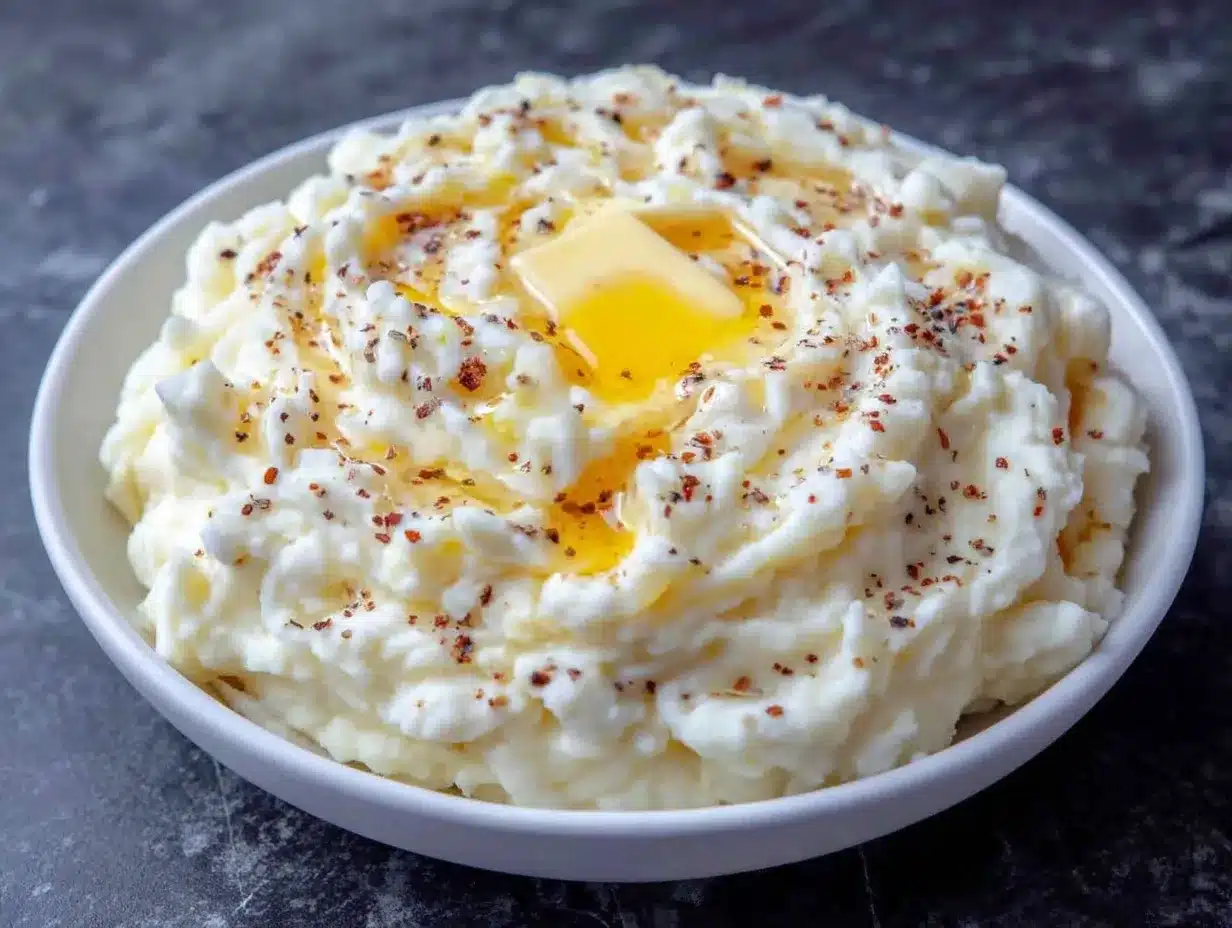
- Serve immediately: Spoon the potatoes into a warm bowl, add a little pat of butter on top if you’re feeling fancy, and serve right away. Mashed potatoes are a now-food, not a later-food.
Cooking Tips & Techniques
I’ve made a lot of mashed potatoes in my time, and I’ve learned a few things the hard way. Here are my best tips to make sure yours turn out perfect every time.
Don’t overwork the potatoes. This is the number one mistake people make. The more you mash, stir, or whip, the more starch you release, and the gluey-er your potatoes get. Use a gentle hand. It’s okay if there’s a tiny lump or two—it adds character.
Warm your dairy. I cannot stress this enough. Cold milk or cream will cool down your hot potatoes, and then you’ll be tempted to over-mash trying to incorporate it. Warm dairy slides right in and keeps everything at the perfect temperature.
Use a ricer for special occasions. If you’re making these for a holiday or a date night, bust out the ricer. It gives you the smoothest, fluffiest texture with zero effort. For everyday, a masher is just fine. I’ve used both, and honestly, the ricer version is slightly more elegant, but the masher version has more soul.
Taste as you go. Potatoes are a blank canvas. They need salt to come alive. I season the cooking water, then add more salt at the end. But everyone’s salt tolerance is different, so taste it. You can always add more salt, but you can’t take it out.
Keep it warm. If your main dish isn’t ready yet, keep the mashed potatoes warm by covering the bowl with a clean kitchen towel or putting them in a low oven (200°F) with a lid on. Don’t leave them on the stove on low heat—they’ll dry out and develop a weird skin on top.
Variations & Adaptations
Once you’ve mastered the basic recipe, it’s fun to play around. Here are a few ways to change it up.
- Garlic Mashed Potatoes: Add 2-3 cloves of peeled garlic to the pot with the potatoes during the last 5 minutes of boiling. Mash them right along with the potatoes. The garlic becomes mellow and sweet, and the flavor is incredible.
- Herb-Infused: Stir in 1 tablespoon of finely chopped fresh chives, parsley, or dill at the very end. It adds a fresh, bright note that cuts through the richness beautifully.
- Cheesy Mash: Fold in 1/4 cup of grated sharp cheddar or Parmesan cheese along with the dairy. Do this while the potatoes are still hot so the cheese melts into a gooey, delicious mess.
- Vegan Version: Use vegan butter and unsweetened oat milk. Add an extra tablespoon of vegan butter for richness. The texture will be slightly less creamy, but still very satisfying.
- Roasted Potato Mash: For a deeper flavor, roast the potato chunks at 400°F for 30 minutes instead of boiling them. Then mash and proceed as usual. It’s a bit more work, but the caramelized flavor is absolutely worth it for a special meal.
Serving & Storage Suggestions
These mashed potatoes are best served hot, straight from the pot. Spoon them into a warm bowl and top with a pat of butter, a sprinkle of fresh pepper, and maybe a few chives for color. They pair beautifully with almost anything—roasted chicken, grilled steak, meatloaf, or even just a simple pan-seared fish. For a vegetarian meal, serve them alongside roasted vegetables and a mushroom gravy.
If you have leftovers (it happens, but not often), store them in an airtight container in the refrigerator for up to 3 days. The texture will change slightly—they’ll be a bit denser—but the flavor will still be good. To reheat, add a splash of milk or cream and warm them gently in a saucepan over low heat, stirring occasionally. You can also microwave them in 30-second bursts, stirring between each. Don’t use high heat, or they’ll become rubbery.
These potatoes don’t freeze well, honestly. The texture becomes grainy and watery after thawing. If you absolutely must freeze them, they’ll keep for about a month, but I’d only recommend it if you plan to use them in a shepherd’s pie or soup later.
Nutritional Information & Benefits
Here’s the approximate nutritional breakdown for one serving (based on using whole milk and unsalted butter):
- Calories: ~320
- Fat: 18g
- Carbohydrates: 35g
- Protein: 5g
- Fiber: 3g
- Sodium: 480mg
Yukon Gold potatoes are a good source of vitamin C, potassium, and fiber (especially if you leave the skins on). They also provide resistant starch, which is great for gut health when the potatoes are cooled and reheated. Of course, this is a comfort food recipe, so it’s not exactly health food—but it’s made with real, whole ingredients, and that counts for something. If you’re watching your sodium, you can reduce the salt in the cooking water by half. For a lower-fat version, use 2% milk and reduce the butter to 2 tablespoons.
Conclusion
This recipe is more than just a side dish—it’s a little ritual. It’s the thing you make when you want to slow down, when you want to take care of yourself or someone you love. It’s proof that you don’t need a holiday or a crowd to enjoy something truly comforting. Just a pound of potatoes, a little butter, and a quiet evening.
I hope you give it a try, and I hope you make it your own. Maybe you’ll add a little garlic, or some fresh herbs, or maybe you’ll leave it just as it is—simple and perfect. That’s the beauty of a recipe like this: it’s a starting point, not a rulebook.
If you do make it, I’d love to hear how it turned out. Drop a comment below and let me know what you served it with, or if you came up with your own twist. Happy cooking, friend.
Frequently Asked Questions
Can I use Russet potatoes instead of Yukon Golds?
Yes, you can. Russets will give you a fluffier, lighter mash, but they won’t be as creamy or rich. If you use Russets, be extra careful not to over-mash them—they’re more prone to becoming gluey. I’d also recommend adding an extra tablespoon of butter to compensate for the lower fat content.
Why do I need to warm the milk and butter?
Warming the dairy prevents the potatoes from cooling down too quickly. Cold milk can shock the hot potatoes, making them seize up and creating a lumpy texture. Warm dairy incorporates smoothly and helps the potatoes stay at the perfect serving temperature.
Can I make these potatoes ahead of time?
You can, but they’re best fresh. If you need to make them ahead, cook the potatoes and mash them, but stop before adding the dairy. Cover and refrigerate the dry mash for up to 24 hours. When you’re ready to serve, reheat the mash gently with the warm dairy mixture, and they’ll be almost as good as fresh.
How do I fix mashed potatoes that are too thin?
If your mash is runny, don’t panic. Let it sit off the heat for a few minutes—it will thicken as it cools. If it’s still too thin, you can stir in a tablespoon of instant potato flakes or a little bit of cornstarch slurry. But honestly, this rarely happens if you drain the potatoes well and don’t add too much liquid.
Can I double this recipe for a crowd?
Absolutely. Just double all the ingredients and use a larger pot. The cooking time will be roughly the same, but you might need to boil the potatoes in batches if your pot isn’t big enough. Just don’t try to cram them all in—crowding the pot leads to uneven cooking.
Pin This Recipe!
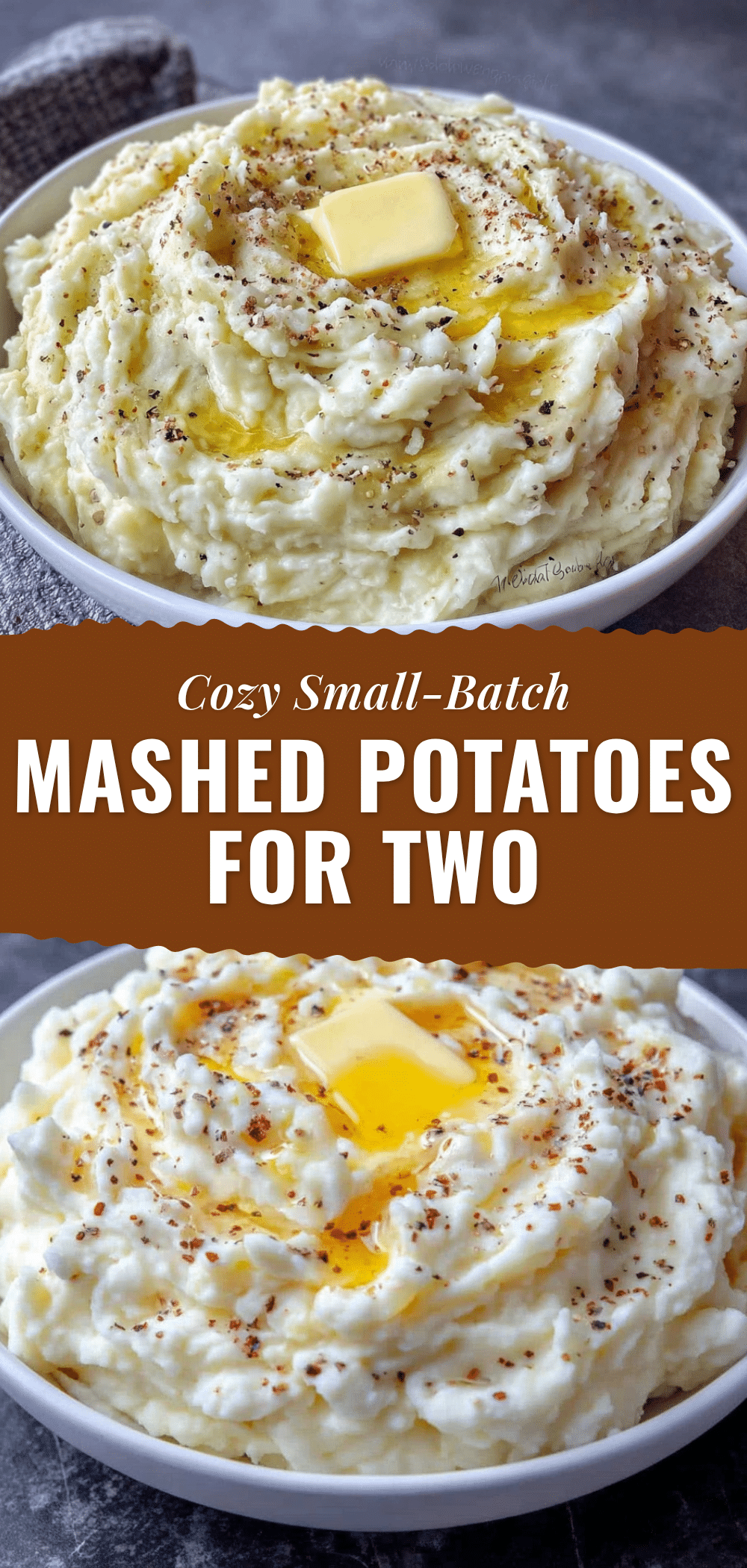
Cozy Small-Batch Mashed Potatoes for Two: Easy & Perfect
This recipe delivers creamy, dreamy mashed potatoes scaled down for two people. It’s quick, easy, and uses simple ingredients for a comforting side dish that tastes like you spent hours on it.
- Prep Time: 5 minutes
- Cook Time: 20 minutes
- Total Time: 25 minutes
- Yield: 2 servings 1x
- Category: Side Dish
- Cuisine: American
Ingredients
- 1 pound (450g) Yukon Gold potatoes
- 4 cups (960ml) cold water
- 1 tablespoon (15g) kosher salt, plus 1/2 teaspoon (2g) more for final seasoning
- 4 tablespoons (56g) unsalted butter, cut into small cubes
- 1/4 cup (60ml) whole milk or heavy cream
- 1/4 teaspoon (1g) freshly ground black pepper
- Optional: 2 tablespoons (30ml) reserved cooking water
Instructions
- Prep the potatoes: Peel the Yukon Gold potatoes and cut them into 1-inch chunks.
- Start the boil: Place the potato chunks in a medium saucepan, cover with cold water, and add 1 tablespoon of kosher salt. Bring to a boil over high heat, then reduce to a gentle simmer. Cook for 15-18 minutes until a fork slides in easily.
- Warm the dairy: While the potatoes boil, combine the butter and milk or cream in a small saucepan. Warm over low heat until the butter is melted and the mixture is steaming. Do not let it boil.
- Drain and dry: Drain the potatoes in a colander. Return the empty saucepan to low heat for 30 seconds to evaporate any water. Add the drained potatoes back to the dry pot and let them sit for 1 minute to release excess steam.
- Mash: Rice the potatoes into the warm pot using a ricer, or mash with a potato masher until broken down but still slightly lumpy. Do not over-mash.
- Add the warm dairy: Pour the warm milk and butter mixture over the mashed potatoes. Fold gently with a rubber spatula until just combined.
- Season and adjust: Add 1/2 teaspoon of salt and 1/4 teaspoon of pepper. Taste and adjust seasoning. If too thick, add a splash of reserved cooking water and fold in.
- Serve immediately: Spoon into a warm bowl, top with a pat of butter if desired, and serve right away.
Notes
Warming the dairy before adding it to the potatoes is key for a silky texture. Don’t over-mash to avoid gluey potatoes. For a dairy-free version, use vegan butter and unsweetened oat milk. Leftovers can be stored in an airtight container in the refrigerator for up to 3 days.
Nutrition
- Serving Size: 1 serving
- Calories: 320
- Sugar: 2
- Sodium: 480
- Fat: 18
- Saturated Fat: 11
- Carbohydrates: 35
- Fiber: 3
- Protein: 5
Keywords: mashed potatoes, small batch, for two, easy, creamy, comfort food, side dish